Ігор Вишневський War
24 February 2025, 08:54
2025-02-24
The eyeWitness to Atrocities app capturing Russian war crimes and keeping users safe for 10 years now. How it works with 53,000 items of digital evidence documented so far
The eyeWitness to Atrocities app, which was initiated by the International Bar Association (IBA), is virtually the same age as the Russia’s war on Ukraine that has been raging since 2014. Long before the full-scale war, a decade ago in fact, in 2015, the app was launched, while its development began as early as 2011.
Meanwhile, since Russia’s full-scale invasion, millions of Ukrainians have massively been confronted not only with war crimes and their consequences, but also with a need to prove these crimes legally. After all, proving these facts is not only about some kind of high ‘justice’ in international courts decades later. This also means more commonplace tangible compensation and affirmation of their rights as victims and survivors right now. This is why the app is so crucial for Ukrainians today.
The eyeWitness to Atrocities app, which was initiated by the International Bar Association (IBA), is virtually the same age as the Russia’s war on Ukraine that has been raging since 2014. Long before the full-scale war, a decade ago in fact, in 2015, the app was launched, while its development began as early as 2011.
Meanwhile, since Russia’s full-scale invasion, millions of Ukrainians have massively been confronted not only with war crimes and their consequences, but also with a need to prove these crimes legally. After all, proving these facts is not only about some kind of high ‘justice’ in international courts decades later. This also means more commonplace tangible compensation and affirmation of their rights as victims and survivors right now. This is why the app is so crucial for Ukrainians today.
To understand what role it has played in Ukraine so far and what technology features allow the app to record evidence of crimes in the way law enforcement and courts require, on the eve of the third year of the full-scale invasion, dev.ua interviewed a representative of the eyeWitness to Atrocities technical team from the company’s headquarters in London and spoke to attorneys at law and experts in Ukraine.
How a controlled capture app works
The practical guide on the effective use of controlled capture apps explains that they record and embed information needed to demonstrate authenticity of footage. For example, in a controlled capture, an image, video, or audio recording is cryptographically signed, geotagged, and timestamped.
«EyeWitness to Atrocities addresses one of the key challenges of capturing evidence — authentication of records. Videos, photos and audios are automatically tagged with GPS data, time stamps and digital signatures, which makes them impossible to fake», — explains Dmytro Hladkyi, an attorney at law and representative of EyeWitness to Atrocities in Ukraine.
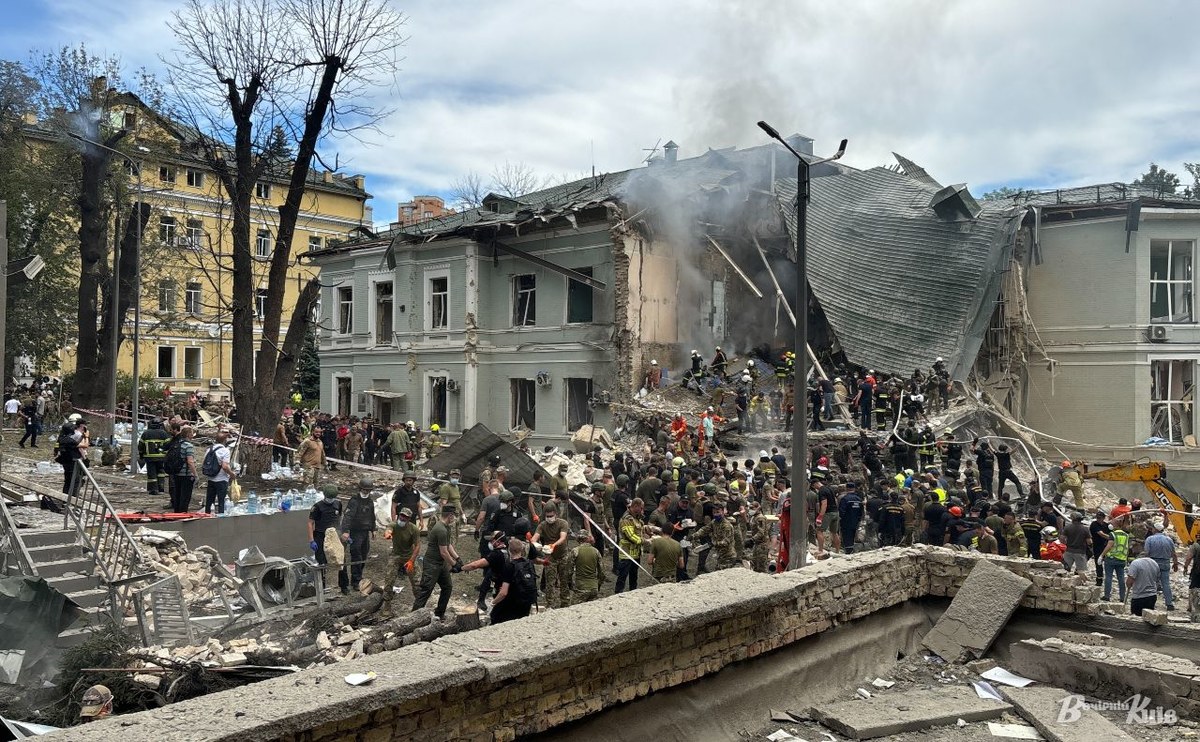
Ohmatdyt hospital shelling aftermath, photo by Anna Bilous, Vechirniy Kyiv
According to the attorney, the capacity to preserve metadata unchanged for each capture is one of eyeWitness' biggest advantages. During his work in Zaporizhzhia region, as well as in other regions of Ukraine, Mr. Hladkyi alone managed to document several thousand cases of attacks on civilian infrastructure and other violations of international humanitarian law through the app.
As attested by Serhiy Denysenko, Executive Director of CyberLab, it is all these features that make it possible to treat the content transmitted through the app as admissible digital evidence. CyberLab analysed this software to confirm for civil society organisations that it is safe to use the app when recording war crimes under occupation or other threats and to pass this information directly to law enforcement.
«First, it’s the date and time. Second, it is the geolocation of photos taken. Third is the data that the user himself or herself can capture. And the fourth is the hash value of the pictures themselves, which makes it impossible to manipulate them and gives them the authenticity that is required for these pictures to be recognised as digital evidence. Why? Because digital evidence, according to all international standards, must be properly identified and recorded», — says Mr. Denysenko.
An impromptu memorial at the deadly site where children had been killed in Odesa, photo by Suspilne
As per already cited EyeWitness to Atrocities practical guide on the effective use of controlled capture applications, the technology can dramatically streamline evidence verification by ensuring the integrity of the footage is intact.
«This is usually achieved by encrypting the media and calculating a hash value, a numeric code based on pixels, that is unique to each photo and video at the time the footage is recorded,» — the practical guide explains.
What the app’s team had to say
dev.ua also sought comments from EyeWitness technical expert Nigel Richards. According to him, the app was certainly unique. While many of the components used to build the technology had been developed before, there was no existing use case quite like this.
«Some key aspects of the development process included metadata integration, which enabled the automatic collection of GPS coordinates, date, and time to securely embed within media files. Security measures ensured that all footage was encrypted on the recording device and could not be altered, preserving its evidentiary value. Additionally, a robust chain of custody system was created to transmit and store footage securely, ensuring that the information remained unaltered and verifiable», — said the expert.
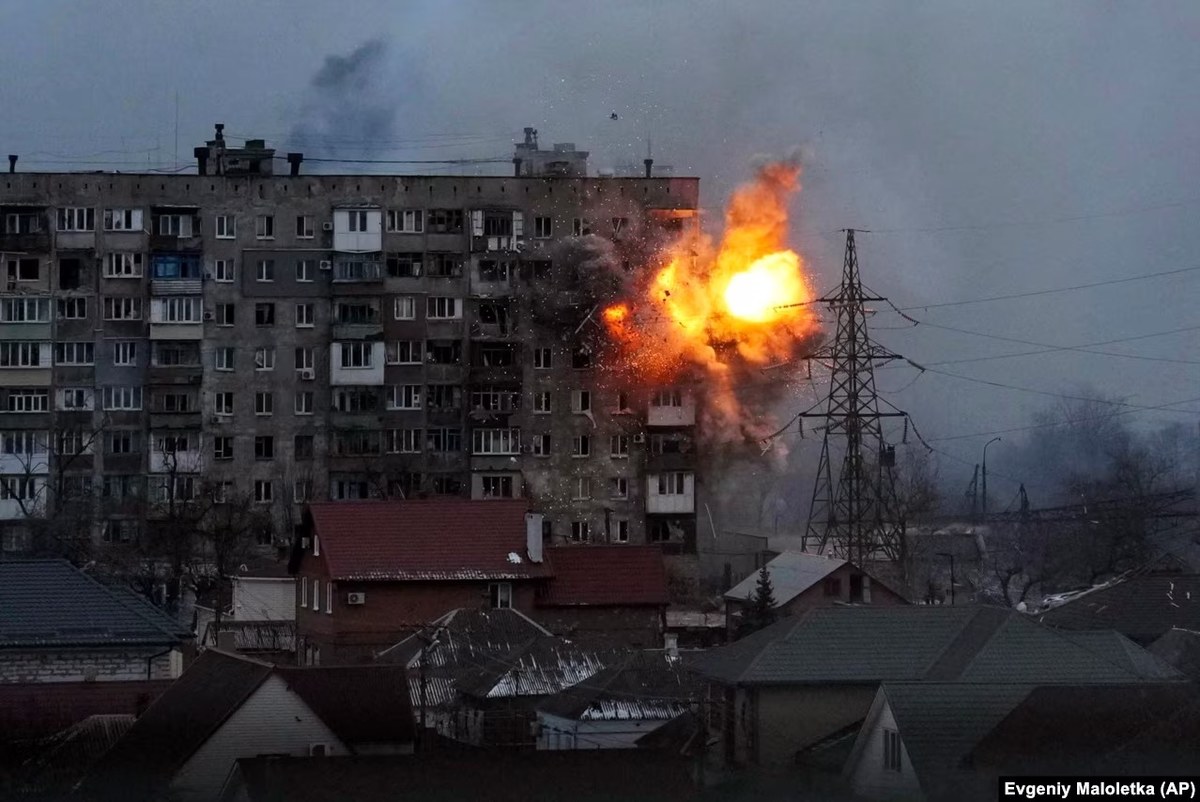
An apartment block shelled in Mariupol. Photo by Yevhen Malolietka
In Nigel Richards’ words, over the years, the eyeWitness to Atrocities app has undergone significant enhancements to bolster its cybersecurity measures. The development team has implemented rigorous code hardening techniques to secure the application’s operations on user devices.
«Regular cybersecurity audits are conducted to identify and address potential vulnerabilities, ensuring the app remains resilient against emerging threats», — Richards explained.
He noted that user feedback was also brought into play when making improvements to the application.
«Feedback from users operating in diverse and challenging environments has highlighted areas for improvement, leading to iterative updates that enhance performance and reliability», — the technical team representative added.
Nigel Richards also highlighted that one of the primary concerns is safeguarding the authenticity of evidence against AI-generated deep fakes and other forms of digital manipulation. To counter this, the team collaborates with cybersecurity auditors to regularly assess and enhance the app’s security protocols, ensuring that captured content remains verifiable and tamper-proof.
«To overcome potential risks, we are constantly strengthening encryption, securing data transfers, and improving security features for users», — says the EyeWitness team mate.
After all, continuous updates of the application, which the technical team is working on, are driven not only by security challenges but also, for example, to ensure the app remains compatible with Android operating systems evolving all the time.
Things we discovered ourselves
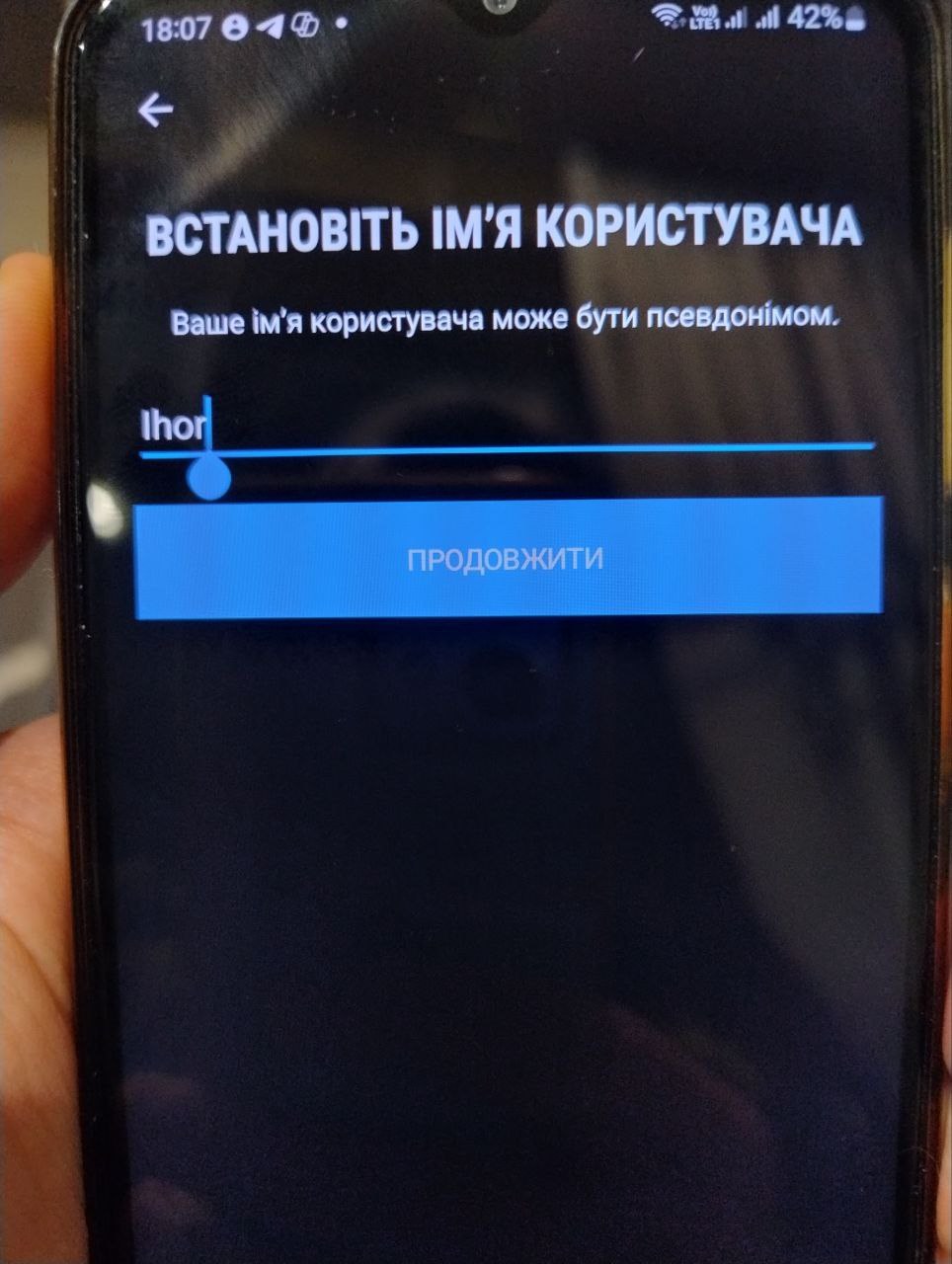
After downloading the app from the Google Play Store to see how it works, the author of this article immediately spotted a few exciting features that immediately revealed that the developers had taken proper care to ensure that users remained completely anonymous, to the greatest extent possible.
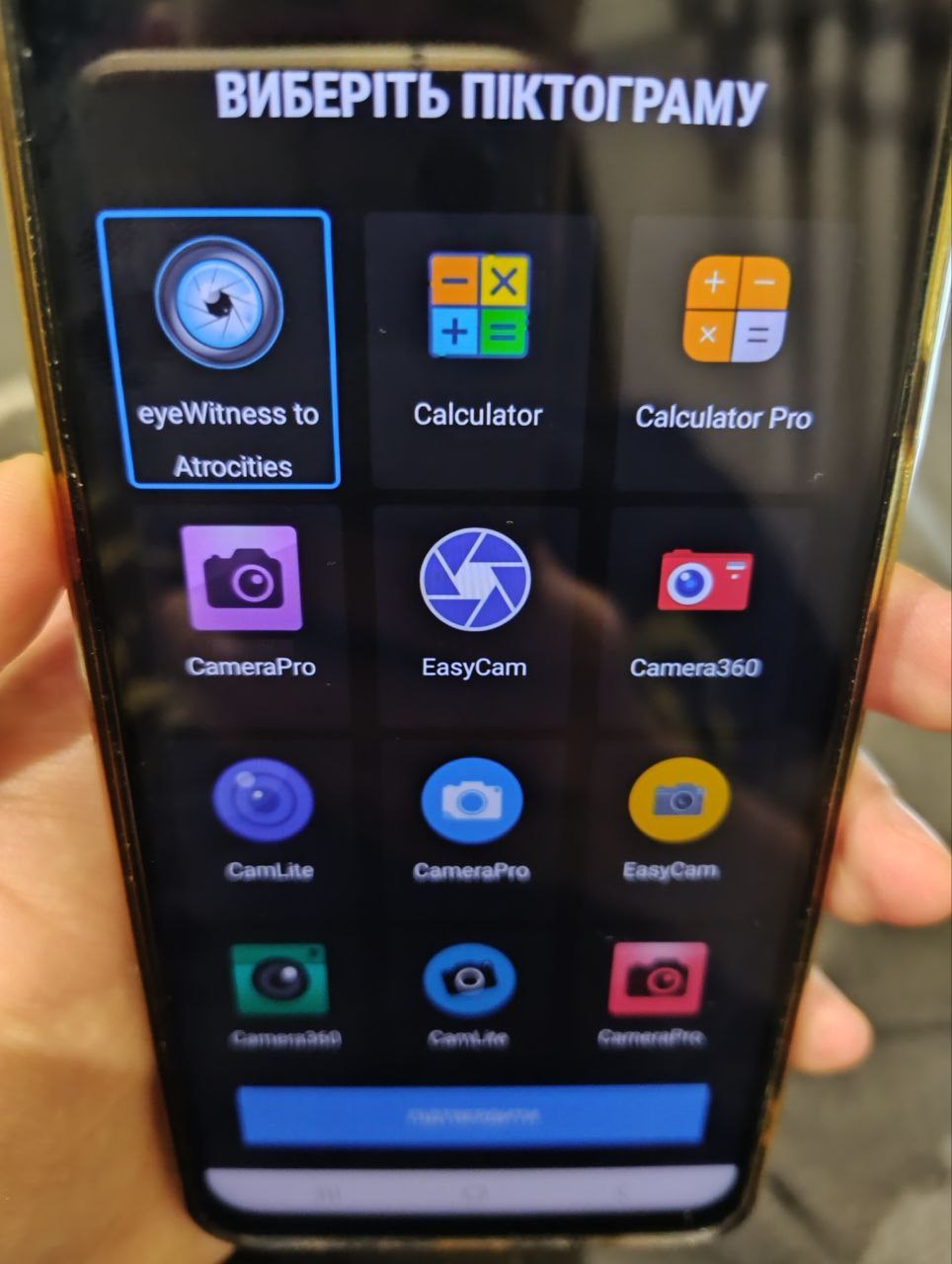
For example, when you sign up for the app, you are advised to use a nickname, and the app’s icon on your phone can be disguised as a different application — a regular camera or even a calculator. By the way, it’s also impossible to take a screenshot of the phone screen while using the app, so another device had to be used instead to take the pictures below.
«In the government-uncontrolled areas, mobile devices of our citizens may end up in the hands of the invaders, which could lead to drastic consequences. If the devices store any information that could be used against Russia, our citizens could be tortured or even murdered», — says Serhiy Denysenko, Executive Director of CyberLab, explaining the motives behind the security measures taken by the software developers.
Another tech advancement is that after the content is captured through the app and uploaded, it is stored on eyeWitness’ secure server, allowing users to delete it from the app’s encrypted gallery for extra reassurance.
The footage is encrypted and tested by cybersecurity experts regularly such that attempting to hack into it would be exceedingly difficult in the event that a phone were to be seized. However, for added security, users have the option to remove the content from their device after uploading, minimizing any risk if their phone falls into the wrong hands.
«The application is uniquely designed to work independently of the smartphone, in that it does not store information in the regular gallery of the device. Rather, it is stored in an encrypted gallery and can then be uploaded to the eyeWitness secure servers and deleted from the app’s gallery. Therefore, the photos and videos cannot be retrieved by third-party organisations, hackers, or unauthorised personnel», — adds CyberLab’s executive director.
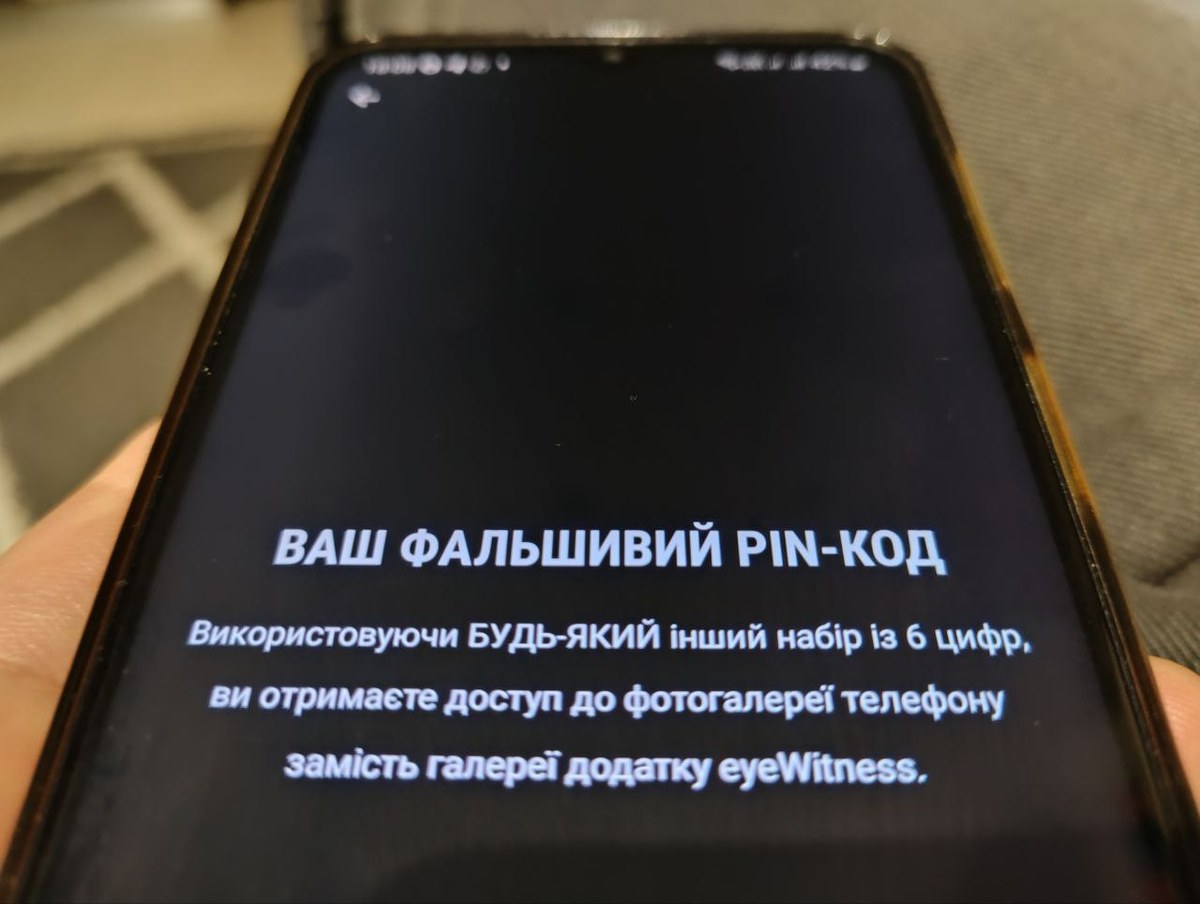
By the way, after installing the app on the phone, the author found another notable feature to help the user protect him or herself in case of unwanted communication with enemy troops. Each user is prompted to enter a pin code. At the same time, there is a fake pin code feature. If someone takes the phone and enters an incorrect pin, the app will redirect the user to the regular photo gallery on the phone, not to the photos captured with the app. It thus appears that one has gained access to the encrypted app gallery, while in fact they have not.
However, despite all these measures undertaken by the developers to ensure the confidentiality and safety of users, one must be aware that no one can be 100% secure in the territories controlled by the hostile force.
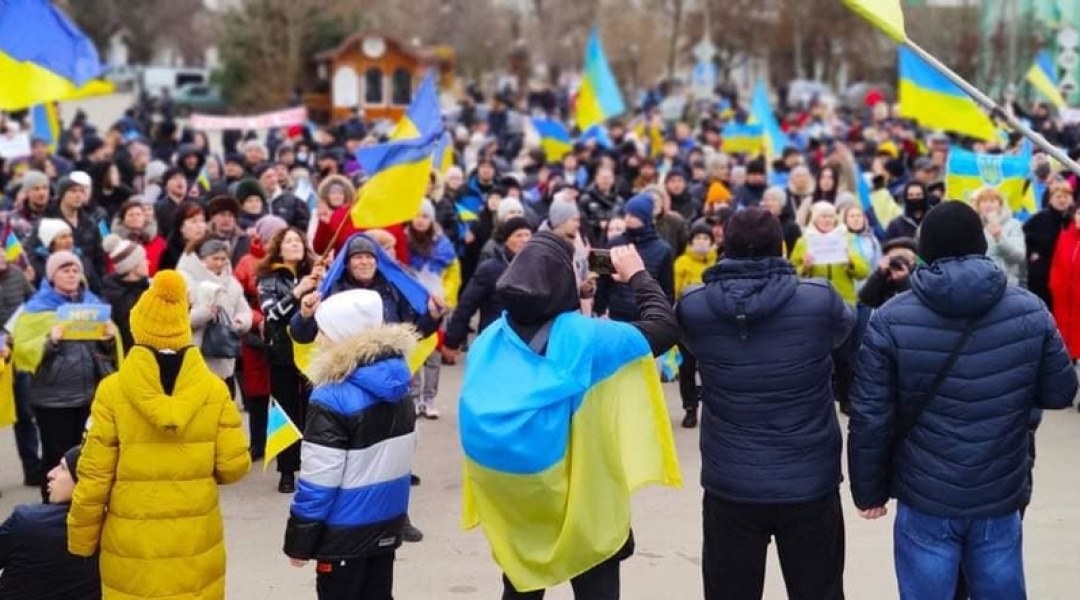
A pro-Ukrainian rally in the temporarily occupied Henichesk early after Russian invasion. Photo by Oleksiy Davydov
«Users can be reassured that the app is designed with strong encryption to mitigate against the risk of attempted access to the app. However, while these security measures help protect stored data, they cannot eliminate all risks. If someone is documenting in an area where it is dangerous to be seen taking photos or videos, this could pose a serious threat. Even with encryption, the act of capturing evidence itself may put a user at risk if they are observed taking photos and videos of crimes or the aftermath. Users should remain aware of their surroundings and assess whether or not it is safe to document. If they proceed to do so, documenters should take precautions when operating in sensitive situations», — warns Serhiy Denysenko.
From phones to courts
Since the outbreak of the full-scale invasion, Ukrainian users of the app have documented more than 53,000 pieces of media content containing evidence of war crimes committed by Russian troops, according to Dmytro Hladkyi, an attorney at law and representative of eyeWitness to Atrocities in Ukraine. «This evidence is being actively used to prepare detailed dossiers for investigators, including at the International Criminal Court andEuropol,» the Mr. Hladkyi said.
A major coalition of Ukrainian human rights organizations, the Ukraine 5 AM, brings together more than 30 human rights organisations and uses the eyeWitness app actively. «Thanks to this partnership, it was possible to consolidate evidence of attacks on civilians, illegal detentions, torture and other crimes that can be qualified as crimes against humanity,» the attorney added.
Additionally, eyeWitness to Atrocities cooperates with the Ukrainian Bar Association and the Office of the Prosecutor General of Ukraine.
«The records collected through eyeWitness have real-life applicability in criminal cases. The high-level verification enables them to be admissible in courts. Although certain details of individual cases remain confidential, a significant part of the available evidence is already being used for investigation purposes. Digital capture helps mitigate the problems associated with the absence of witnesses or tampering with evidence,» says Dmytro Hladkyi.
In his turn, Roman Chumak, an attorney at law who has delivered many presentations on the capabilities of the eyeWitness to Atrocities app for lawyers in Kharkiv region and all of Ukraine since the beginning of the full-scale war, confirms in an interview with dev.ua that the tool is being widely used by legal professionals to record the aftermath of war crimes and destruction.
Some of the cases based on the evidence recorded through the app have already been filed in Ukrainian courts.
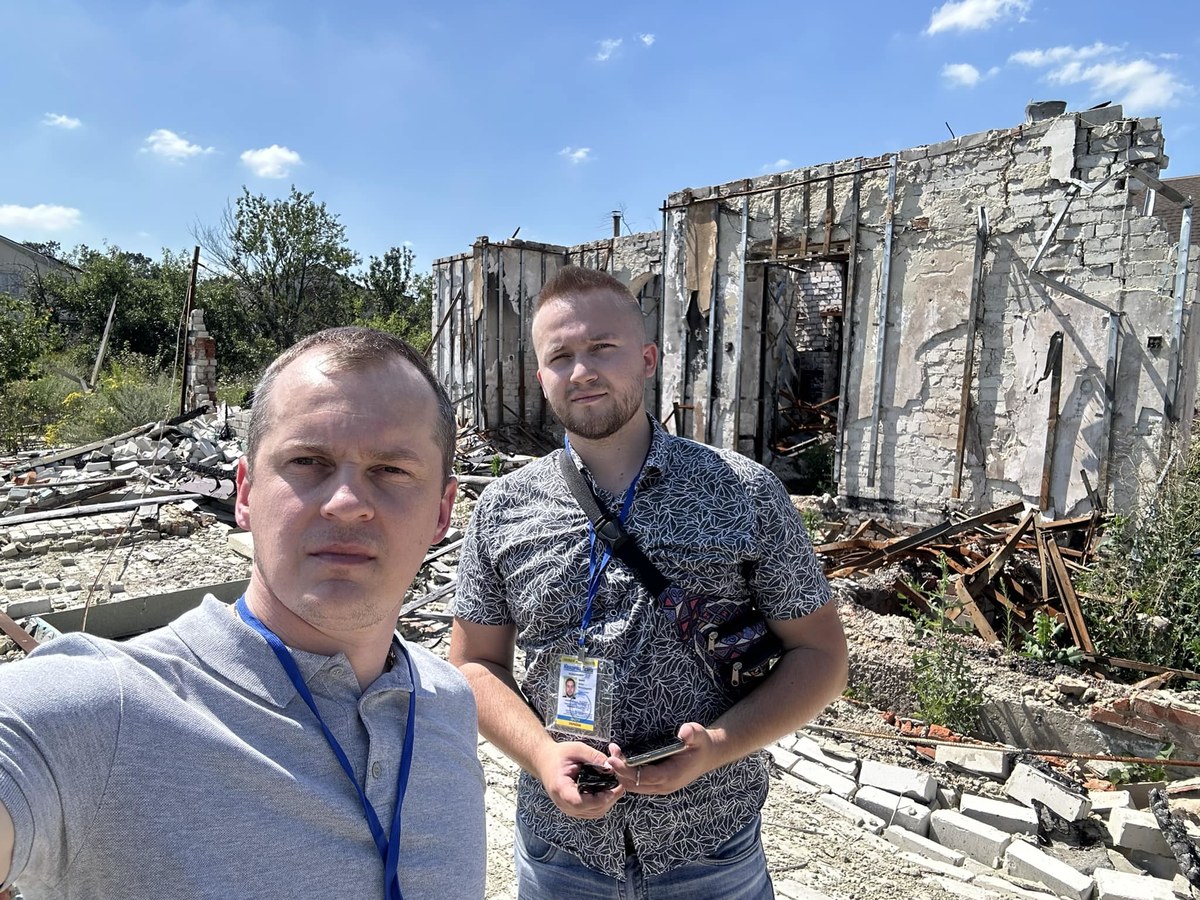
Attorney at law Roman Chumak near a destroyed house in Kharkiv region. Photo from his Facebook page
To illustrate the point, the attorney mentioned, in particular, a number of rulings of the Kharkiv Regional Commercial Court on the claim of Ukrainian companies against the Russian Federation for damages. ‘These cases demonstrate that eyeWitness to Atrocities is an effective tool for documenting war crimes and is used in trials at both national and international courts,’ says Roman Chumak, whose office in Kharkiv was also destroyed by enemy shelling.
Meanwhile, Dmytro Hladkyi says that while working in the field, he encountered situations where quick crime footage was critical, and this tool helped prevent the loss of important evidence.
«In addition, by engaging with other human rights defenders, we were able to collect and submit evidence for further scrutiny by international courts. Given the ongoing hostilities, the role of such digital tools will only grow,» the attorney believes.
CyberLab’s executive director, Serhiy Denysenko, also argues that such an application is essential for Ukrainians to record any property damage they have suffered in order to seek redress. «Every incident — an incoming strike among others — must be recorded in some way. This is especially true for citizens who are closer to the line of contact, in the frontline areas, because law enforcement authorities there cannot always arrive at the scene of the incident to properly collect evidence. If you have captured this, you can then file for damage recovery, especially since you do not carry this evidence in your phone, but it is already stored on eyeWitness servers,» Mr. Denysenko emphasises.
True, as always, there is a flip side to the coin — given the number of war crimes recorded in Ukraine as of the end of 2024 neared 150,000, and the Prosecutor General’s Office reported that law enforcement officers record 200-300 war crimes daily, this massive amount of information could swallow Ukraine’s law enforcement and judiciary like an avalanche. In fact, it has already happened.
How the electronic database of war crimes works, which itself forms a hierarchy of suspects and allows you to build criminal cases. We talked to those who fill it
Our journalist received a proposal on Telegram to «set fire to a TCC car.» What does this «game» look like and how much money are the criminals offering?