Хочете будувати кар’єру в Data Science та AI? Vodafone Big Data Lab відкриває новий набір —>
Марія БровінськаAI Eng
9 September 2026, 09:33
2026-09-09
Ukrainian company AEROSTRATEG is developing an AI platform for aerospace and defense engineering — already working with 12 defense industry enterprises
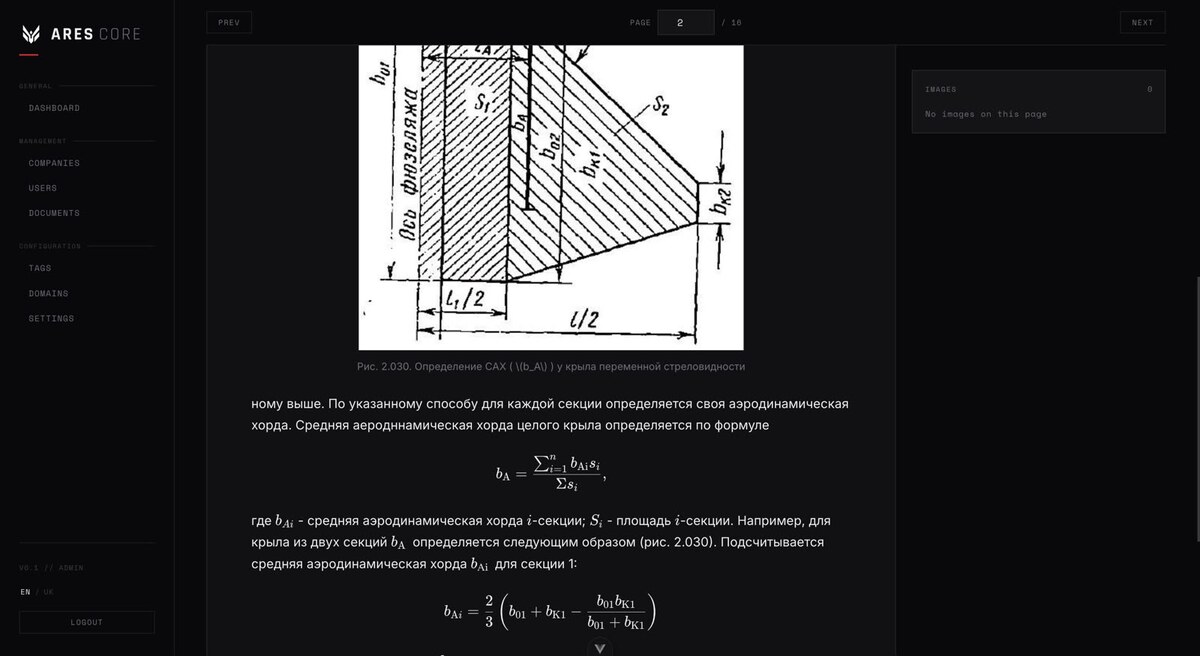
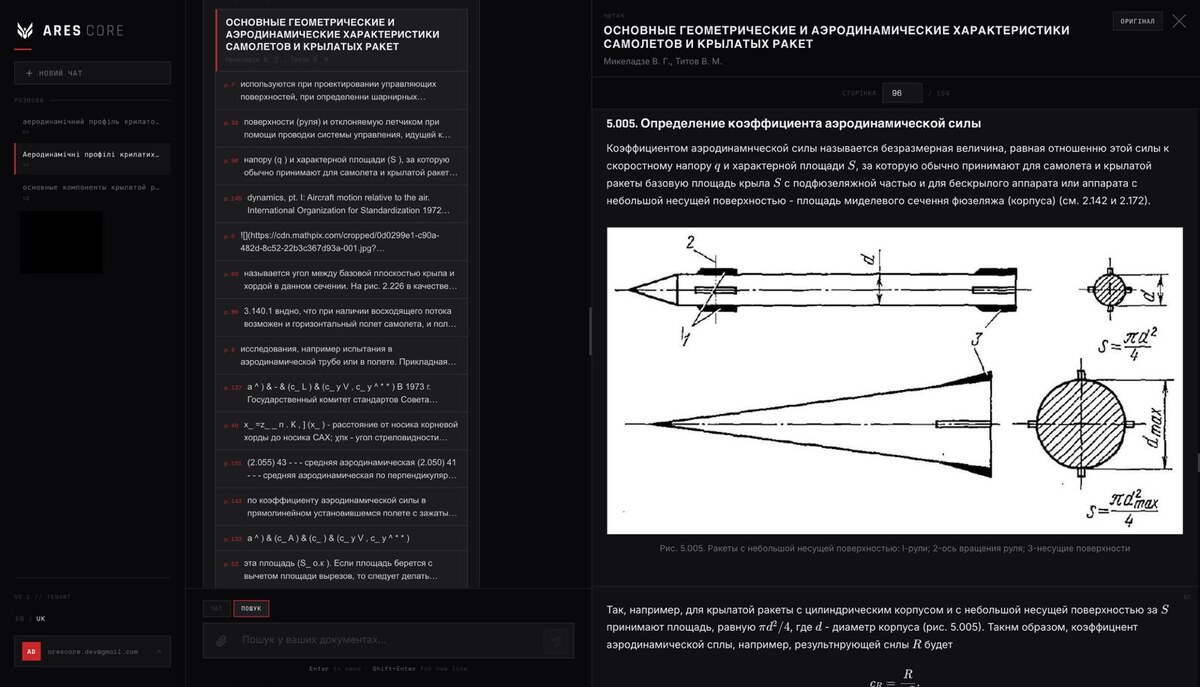
Ukrainian deeptech company AEROSTRATEG, founded in Kyiv in January 2026, is developing Ares Core — an AI-native platform for aerospace and defense engineers. According to the company’s director Volodymyr Mitasov, the product is already being tested by 12 Ukrainian defense-industrial complex enterprises, and the company has two signed commercial SaaS licenses and is preparing two more installations of local hardware and software complexes for industrial customers.
Ukrainian deeptech company AEROSTRATEG, founded in Kyiv in January 2026, is developing Ares Core — an AI-native platform for aerospace and defense engineers. According to the company’s director Volodymyr Mitasov, the product is already being tested by 12 Ukrainian defense-industrial complex enterprises, and the company has two signed commercial SaaS licenses and is preparing two more installations of local hardware and software complexes for industrial customers.
How the idea came about
The impetus for the creation of Ares Core was the team’s acquaintance with the German company LEAP 71 and its Noyron system in the summer of 2025 — it showed an alternative direction of application of AI to chatbots: not working with text, but computational engineering and the creation of physical objects. This prompted the founders to combine a modern AI stack with their own expertise in aerospace and defense engineering.
The company emphasizes: Ares Core is not a competitor to ChatGPT, Claude or Gemini and is not a «fine tune» of a ready-made model. Universal language models are optimized for working with text, while an engineer needs a system that can correctly operate with requirements, regulatory documentation, formulas, geometry and simulation results — that is, data where probabilistic generation of LLM creates a risk of errors. Therefore, in the Ares Core architecture, the language model is responsible only for task interpretation, search and reasoning, and the numerical calculations themselves are performed by separate deterministic computing tools in Python, the results of which undergo a separate verification stage.
Technology: from GraphRAG to custom foundation models
Technically, the current version, Ares Core 1.0, Mitasov told dev.ua, is an agentic GraphRAG system with hybrid search (a combination of BM25 and semantic/vector search), a specialized knowledge base, and a separate layer of deterministic calculations. In parallel, the company is developing knowledge graphs and direct integrations with engineering software — currently with SolidWorks, with ANSYS and MATLAB in the plans.
The product roadmap looks like this:
Ares Core 1.0 (current version) — AI that finds, analyzes, and explains engineering information, helps with calculations, and searches for options.
Ares Core 2.0 — proprietary specialized foundation models for the engineering domain that combine language modeling with physics-aware calculations.
Ares Core 3.0 is the company’s long-term goal: Artificial General Engineer (AGE), a system capable of independently decomposing requirements, generating and evaluating design options, running simulations, and forming a validated digital twin of the product.
Knowledge base and data security
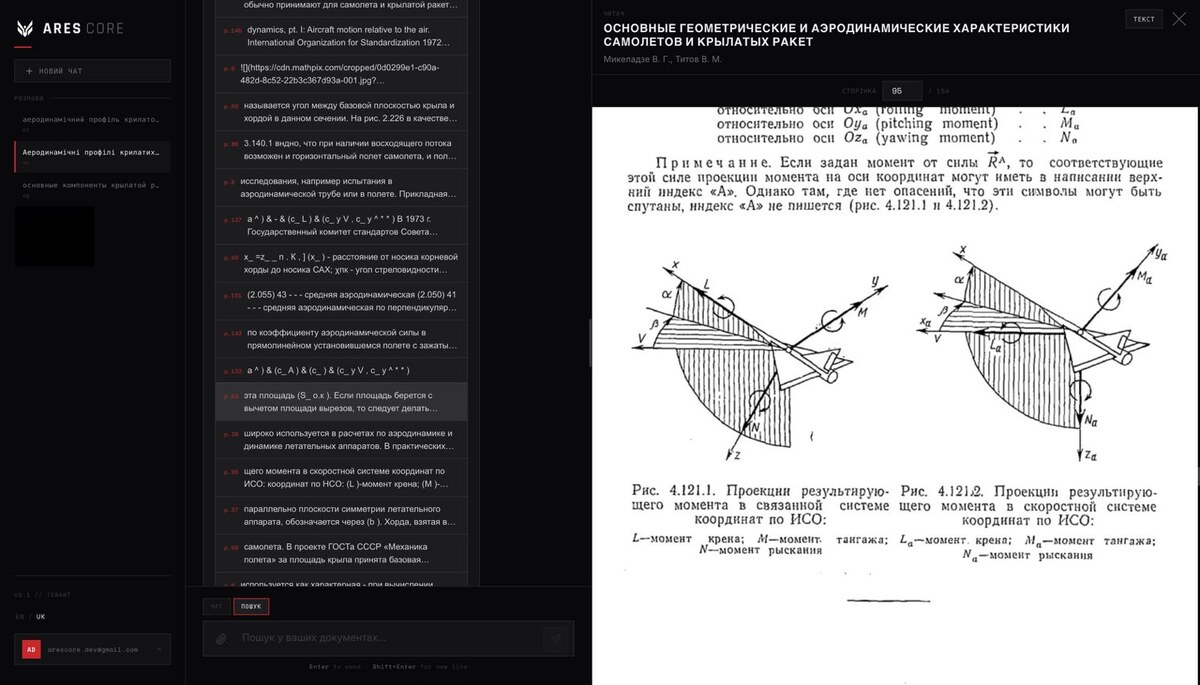
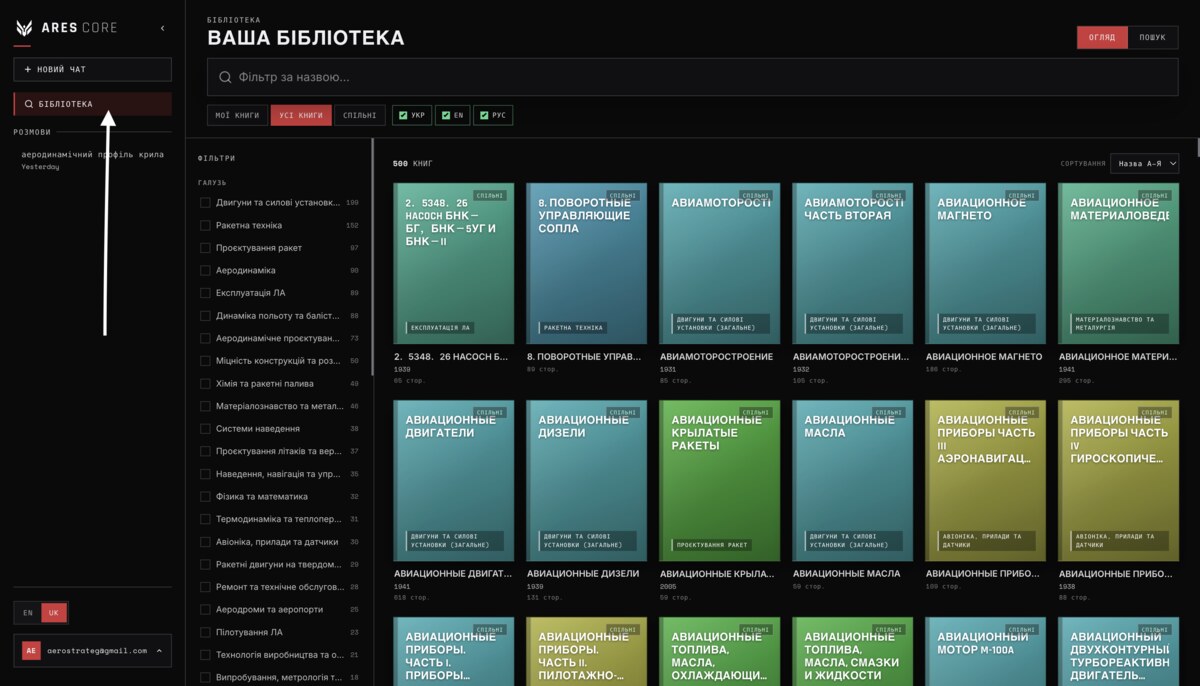
The company, according to Mitasov, is forming its own specialized technical corpus of scientific publications, standards, dissertations, and reference books — the collection of materials began in 2022–2023, and the process became systematic in 2025. Specialized OCR is used for complex engineering documents (with formulas, tables, drawings). The data is divided into classes — open materials, licensed content, own and partner data, customer data — so that proprietary information from one client does not end up in the common corpus.
For the defense sector, AEROSTRATEG focuses not on «no filters,» but on control: the product can be deployed in an air-gapped environment — with data isolation, role-based access control, action auditing, and no connection to the external Internet. A typical initial implementation of such a local complex takes about a month, depending on the client’s data volume and information security requirements.
One of the cases cited by the company is the use of Ares Core 1.0 in a deep modernization of a complex air defense product: the engineering group processed 95 application calculation requests through the system, using it to search for technical information and compare solution options, which, according to the team, significantly reduced part of the previous engineering research.
Business model and financing
AEROSTRATEG uses a hybrid monetization model — SaaS access via the company’s cloud infrastructure and enterprise on-premise/air-gap turnkey hardware and software. For a defense company, a SaaS subscription costs an average of $5,000–10,000 per month, depending on the volume of data, number of engineers, and level of integration.
The product has already been developed with over $400,000 of the founders’ own funds, derived from the company’s other businesses, invested in the product, primarily for payroll, R&D, and technology infrastructure. The company is now raising external capital and grant funding to transition to Ares Core 2.0 development.
Team
The team consists of 15 specialists, united in two directions: AI/software department (Architects of GraphRAG systems, ML engineers, backend developers) and R&D department (design engineers, specialists in strength and aerodynamics, largely graduates of the specialty «Aviation and Rocket and Space Engineering»).
Mitasov says that Ares Core is built on the human-in-the-loop principle — the system takes on the routine (information search, analysis of standards, initial synthesis of options), but the final engineering decision and responsibility for the product remain with the person.
Development plans
The priority market for the company is the Ukrainian aerospace and defense sector; after product validation in Ukraine, AEROSTRATEG is considering entering partner countries and dual-use segments (UAV, robotics, industrial engineering, energy). The company plans to enter international markets exclusively within the framework of current legislation and export control.
The company develops partnerships in four areas: technology partners (GPU and compute infrastructure), knowledge partners (specialized universities and scientific institutions, among the landmarks are KPI and Kharkiv Institute of Technology), industrial partners (defense and aerospace enterprises), and capital partners (strategic investors). The company notes that it fundamentally does not cooperate with entities associated with an aggressor state, capital of unclear origin, or structures that cannot provide adequate protection of defense information.
A Ukrainian military man has developed a program for working with coordinates — instant conversion, quick viewing, and mass marking. How the Stepan system works