

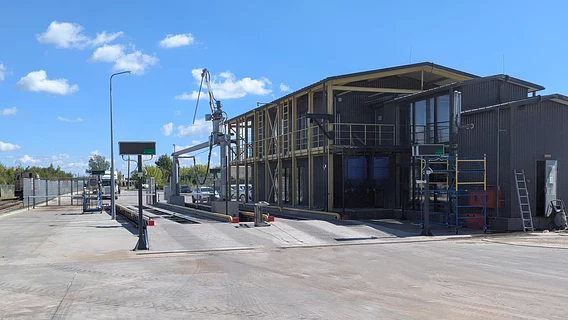
NFC cards instead of paper tickets. How the automated Kernel elevator works without scales, unnecessary movements and piles of waste paper
NFC cards instead of paper tickets. How the automated Kernel elevator works without scales, unnecessary movements and piles of waste paper
Ten years ago, the process of loading and unloading grain elevators (granary) "Kernel" by grain trucks worked according to a linear analog algorithm. The guard at the checkpoint registered the car, the driver received a registration ticket and went to the weigher, the laboratory manually recorded the quality of the grain, the driver got out of the car several times and "walked in circles", and at the exit from the elevator the guard checked whether anything "superfluous" was being taken out. Everything was accompanied by paper tickets, queues and the risk of errors. Now the process has changed dramatically: the driver does not leave the cab at all, documents are signed with an electronic signature, and the human factor in the process of cargo clearance is minimized.
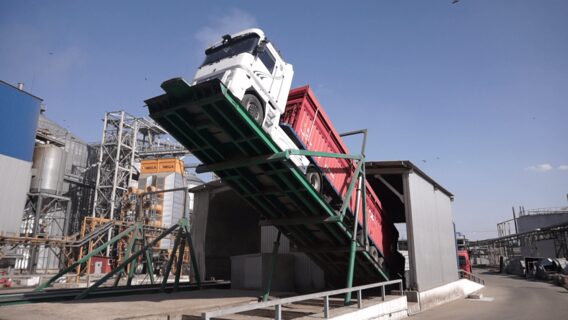
How Kernel made traffic flows at production facilities predictable with TransitHUB
How Kernel made traffic flows at production facilities predictable with TransitHUB
A few years ago, at night, there were queues of grain trucks under the Kernel elevators — dozens of cars at once. The drivers spent the night in the cabins, and a guard with a flashlight counted the cars and made sure that no one got ahead. A truck could stand under the gate for up to three days: the carrier did not earn money during this time, the company overpaid for downtime, which was included in the tariff by contractors, and the company did not understand when exactly the raw materials would arrive.
Today, this picture is no longer there. But, as it turned out, removing the live queue turned out to be a much more difficult task than simply «making slot reservations.» Over six years, Kernel’s internal platform for managing transport logistics — TransitHUB — has grown from a simple electronic recording tool into a highly critical production system, on which the reception and shipment of 30 elevators, 6 factories and 5 terminals depend, and it is used by about 50,000 drivers.
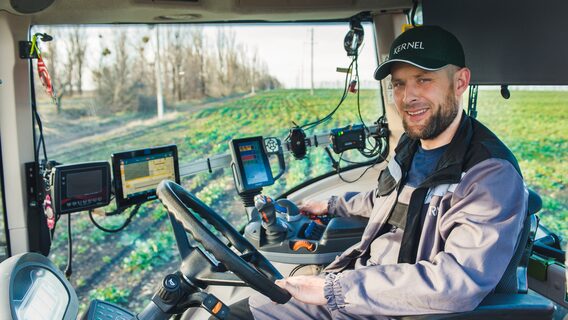
Real-time field monitoring. How Kernel built a digital system for 7,000 pieces of equipment
Real-time field monitoring. How Kernel built a digital system for 7,000 pieces of equipment
Harvesting in a large agricultural holding involves 7,000 units of machinery in simultaneous motion: combines, grain trucks, loaders. Each machine generates data streams every second — GPS, fuel level sensors, engine speed and temperature, auger, loosening depth, wind speed, and air temperature. Altogether, these are tens of millions of signals every day.
1 comment
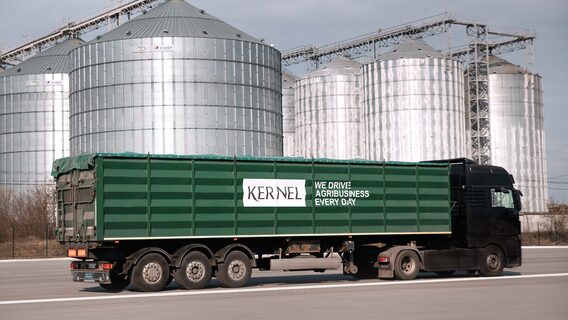
How Ukraine's largest agro-tech holding got rid of hundreds of thousands of paper invoices — and why drivers don't want to go back to paper anymore
How Ukraine's largest agro-tech holding got rid of hundreds of thousands of paper invoices — and why drivers don't want to go back to paper anymore
Every year, 2 million documents pass through the Kernel system. A few years ago, each of them existed on paper — and could be lost, have incorrectly entered data or discrepancies in the weight of the goods, which caused a delay in the entire delivery. Today, 65% of these documents exist only in digital form. And drivers who once transferred pieces of paper at weigh stations now sign consignment notes on their phones.
For several years, Kernel has been actively implementing electronic waybills (eWBLs) in all chains of transportation of sunflower seeds, grain, oil, etc. This is not just a technical feature, but a real change in the culture of document flow in the agricultural sector. The goal was simple: less paper, more transparency and speed in the formation and accounting of primary documents.
4 comments
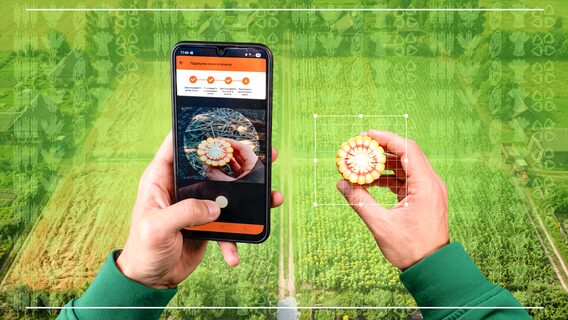
"Kernel" counts seeds by photo and builds logistics for 500,000 variables in 8 minutes. How the agrotech platform works
"Kernel" counts seeds by photo and builds logistics for 500,000 variables in 8 minutes. How the agrotech platform works
An agronomist takes a photo of a corn head and within seconds receives a grain count along with a yield forecast. A logistician opens the system in the morning and within 8 minutes has a crop transportation plan for the fields, elevators, and port. This sounds like a set of separate AI features. In fact, it is one system.
For eight years, Kernel has been developing its own Digital Agribusiness (DAB) — a web and mobile platform with a microservice architecture on the backend, which combines 6 separate projects — from crop planning, agricultural operations, calculation of fertilizer rates to logistics, analytics, and Data Science models.
Its task is not just to collect data, but to answer key business questions: how much to invest in a season, what yield to expect, how not to lose it during the growing process, and how to track what is really happening in the fields or individual areas.
dev.ua is launching a project in which, in partnership with the largest Ukrainian agricultural holding, Kernel, talks about the most modern technological solutions in agriculture that increase the efficiency of agricultural production and simplify the work of farmers.





