The end of the era of human websites. Why Rozetka, Prom and Comfy will be forced to adapt to robots
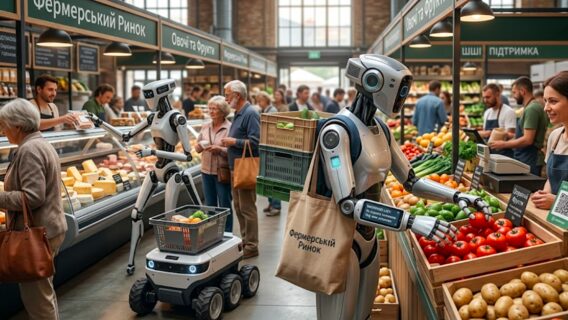
We have always built the world for ourselves. Now we will have to rebuild it for robots. AI agents see the world differently. So when we start using them actively, the old marketplace architecture simply will not work for them.
We have always built the world for ourselves. Now we will have to rebuild it for robots. AI agents see the world differently. So when we start using them actively, the old marketplace architecture simply will not work for them.
Artificial intelligence doesn’t perceive a website the way humans do. And merchants will have to invest millions in redesigning to stay competitive. This is one of my main insights from the Visa Payments Forum in Paris, which I attended. This is a large-scale event that brings together thousands of partners from one of the largest payment infrastructure owners in the world. And Visa’s top managers share their vision there: what exactly awaits us next.
«When I was little, I wanted to be a journalist,» said Godfrey Sullivan, Senior Vice President of Products and Solutions at Visa in our region, during his speech. He explains his childhood desire by saying that journalists are always watching for changes, and now is the time for global shifts. So, they say, media people are lucky. Well, I would argue with this thesis, but I must admit: if everything develops as Visa plans, then a technological, business, and behavioral shift in society is indeed inevitable.
Privat and mono in the game: customers will have fun
Where does it all start? Visa is now waiting for the first banks to adapt to AI agents. And two Ukrainian giants — PrivatBank and monobank — have already been included in this pilot program. They will be the first to receive the appropriate tools and the first to test them on users. So, Privat and mono clients, you definitely won’t be bored in the near future.
And if banks are ready to work with AI, then e-commerce will have to adapt too. Hello, Rozetka, Prom, Comfy, Allo and everyone else!
And this transformation will be painful. The modern world is used to the classic funnel: a person sees an advertisement for a product, goes to a website, makes a final choice, and buys from a card tied to a digital wallet.
The future looks different: a bot orders goods online instead of a person according to a certain algorithm. It is not yet entirely clear how this will kill the traditional online advertising market. A bot has no eyes or emotions, it operates purely according to code. Most likely, some goods will continue to be sold on an emotional principle (where a person decides). At the same time, routine, predictable costs will completely go to our digital assistants.
Digital brain cast
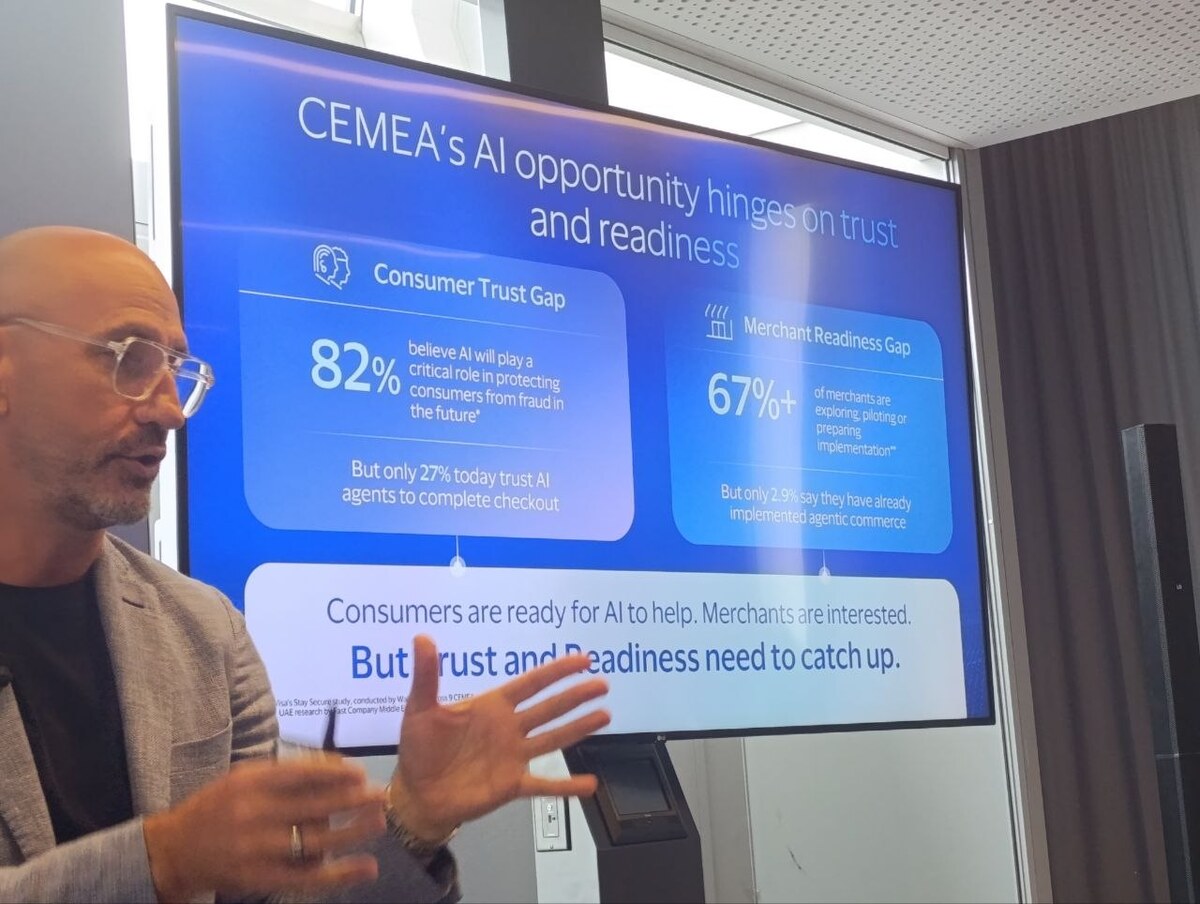
There is currently a lot of skepticism about whether people are even capable of entrusting online purchases to an agent. Visa research clearly demonstrates this: only 27% of people surveyed in our region are ready to delegate the finalization of online purchases to bots. And only 2.9% of online sellers have already implemented commerce with the ability to integrate AI agents .
There is still a critical lack of trust. Remember when people used to withdraw all the cash from their cards on payday? They were afraid to leave money in «digital» form. Somewhere at this stage we are now in relations with AI agents. The first swallows already exist, but they are viewed as point experiments. However, it is quite easy to imagine the tasks that a bot can perform instead of me.
The simplest case: I have a fixed budget for food for a month. «Dear bot, please plan my purchases at Silpo so that this amount is guaranteed to last me for 30 days.»
The bot knows what I’ve bought over the past year because it has access to my card details and transaction history. In a sense, it has a digital mold of my brain and my consumer behavior. And now its job is to make it a little more rational (with my consent, of course).
«Bot, plan my diet more economically, order everything I need, but wisely. I want to spend 20% less on food to save for a vacation. Calculate the amount I need to travel to Odessa for a couple of weeks without going over my credit limit, and put it aside little by little. Is this even possible? Bot, be human, help! :) Block my card for more than 500 UAH when I go to a bar in the evening. Otherwise, you and I will not go anywhere.»
Shifting responsibility
Remember when people wrote en masse that they use ChatGPT as a psychologist? Well, there’s no reason why they wouldn’t start using AI agents as personal financial advisors. It’s just easier that way. The AI world of the near future is, to some extent, about shifting responsibility from yourself to artificial intelligence. «It knows me better than I do, so let it decide.»
Even the savings scheme I described seems to be simple. But how many people «fall» into the trap of trivial family budget planning and consistently end up in the red? Is it a familiar story? Does it hurt?
This can be solved with automation. So my prediction: AI agents in banks and e-commerce will appear very quickly. There is a demand for this. It is somewhat hidden for now, but there is a big pain behind it, and it is about money.
One of the speakers joked at the forum that similar AI agents will soon appear in the tax office. This will make it easier for tax officials to understand their «clients», their real expenses and earnings. Banking secrecy is still in effect in Ukraine with quite serious restrictions on access to citizens' and businesses' data. However, in the coming years, the government intends to undermine this wall and gain access to sensitive information.
And here, I’m afraid, lies the main risk: if this wall is torn down and the tax service’s AI agents start counting every penny too meticulously, Ukrainians will quickly find their asymmetric protection. Digital money will simply flow en masse back into good old cash.