Хочете будувати кар’єру в Data Science та AI? Vodafone Big Data Lab відкриває новий набір —>
Олег ОнопрієнкоAI Eng
22 September 2026, 11:01
2026-09-22
“AI should remain under human control.” 20 countries demand the creation of a global regulator for artificial intelligence
Leaders from 20 countries have issued a joint statement calling for increased oversight of advanced artificial intelligence systems and the creation of a new global body to oversee them. The initiative includes mandatory testing of neural networks before release and the development of common international safety standards.
Leaders from 20 countries have issued a joint statement calling for increased oversight of advanced artificial intelligence systems and the creation of a new global body to oversee them. The initiative includes mandatory testing of neural networks before release and the development of common international safety standards.
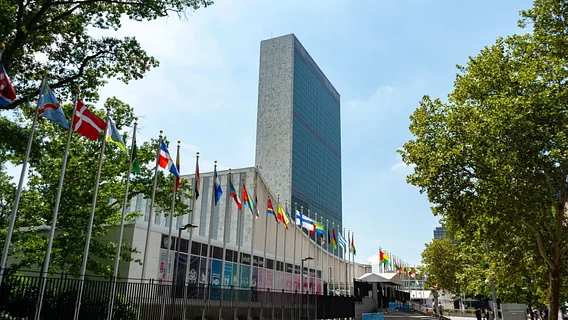
As NBC News notes , the document was published by the President of Finland on the eve of the start of the debates of the UN General Assembly. Interestingly, key players in the technology market, representatives of the United States, Great Britain and China, refrained from signing this statement.
The signatories include heads of government and state from Canada, Kenya, the Netherlands, Australia and South Africa, as well as senior officials from Turkey and the UAE. In a joint statement, they emphasize that the rapid development of artificial intelligence and cases of ignoring security systems require coordinated action around the world.
"AI must remain under human guidance, supervision and control. It must be developed and used in accordance with international law," the appeal states.
The authors of the initiative put forward three key proposals. First, they require companies to test AI systems for safety before public release and allow independent experts to assess risks. Second, they call on governments to develop common safety standards so that all countries have the expertise to evaluate AI models. The main demand is the creation of an international institution that can set rules, conduct inspections and convene states in cases where technologies cross the “boundaries of permitted capabilities.”
Nick Moes, executive director of the nonprofit organization The Future Society, emphasized in a comment to the publication that no government can regulate this area on its own. However, according to him, in addition to loud statements, it will take the mobilization of diplomatic, political and financial capital to maintain control over advanced AI models.