Хочете будувати кар’єру в Data Science та AI? Vodafone Big Data Lab відкриває новий набір —>
Марія БровінськаHot News
10 July 2025, 09:10
2025-07-10
There's nothing to breathe. How to determine the level of air pollution and what to do when the city is drowning in smoke after shelling
Kyiv residents are once again experiencing air quality problems in the Ukrainian capital: visibility has significantly deteriorated, a strong smell of smoke has appeared in certain areas, and breathing has become difficult. The reason for this phenomenon is another Russian shelling, which has caused numerous fires in various areas of the capital and in some places has led to pollution levels exceeding the norm by dozens of times. We remind you of what you need to know about air quality and what useful tools are available for monitoring it.
Kyiv residents are once again experiencing air quality problems in the Ukrainian capital: visibility has significantly deteriorated, a strong smell of smoke has appeared in certain areas, and breathing has become difficult. The reason for this phenomenon is another Russian shelling, which has caused numerous fires in various areas of the capital and in some places has led to pollution levels exceeding the norm by dozens of times. We remind you of what you need to know about air quality and what useful tools are available for monitoring it.
Data on air quality in Kyiv after Russian attacks
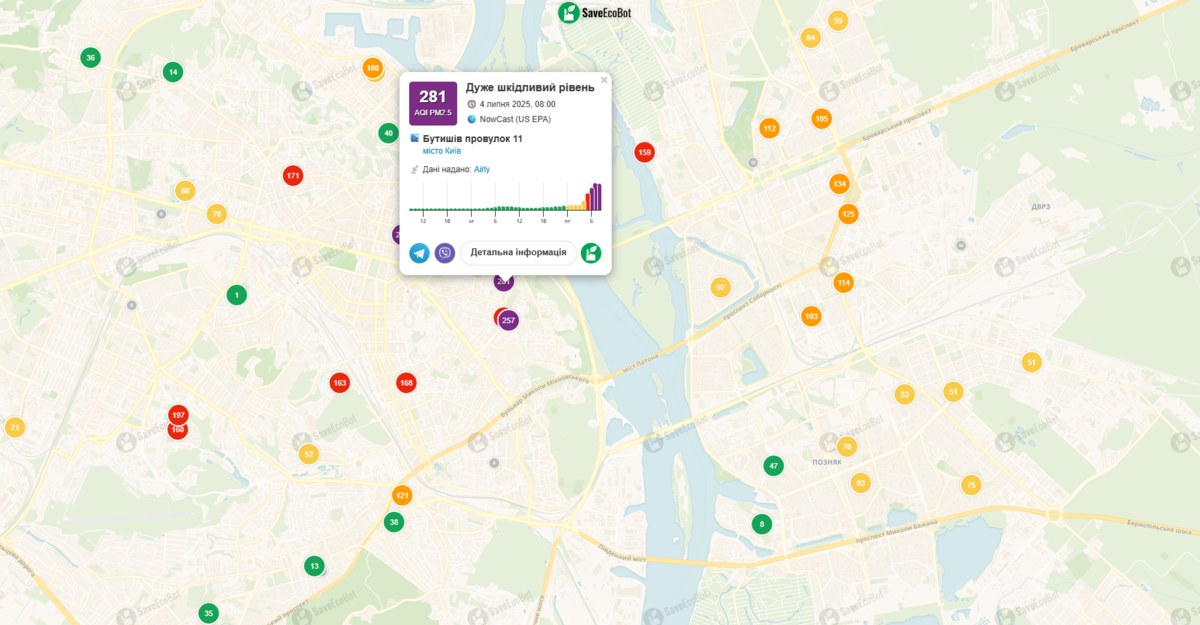
Data on air quality in Kyiv on July 4
On the night of July 4, Russia launched a massive attack on the Ukrainian capital with ballistic missiles and kamikaze drones. As of this morning, more than 20 people were injured and numerous fires were reported, including in the Sviatoshynskyi, Solomyanskyi, and Shevchenkivskyi districts of the city.
According to the SaveEcoBot service, a number of districts in Kyiv are currently experiencing very harmful levels of air pollution. The worst situation is in the Pechersk district, where the air quality index is recorded at 281.
Screenshot from the SaveEcoBot website
The situation is not much better on Knyaziv Ostrozkyh Street (quality index 257), Khreshchatyk (210) and Volodymyrsky Uzviz (208).
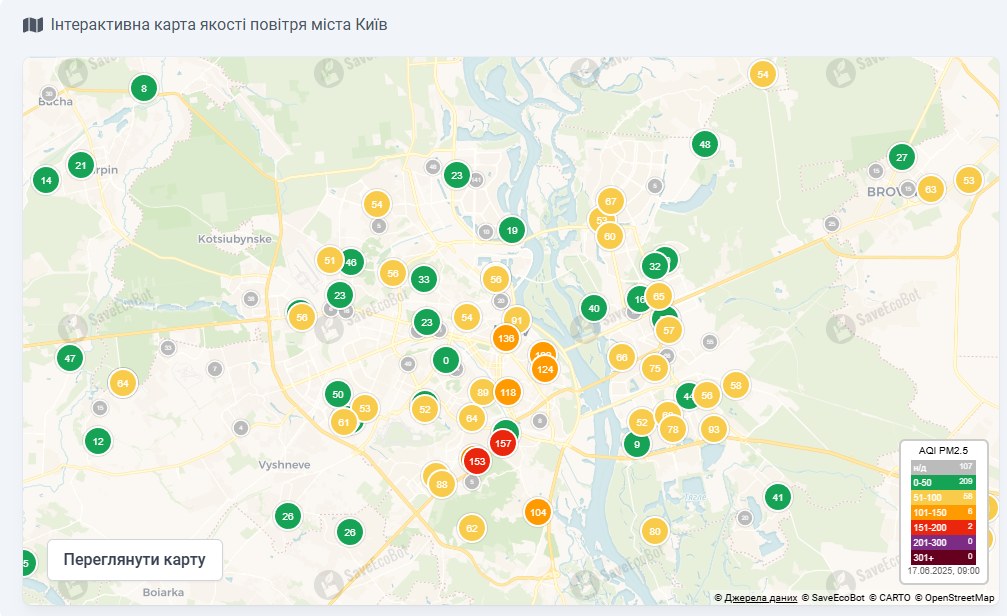
Data on air quality in Kyiv on June 17
On the night of June 17, the Russians used about 175 drones, more than 14 cruise missiles and at least two ballistic missiles, the KMVA says. Currently, 14 people are known to have died and 99 were injured, another 55 were wounded. The greatest damage was caused to houses in Solomyansk and Darnytskyi districts.
At the same time, a moderate level of air pollution was recorded in Kyiv. According to the SaveEcoBot website, in some areas the air quality index reached 160.
Screenshot from the SaveEcoBot website
If the index reaches 101, this air condition is harmful. The most polluted air is in the Holosiivskyi district.
Data on air quality in Kyiv on June 10
As reported by the Ministry of Environmental Protection and Natural Resources, in Darnytsia district the level of air pollution is locally elevated. In other districts of the city the level of air pollution is low. All indicators in these districts are significantly lower than the maximum permissible concentrations.
The Kyiv City Council, citing the Department of Environmental Protection and Climate Change Adaptation of the Kyiv City State Administration, reported that very low levels of pollution are observed at 5 stationary air monitoring points, and low levels at one. The average level of pollution was recorded only at one point at the address: 26 Arkhitektora Verbytskoho St. in the Darnytskyi district of the capital.
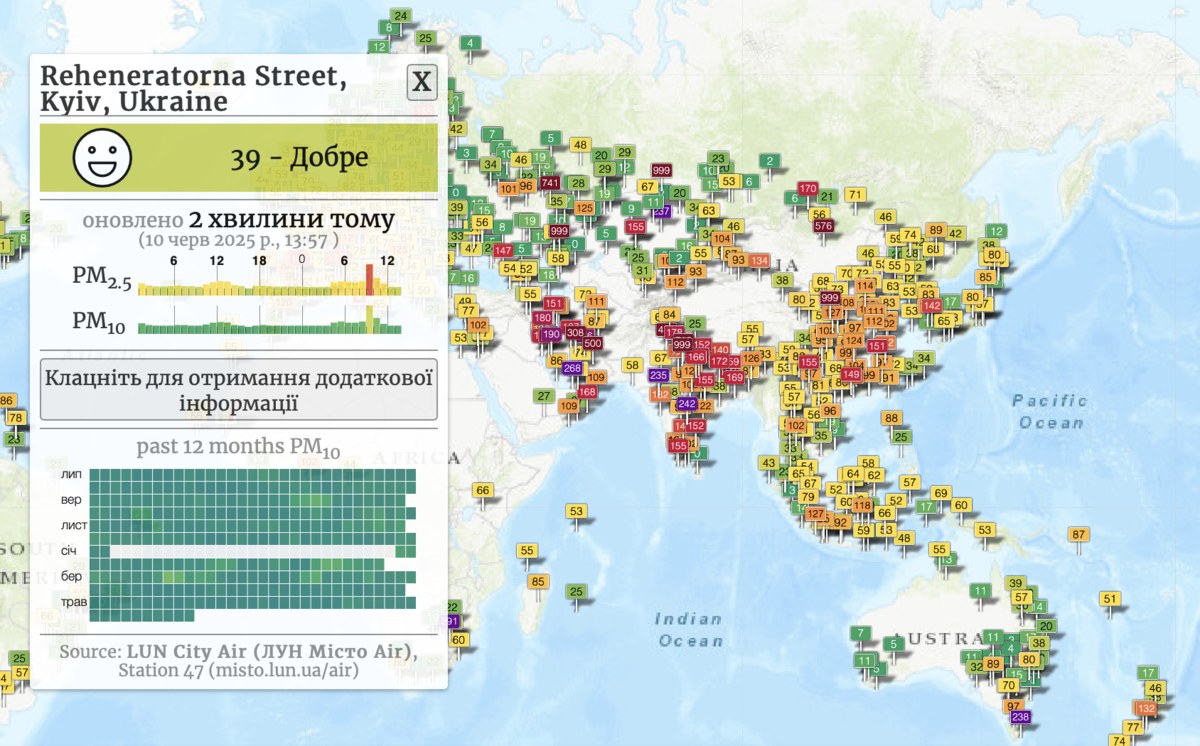
As of 12:00, the department’s map for monitoring air quality in real time looks like this: Screenshot from asm.kyivcity.gov.ua. According to the SaveEcoBot service, moderate pollution levels are recorded at 8 monitoring points, dangerous for sensitive groups at 2, and good at the rest: Screenshot from saveecobot.com. According to the EcoZagroza web resource, the air pollution map in Kyiv as of 12:00 on June 10 looks like this:
Screenshot from ecozagroza.gov.ua
At the observation point at 42/1 Nauky Avenue, the air pollution level is currently dangerous, and at 6E Trostyanetska Street, the air quality is characterized as very poor. Therefore, the Ministry of Environment recommended limiting the time spent outdoors and not ventilating the premises during the day until the situation stabilizes.
What you need to know about air pollution
Air Quality Index
This is an indicator used to inform the public in a simple way how polluted the air is now or how polluted it is predicted to be in the future and whether it poses any health risks.
Different countries have their own air quality indices that correspond to different national air quality standards. Almost every EU country has its own index, for example, in the UK — UK Daily Air Quality Index (DAQI), in Belgium — BelATMO, in Spain — CALIOPE, in the USA — EPA Air Now, but here is the World air quality index and the European Air Quality Index (European AQI), which was developed jointly by the Directorate-General for the Environment of the European Commission and the European Environment Agency to inform citizens and public authorities about the current state of air quality in Europe.
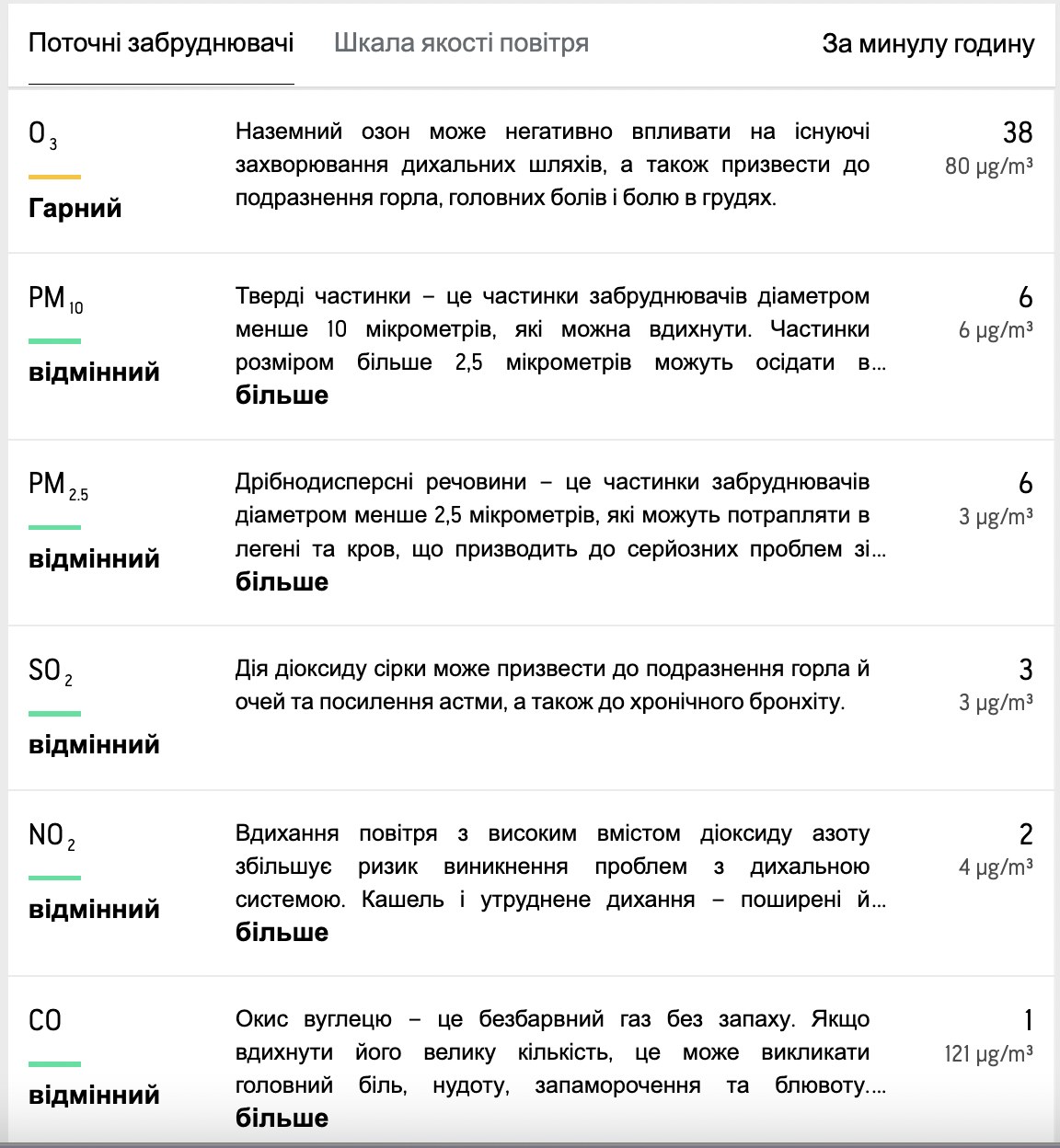
To determine air quality, several indicators are measured: O3 (ozone), NO2 (nitrogen dioxide), SO2 (sulfur dioxide), PM2.5 and PM10 (weighted particles with a diameter of less than 2.5 micrometers and 10 micrometers, respectively).
About nitrogen, ozone and sulfur, seven are known, and PM is a microscopic mixture of solid and liquid particles, which for a long time remains suspended in the air and practically does not settle. It is PM that poses the greatest risk to human health, because they penetrate the body, bypassing the natural filters of a person (skin, respiratory tract). They cause irritation of the mucous membrane, provoke tearing and sneezing. PM contains both chemical compounds (sulfates, nitrates, ammonia, formaldehyde), and biological components (various allergens, plant pollen, bacteria), tobacco and exhaust smoke.
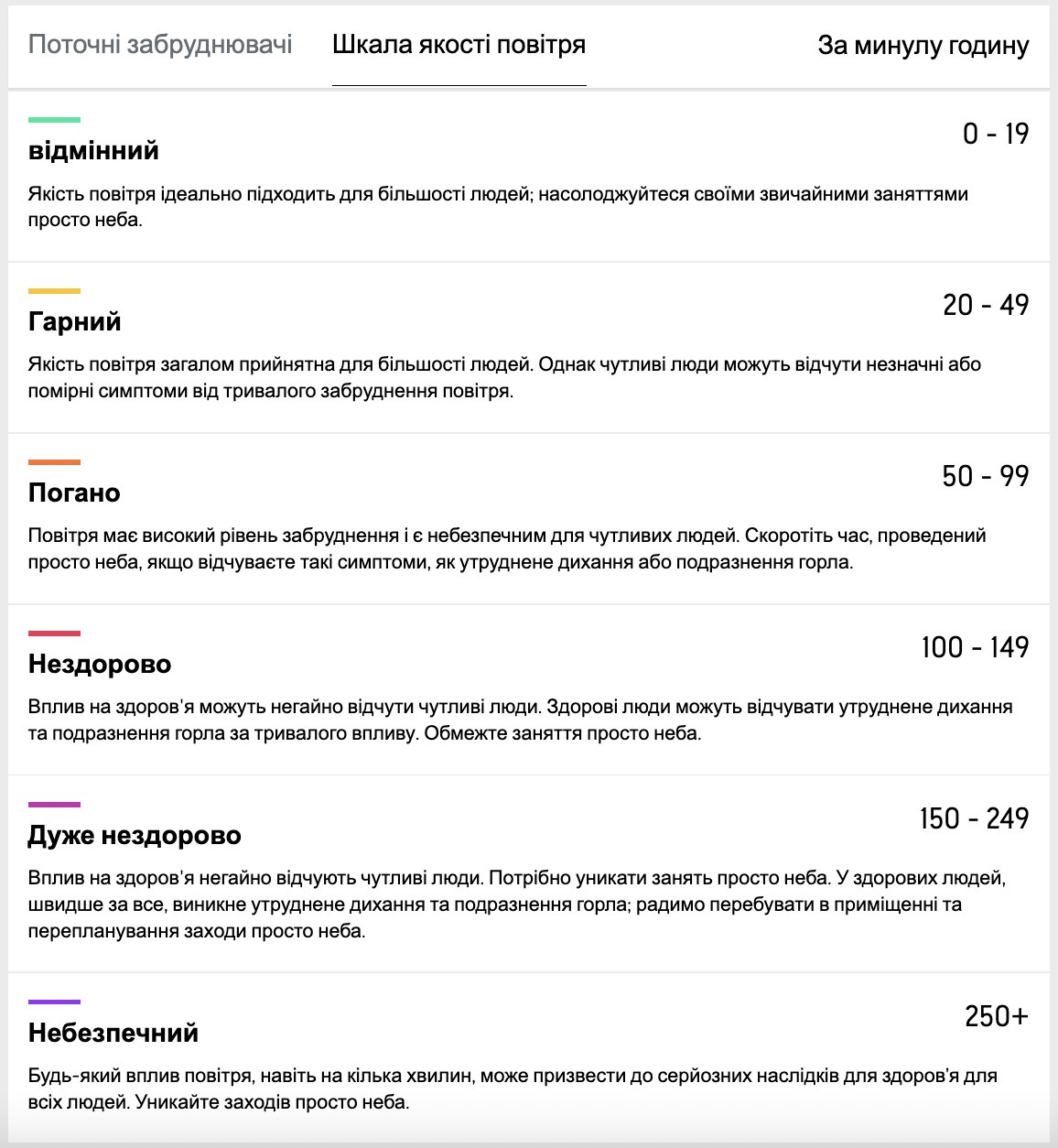
Averaged measurement indicators for a certain period of time are grouped by points and displayed on a scale from 0 to 500. In total, there are 6 categories in the scale, each of which has its own color and looks like this (pictograms have been added for easy visualization):
accuweather.com
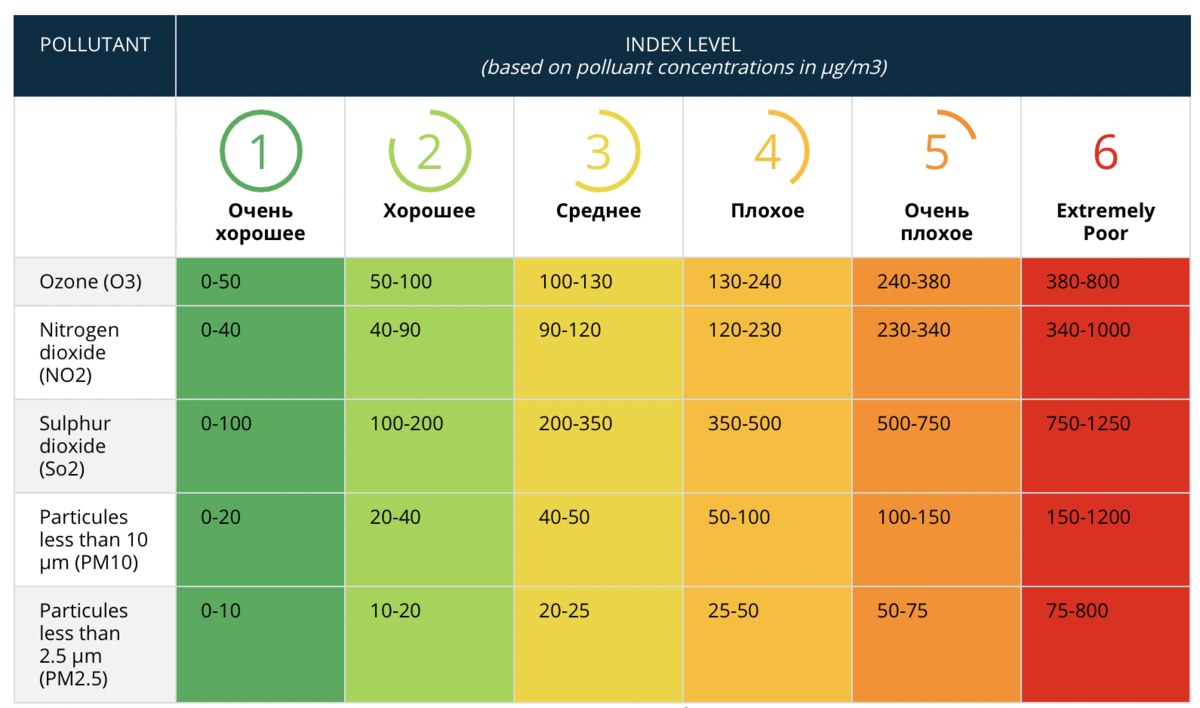
The European scale looks a little different.
How to find out about air quality online
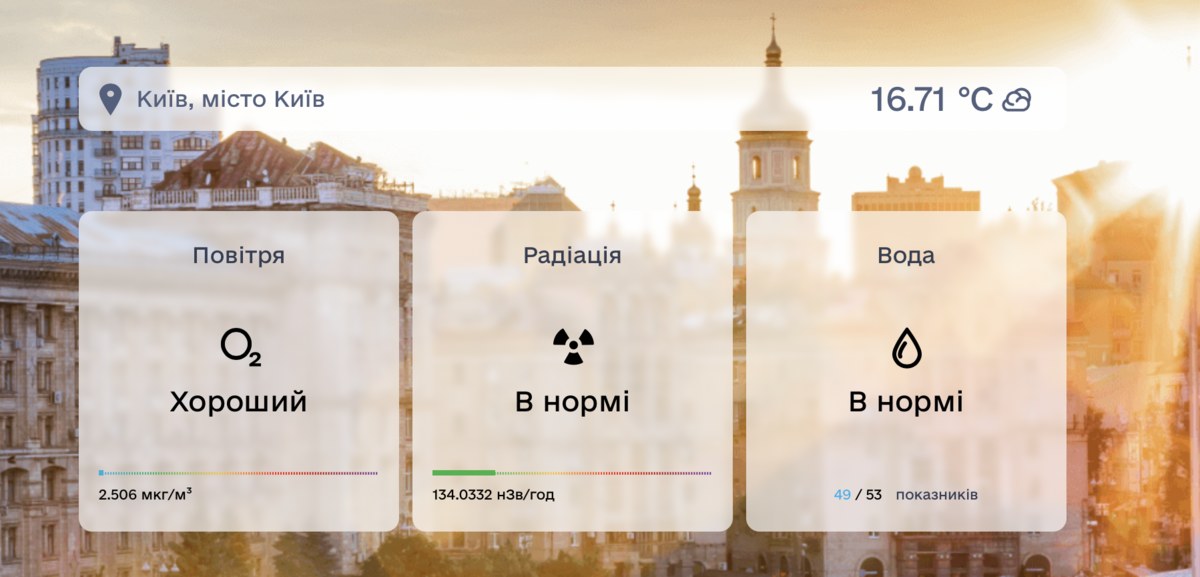
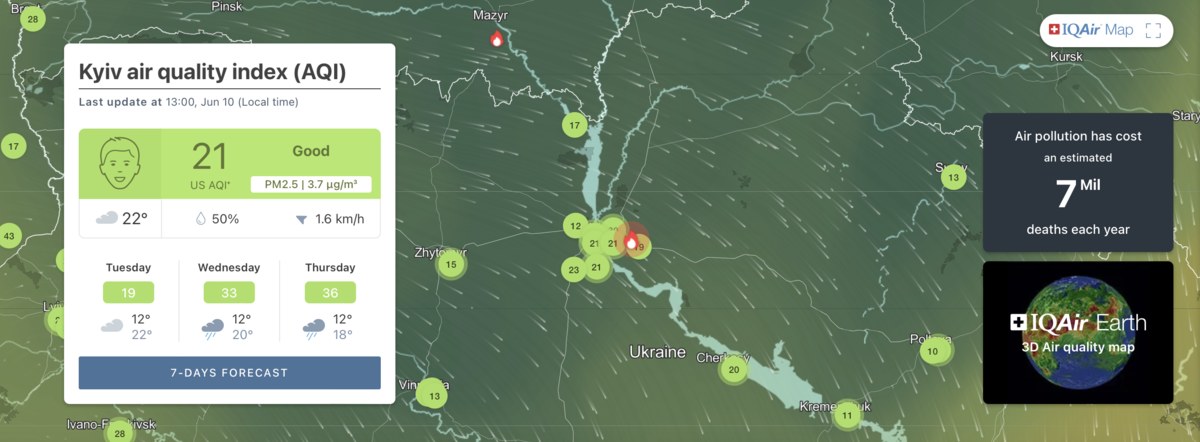
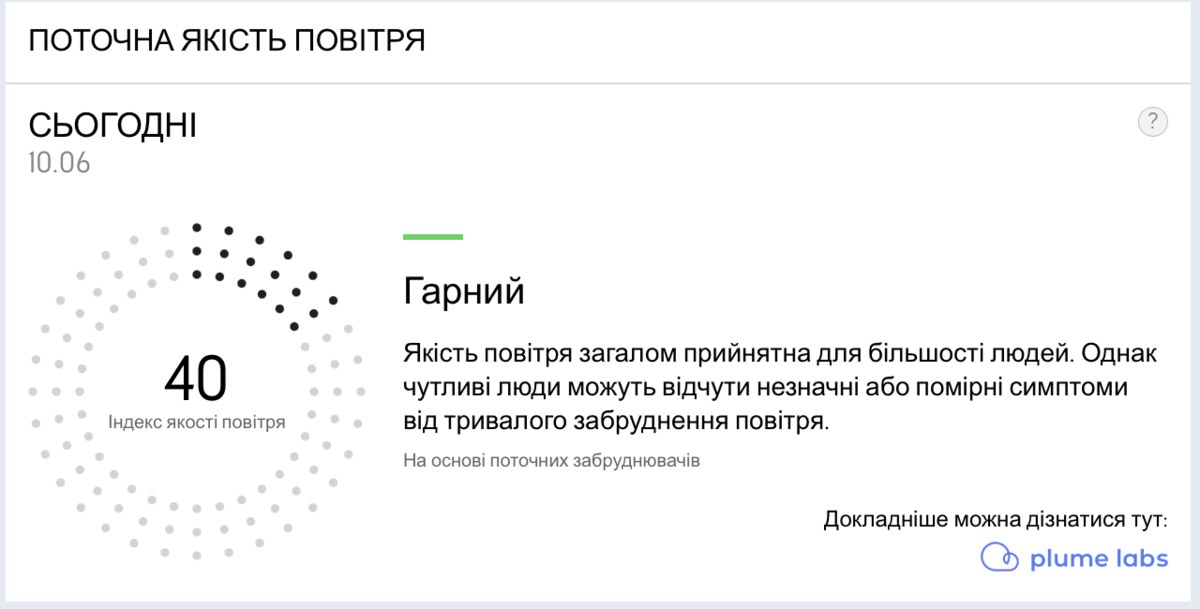
There are many resources that provide such information. We learned the indicators of several online platforms that report on the quality of the capital’s air.
Gadgets can also help us learn about the air we breathe at a specific time. In particular, global electronics developers attach great importance to the option of studying air quality and produce special devices that can analyze air in real time.
There are air quality analyzers for smart homes or mobile devices that you can carry with you. Such devices allow you to determine the level of dust, carbon dioxide, and other unwanted impurities in the air in a specific room or outdoors.
The most popular today are the following:
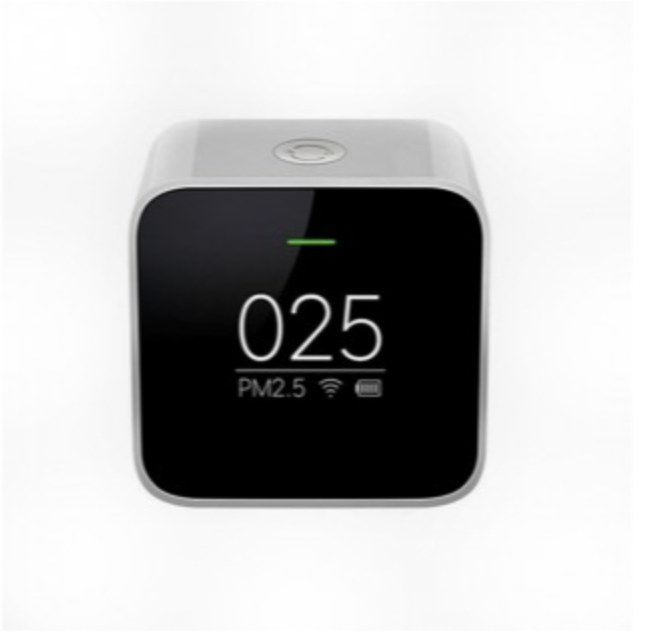
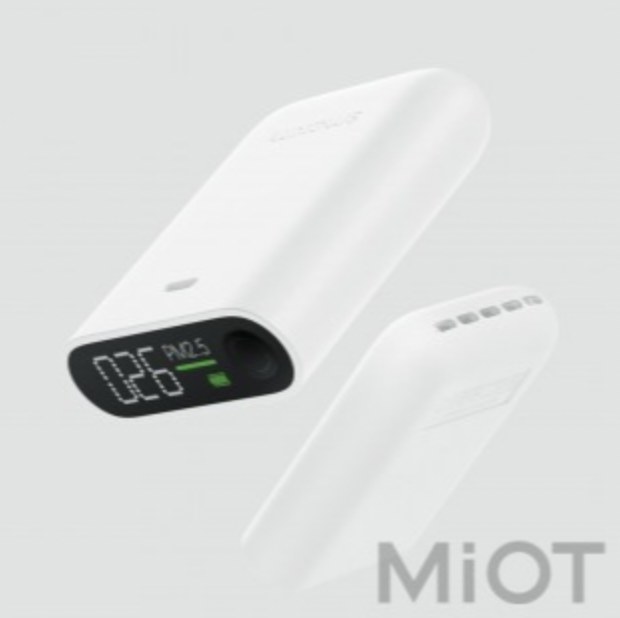
Air pollution analyzer Xiaomi SmartMi PM 2.5 Air Detector
The air quality sensor is made quite compact, it is easy to hold in the palm of your hand. In addition, the entire body is made of high-quality ABS plastic, coated with pure white spray paint, which gives the product a sophisticated appearance.
The weight of the entire sensor is only about 90.5 g, making it easy to put in your pocket and carry with you.
The Smartmi sensor has a built-in DC booster fan, which allows you to quickly «take air samples», and thanks to a high-precision laser sensor, accurately detect small particles in the air, quickly calculate the PM2.5 concentration in real time.
With a battery capacity of 950 mAh and a rated power of 3 W, the sensor is capable of producing up to 120 times of air pollution measurements (when used for no more than three minutes). If the sensor is not used for 30 minutes, it will automatically turn off.
Additionally, once the battery runs out, users can also easily charge the device via the built-in micro-USB charging interface.
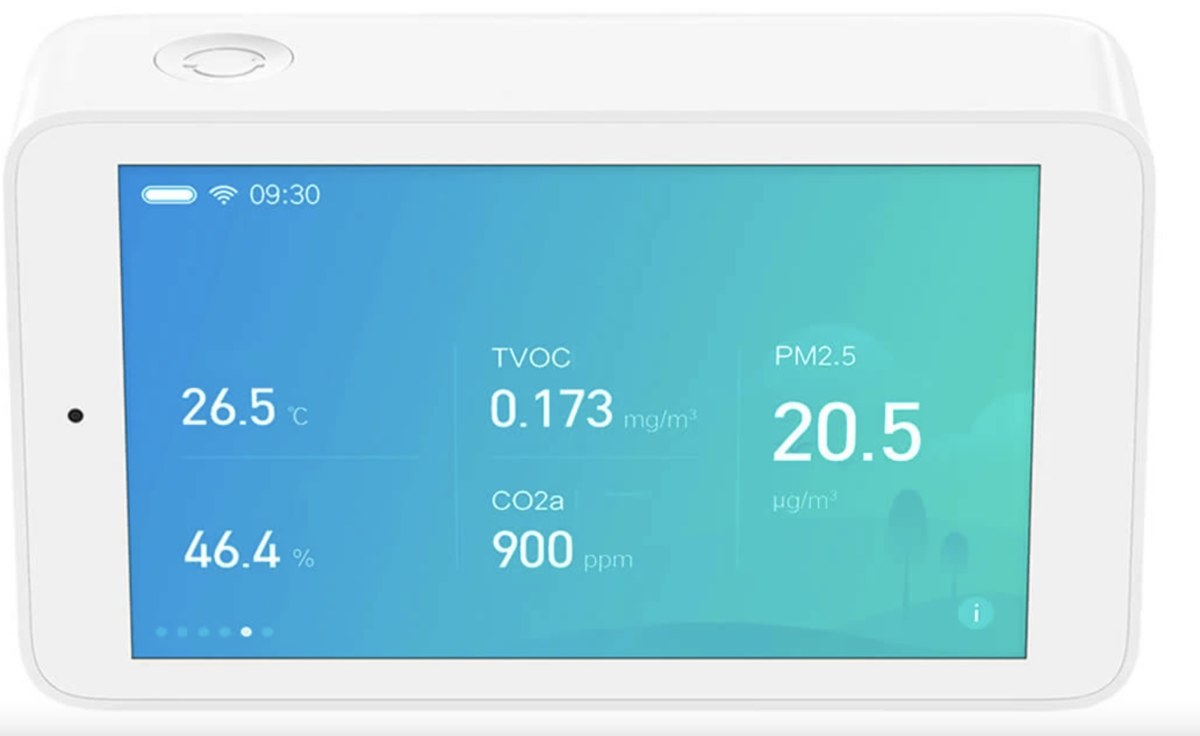
The screen diagonal is 3.1 inches, the resolution is 328 pixels per inch, the precise touch screen, automatic brightness, excellent contrast. All this makes using the gas analyzer extremely convenient.
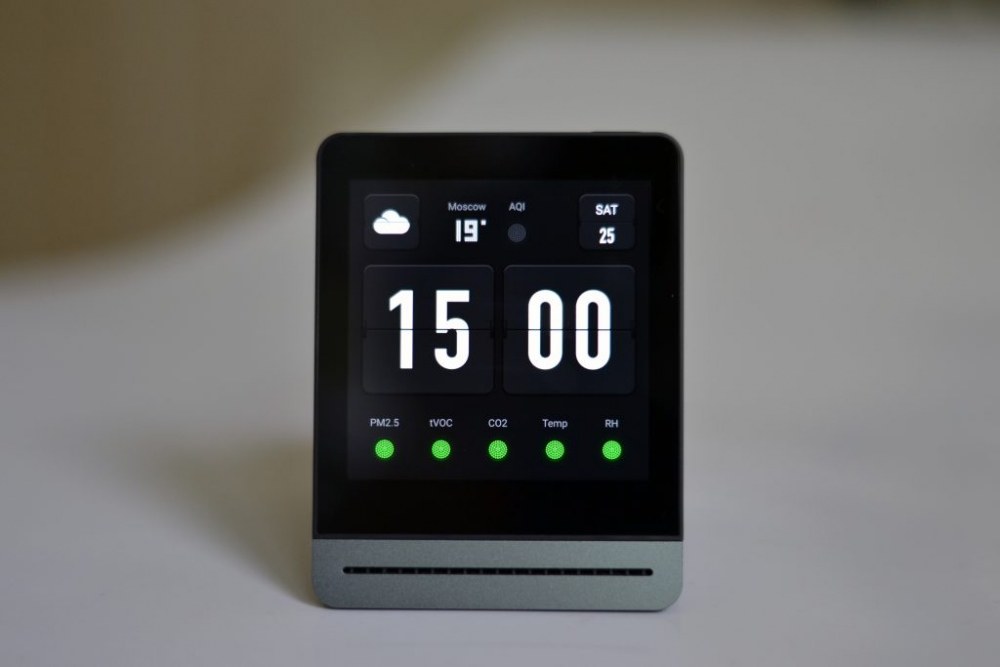
Time, weather forecast, air quality outside the window, UV index — all this is shown on the display!
The air analyzer has a 4-core processor capable of multitasking.
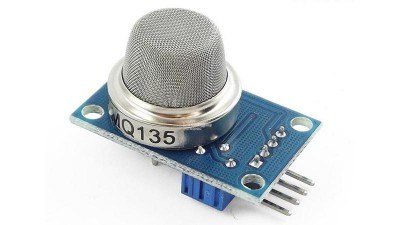
MQ-135 Arduino Air Quality Sensor
The MQ135 air quality sensor module is designed to determine the content and amount of harmful and dangerous gases in the air, such as: NH3, NOx, alcohol vapor, gasoline, smoke, CO2, etc. Built on the MQ135 sensor. The module board has a comparator to determine the threshold value of the concentration of harmful substances. The trigger threshold is set by a potentiometer.
Technical specifications:
TTL level output signal
Analog sensor output 0 — 5 V
The higher the gas concentration, the higher the output voltage.
Module supply voltage: 5 V DC
Dimensions: 32 mm x 22 mm x 27 mm
Sensor type: MQ-135
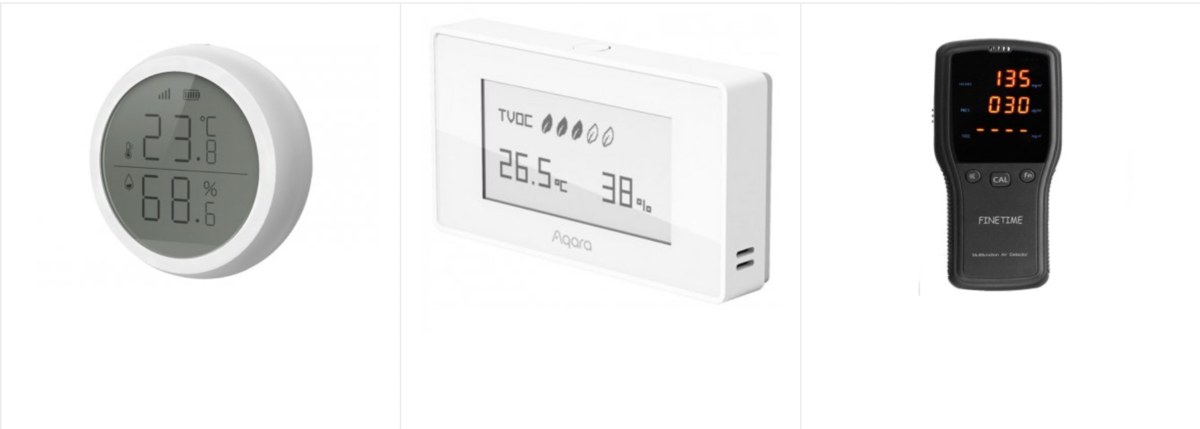
There is also a wide range of indoor air quality sensors.
Popular models include Z-Wave MCO Home, Aqara TVOC, PTH-5, Tervix T&H, Kronos HCHO, OOTDTY, etc.
What to do when the air is dirty?
In case of smoke inhalation, it is necessary to follow the recommendations of experts:
keep windows closed, especially at night and in the morning;
if possible, avoid being outdoors;
If available, air conditioning and air purification systems should be turned on;
drink plenty of water and do wet cleaning;
If you experience shortness of breath and cough, you should consult a doctor.