Хочете будувати кар’єру в Data Science та AI? Vodafone Big Data Lab відкриває новий набір —>
Олег ОнопрієнкоHot News
25 February 2026, 09:00
2026-02-25
"All information from Telegram goes to the Russian special services." Blitz with the head of the information security and cybersecurity service of the NSDC Apparatus
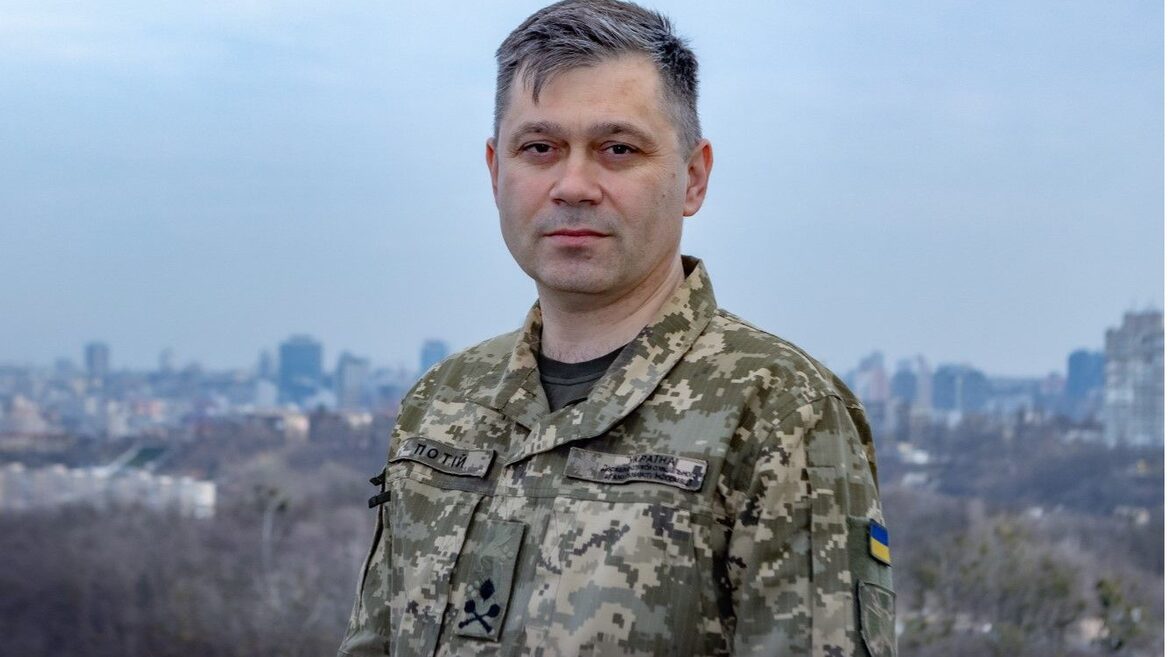
On the sidelines of the Kyiv Cyber Resilience Forum 2026, we spoke with Natalia Tkachuk, Head of the Information Security and Cybersecurity Service of the NSDC of Ukraine and Secretary of the National Security and Defense Council of Ukraine, about changing enemy tactics, the creation of new international alliances, and critical vulnerabilities in the Ukrainian MilTech sector.
On the sidelines of the Kyiv Cyber Resilience Forum 2026, we spoke with Natalia Tkachuk, Head of the Information Security and Cybersecurity Service of the NSDC of Ukraine and Secretary of the National Security and Defense Council of Ukraine, about changing enemy tactics, the creation of new international alliances, and critical vulnerabilities in the Ukrainian MilTech sector.
— How has the nature of cyber threats changed since the start of the full-scale invasion?
At the beginning of the war, Russia acted straightforwardly, expecting a blitzkrieg. They did not try to hide their presence, their goal was the total destruction of systems and the creation of large-scale blackouts.
However, realizing that there will be no quick victory, the enemy has changed its strategy. Now their main goal is cyber intelligence. They seek to be unnoticed inside our systems, especially military ones, to collect intelligence for adjusting combat strikes and using for military purposes. That is why cyber hygiene today is not just advice, but a matter of saving lives and finances.
Information in war is a weapon that can be accidentally turned against you. We are recording serious errors in communication regarding energy security. For example, some MPs publish unnecessary details that the enemy instantly uses to correct cyberattacks on the energy system.
We urge you not to give specific data, not to say what exactly was destroyed or restored. It is better to remain silent altogether - people will see if there is light anyway. There was an unfortunate example in Kharkiv, when the local authorities' statement about the successful restoration of the facility led to an instant second blow. This is "cheap PR" that puts critical infrastructure under attack.
Even during technological disasters, as was the case during the -20 frost, Telegram channels and some politicians were quick to call it a "cyberattack," sowing panic instead of checking the facts.
— The issue of Telegram in Ukraine remains acute. What is the position of the NCCC?
The NCCC was the first structure to recommend banning Telegram in military units, government agencies, and critical infrastructure facilities. We clearly understand that all information that passes through this messenger ends up with Russian special services.
In addition to espionage, Telegram is a tool for cyberattacks because it spreads malware that infiltrates government computers. Personally, I do not use it on principle and ask that documents be sent to me via WhatsApp or other secure messengers.
— Ukraine, Romania, and Moldova have created a cyber alliance. Tell us more about what it entails?
This is the world's first regional hybrid alliance, founded by Ukraine, Romania, and Moldova. We worked for half a year on the text of the memorandum, which provides for joint exercises, exchange of intelligence data, and the ability to turn to a partner for direct assistance to repel an attack in real time.
This even includes proactive cyber defense (cyber offensive actions) within the framework of each country's national legislation. This memorandum is open for signature by other countries, so we expect other partner countries to join the alliance in the future.
— Who is currently supporting Ukraine financially, given the reduction in financial assistance from the United States?
Although the level of direct support from the US has changed somewhat, the Tallinn Mechanism, which unites Western countries, has become key. We offer specific projects to strengthen cyber defense, which they fund. The fact that the US has moved away from this level of assistance has somehow encouraged the Europeans to create something of their own.
Our specialists from the Security Service, the State Special Communications Service, and the Ministry of Defense are today the best in the world, and our partners recognize this by actively providing us with important intelligence data.
— Who else besides the Russian Federation is cyberattacking Ukraine?
We have already seen attacks from North Korea and Belarusian hackers. Cooperation between authoritarian regimes in cyberspace will only increase.
— What priorities do you see in protecting Ukrainian developments in the coming years?
Our top priority is supply chain cybersecurity. Ukrainian MilTech is rapidly developing: private companies and startups are building drones, but often do not have the resources for cyber protection. If a drone has vulnerable firmware, an enemy can seize control of it or infiltrate our military networks through the developer’s systems.
We at the NCCC are already coordinating work to strengthen the protection of our defense industry, offering developers free services and assistance from the state.
"Durov was and remains an FSB agent." Telegram will be blocked only for Russian soldiers (and not in the Russian Federation as a whole) so that the FSB can control the situation - riots are starting. This was stated by the former head of the Cyber Police, Sergey Demedyuk
"Why do cyberattacks when you can just physically destroy everything?" They recorded a blitz with the brigadier general, head of the State Special Communications Service, about existing threats. He invited IT specialists to sign a contract with his department - the work is
The core mechanic of ragdoll drop is simple but addictive: drop the ragdoll and observe the unpredictable physics reactions. Every fall feels different depending on the angle and obstacles.
Після такого ще раз замислюєшся, скільки інформації ми щодня залишаємо в месенджерах, навіть не звертаючи на це уваги. Кібергігієна справді стала частиною звичайного життя. А число 777 у тексті про кібербезпеку я б уже сприйняла як символічне нагадування тричі перевірити, куди й кому щось надсилаєш.












The core mechanic of ragdoll drop is simple but addictive: drop the ragdoll and observe the unpredictable physics reactions. Every fall feels different depending on the angle and obstacles.
Після такого ще раз замислюєшся, скільки інформації ми щодня залишаємо в месенджерах, навіть не звертаючи на це уваги. Кібергігієна справді стала частиною звичайного життя. А число 777 у тексті про кібербезпеку я б уже сприйняла як символічне нагадування тричі перевірити, куди й кому щось надсилаєш.
a