Хочете будувати кар’єру в Data Science та AI? Vodafone Big Data Lab відкриває новий набір —>
Наталя ХандусенкоAI Eng
30 March 2026, 17:26
2026-03-30
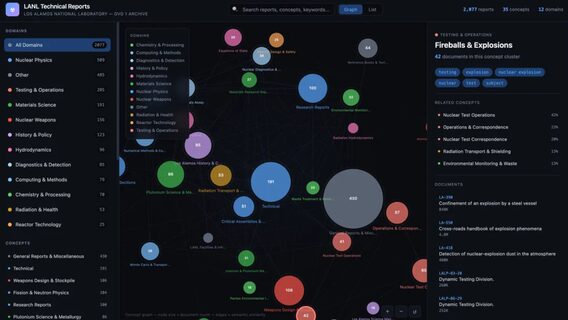
With the help of AI, an American turned the archive of government documents from the Los Alamos laboratory, where Oppenheimer developed bombs, into an interactive website
A Reddit user talked about creating an AI-powered website where he collected over 2,000 documents from the famous Los Alamos laboratory, where the atomic bomb was created at the end of World War II.
A Reddit user talked about creating an AI-powered website where he collected over 2,000 documents from the famous Los Alamos laboratory, where the atomic bomb was created at the end of World War II.
A Redditor named CryptoSpecialAgent discovered an archive of Los Alamos technical reports on the website ScienceMadness.org. This is a collection of rare scientific papers and experimental data in the field of nuclear physics — materials that were declassified long ago and were stored on the Los Alamos National Laboratory's FTP server at the dawn of the internet.
Reference
Los Alamos National Laboratory (LANL) is a leading US research center in New Mexico, established in 1943 (Project Y) to develop the atomic bomb. Today it is one of the world's largest multidisciplinary institutes (over 18,000 employees) dealing with nuclear safety, energy, and supercomputer simulations.
The first director was Robert Oppenheimer; the laboratory developed the bombs for the bombing of Hiroshima and Nagasaki.
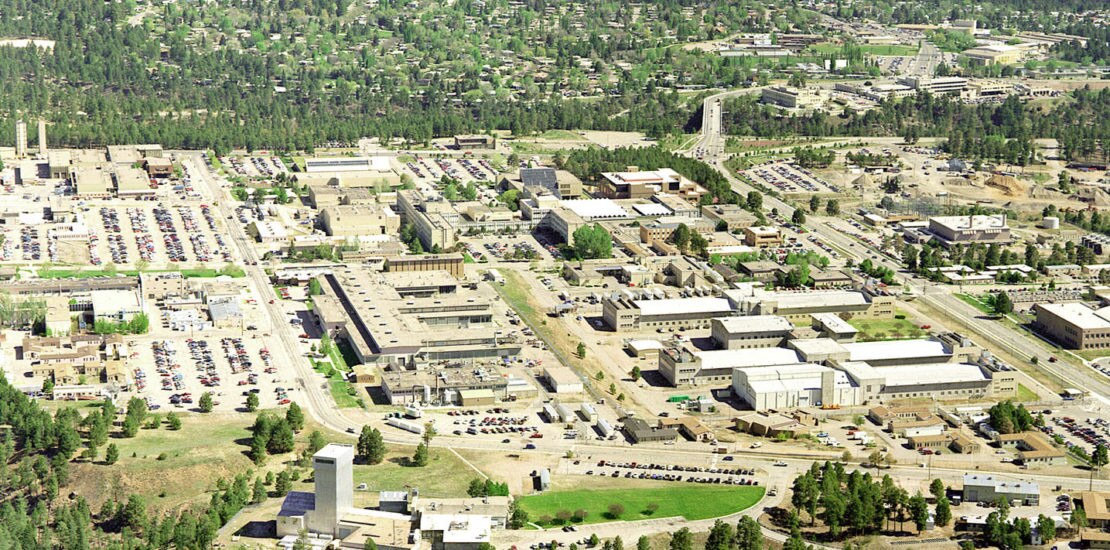
Los Alamos National Laboratory (LANL). Source: Amentum
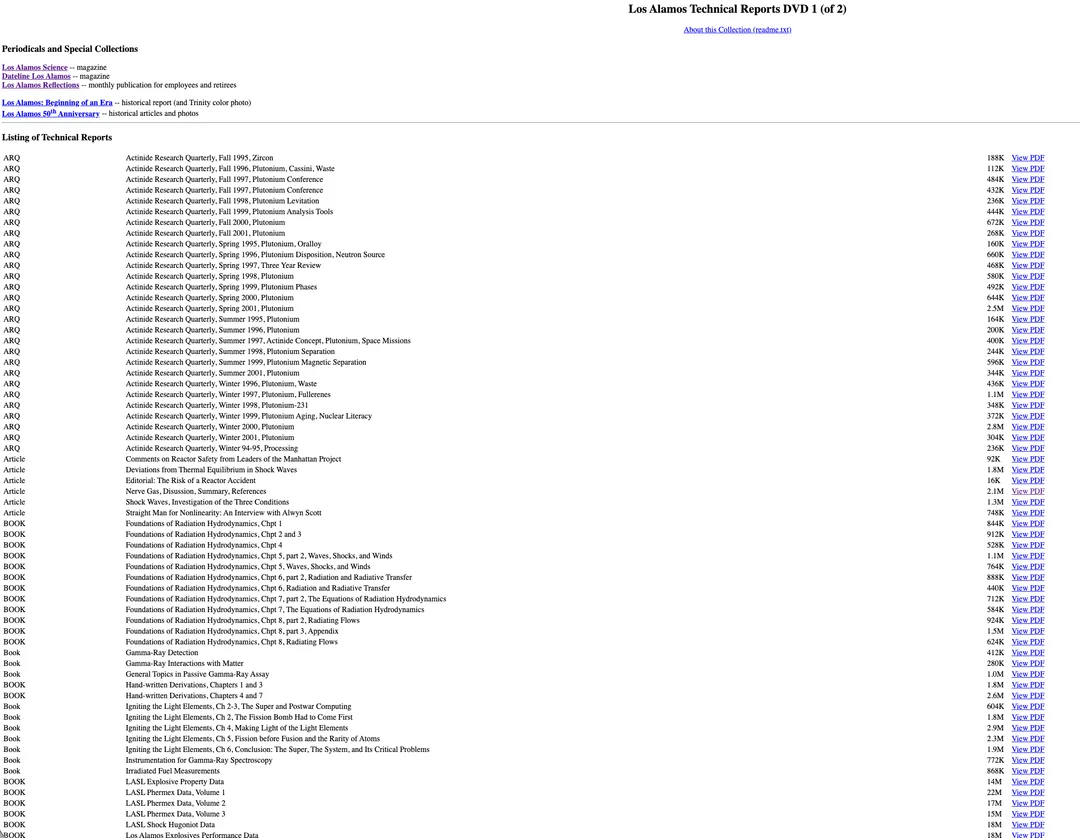
“Unfortunately, after the events of September 11, Los Alamos Laboratory (LANL) decided that it was dangerous to leave such information freely available to anyone, and deleted all technical reports from its server. However, the ScienceMadness project managed to create a mirror of the archive before this happened… and, surprisingly, the site is still up and running, 25 years later. These documents remain declassified, and therefore it is completely legal to possess and distribute them,” the project author wrote .
As you can see in the screenshot above, complex technical documents are simply piled into a single alphabetical list. There is no clue as to how they are related to each other or to which scientific concepts they refer to.
"Luckily, Claude Code created a modern 'mirror' of this archive on my local computer, and the difference is simply amazing (it was done with one prompt in less than 10 minutes)," the vibecoder added.
At the request of users, CryptoSpecialAgent shared prompts for creating mirroring and an advanced document explorer.
Reddit user CryptoSpecialAgent
Prompt 1 (To create a mirror of the original site and download all documents):
Scrape (copy the contents of) this web page into the current directory and download all the linked PDFs into a separate subdirectory. Then update the links to the PDFs in the local copy of the page to be relative and point to the local PDFs. Do not follow links that do not lead to the PDFs, and do not scrape them - leave them as they are. https://library.sciencemadness.org/lanl1_a/mainindex.html
Prompt 2 (Create an advanced document explorer):
Hi… I have managed to collect a good portion of those Los Alamos technical reports (the ones that were copied by sciencemadness when LANL deleted them after 9/11). So this current directory is the starting point for volume 1 of this 2-disc DVD set… If you open maindex.html you will see over 2000 links to PDFs of the technical reports stored in ./pdfs and its subdirectories.
Your task: I want you to create newindex.html, which should be a stylish, modern interface for viewing and retrieving technical reports. Organize them in a way that makes sense and appeals to enthusiast-level nuclear physicists. You know what would be cool? If you could, for example, vectorize the documents and make this smooth, nice graphical visualization for navigating between different concepts, each concept linked to the most semantically relevant PDF. I'll let you handle the details. Ask me if you need anything (keys, etc.).
According to the developer, the first prompt was run on Sonnet 4.6, and the second on Opus 4.6. "Both completed in full, and everything worked properly right out of the box, without any additional configuration."
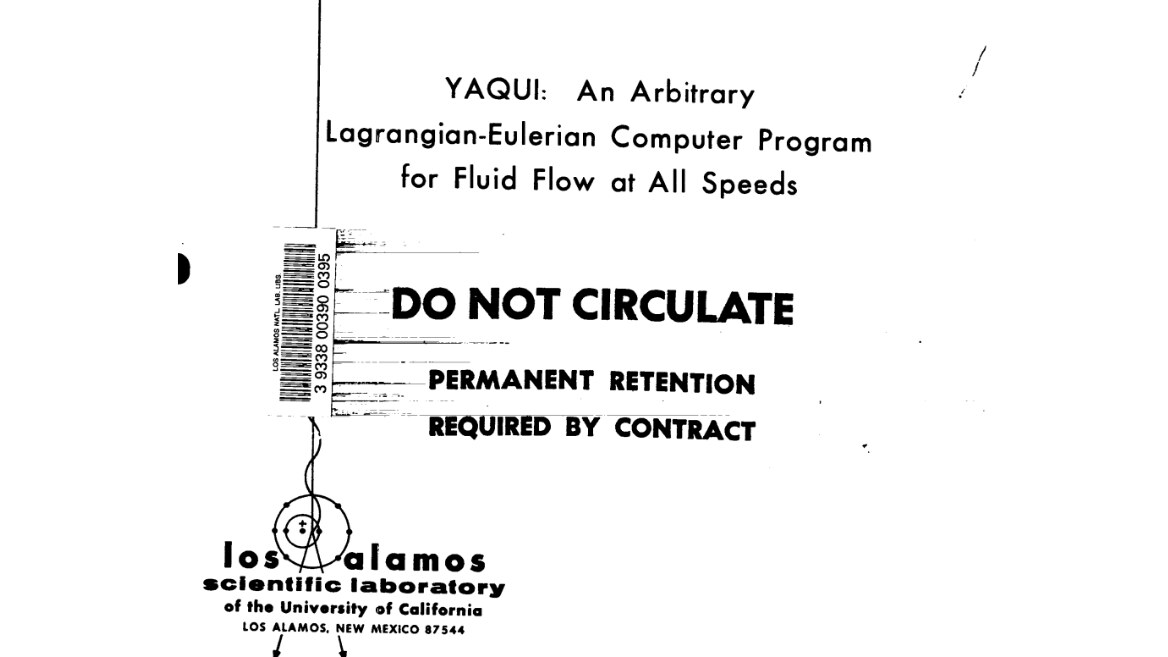
The vibecoder considers the detailed architectural documentation of a 1974 Fortran hydrodynamics simulation, which was used to model nuclear explosions, to be a real find.
Як нейромережі бачать вільну та незалежну Україну? Тест dev.ua
Нейронні мережі для генерації зображень бачать світ по-своєму, їхню логіку зрозуміти часом зовсім неможливо. Але таки хочеться. На честь Дня Незалежності України редакція dev.ua вирішила провести невеликий експеримент.
Ми задали чотирьом різним нейронним мережам п’ять однакових запитів: «прапор України», «День Незалежності України», «український Крим», «перемога України» та «українці». Отриманими результатами ми ділимося з вами нижче.
У TikTok тепер можна генерувати фон за допомогою нейромережі. Ми протестували її та ділимося результатами
У TikTok з’явилася нова функція «Розумний фон». З її допомогою як фон для тіктоків можна підставляти згенеровані нейромережею зображення. Редакція dev.ua протестувала цю технологію і ділиться своїми враженнями.