Хочете будувати кар’єру в Data Science та AI? Vodafone Big Data Lab відкриває новий набір —>
Валентин ШнайдерAI Eng
17 April 2026, 08:39
2026-04-17
Anthropic releases Claude Opus 4.7: the model writes code and processes images better
Anthropic has opened access to the new Claude Opus 4.7 model, which has shown better results than the previous version in programming, financial tasks, and working with complex information.
Anthropic has opened access to the new Claude Opus 4.7 model, which has shown better results than the previous version in programming, financial tasks, and working with complex information.
According to Anthropic, the model is now available in Claude, API, as well as Amazon Bedrock, Google Vertex AI, and Microsoft Foundry. The cost remains unchanged at $5 per million input tokens and $25 per million output tokens.
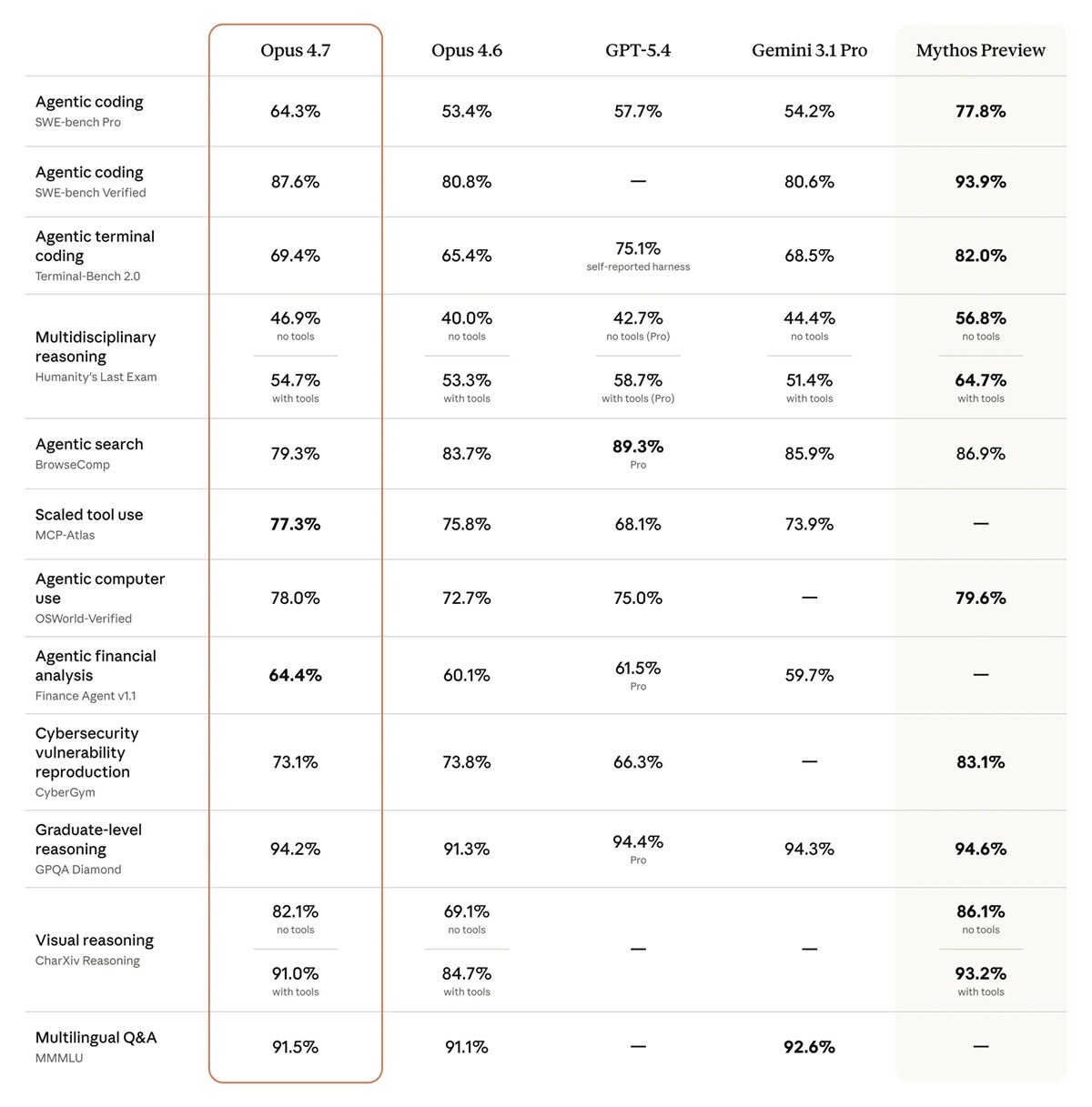
In programming, the model really added. In the SWE-bench Pro test, it scored 64,3% against 53,4% in the previous version. In a more accurate test of the same tasks, the result is 87,6%. In another test for working with a terminal, the model showed 69,4%.
Companies are also confirming the progress. GitHub recorded an increase of about 13% in a set of 93 tasks. Notion says about +14% performance and significantly fewer crashes. In CursorBench, the result increased to 70% against 58%. Rakuten reports that the model solves three times more real-world tasks, and Vercel noted a new behavior — before writing the code, the model tries to check whether the solution is even correct.
In tasks that require analyzing information and making decisions, the model also improved. For example, in the GDPval-AA test, it scored 1,753 points, compared to 1,619 in the previous version. In financial scenarios, the result is 64,4%.
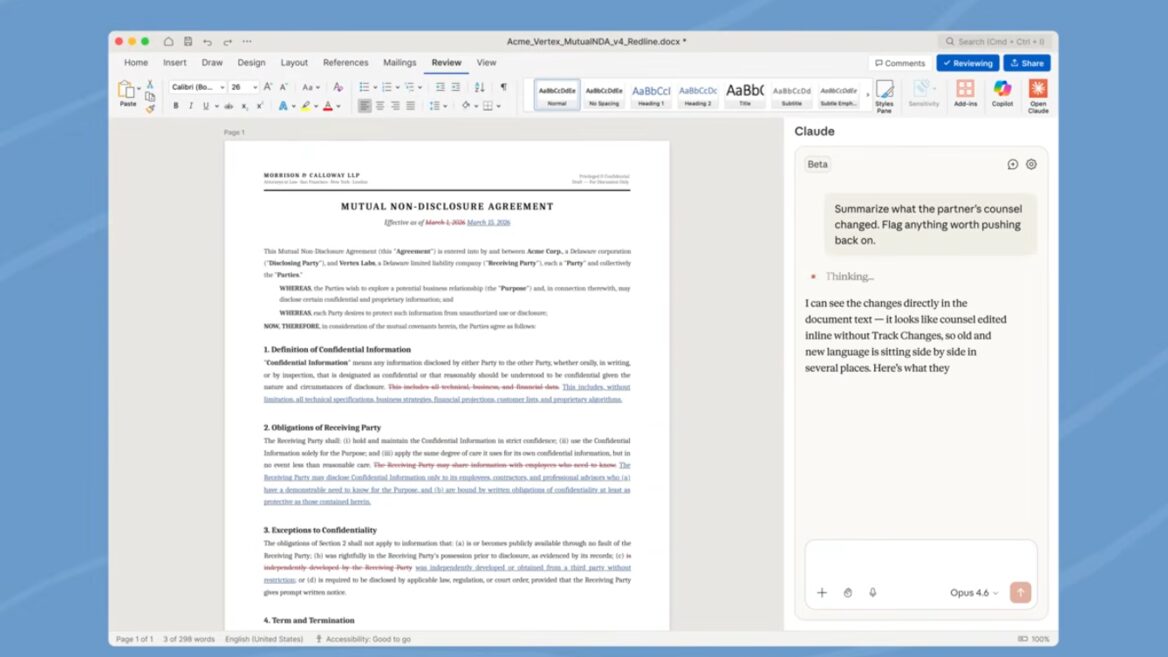
Image processing has also been improved. The model now processes images up to 2576 pixels on the long side. This is about three times more than before, and allows you to work normally with complex diagrams, tables, and screenshots.
Anthropic has also added a new level of «depth of work» called xhigh. This means the model can think longer about a problem and provide more accurate answers. In Claude Code, this mode is now enabled by default.
New tools include the /ultrareview command, which checks code for errors before it runs, and a mechanism that allows you to control how much resources the model spends on long tasks.
However, there is a price caveat. While the pricing hasn’t changed, the new way of processing text means that the same query can use 1.0-1.35 times more tokens. Also, if the model «thinks» longer, it uses more resources.
Opus 4.7 is not Anthropic’s most powerful model. Above is Claude Mythos Preview, but it is still available in limited quantities. In the new version, the company has specifically limited some of the cybersecurity-related features and added automatic filters for dangerous requests. This means that Anthropic is testing the protections on a more accessible model before opening up more powerful ones.
Previously, dev.ua wrote about how US Treasury Secretary Scott Bessant and Federal Reserve Chairman Jerome Powell calledan emergency meeting with bank executives this week to warn them about the cybersecurity risks posed by Anthropic’s new artificial intelligence model.
Як нейромережі бачать вільну та незалежну Україну? Тест dev.ua
Нейронні мережі для генерації зображень бачать світ по-своєму, їхню логіку зрозуміти часом зовсім неможливо. Але таки хочеться. На честь Дня Незалежності України редакція dev.ua вирішила провести невеликий експеримент.
Ми задали чотирьом різним нейронним мережам п’ять однакових запитів: «прапор України», «День Незалежності України», «український Крим», «перемога України» та «українці». Отриманими результатами ми ділимося з вами нижче.
У TikTok тепер можна генерувати фон за допомогою нейромережі. Ми протестували її та ділимося результатами
У TikTok з’явилася нова функція «Розумний фон». З її допомогою як фон для тіктоків можна підставляти згенеровані нейромережею зображення. Редакція dev.ua протестувала цю технологію і ділиться своїми враженнями.