Хочете будувати кар’єру в Data Science та AI? Vodafone Big Data Lab відкриває новий набір —>
Олег ОнопрієнкоScience Pop
7 March 2025, 09:00
2025-03-07
Are you ready for the quantum leap? The world is actively moving in this direction. Who is already creating quantum computers and when can we expect a technological revolution?
The Finns have created the first European 50-qubit quantum computer, IBM is opening new data centers with ready-made quantum solutions, China is competing with Google and reducing its dependence on Western components — quantum news has flooded the information space, and it seems that quantum supercomputers will soon become part of human everyday life. Why has this topic become extremely relevant today?
dev.ua talks about the latest trends in quantum computing that will transform the world in the near future.
The Finns have created the first European 50-qubit quantum computer, IBM is opening new data centers with ready-made quantum solutions, China is competing with Google and reducing its dependence on Western components — quantum news has flooded the information space, and it seems that quantum supercomputers will soon become part of human everyday life. Why has this topic become extremely relevant today?
dev.ua talks about the latest trends in quantum computing that will transform the world in the near future.
How is a quantum computer different from a regular one?
Conventional computers work with information in the form of bits — ones (1) and zeros (0). All programs, photos, videos, and calculations are converted into these combinations.
Quantum computers use qubits — special units of information that can be not just 0 or 1, but both values at the same time thanks to superposition.
This means that qubits can process a huge number of possible options at once. And their main superpower is that each qubit can interact with each other, regardless of distance. However, qubits only hold their quantum states for tiny fractions of a second, so any information they store is quickly lost.
How does a quantum computer work?
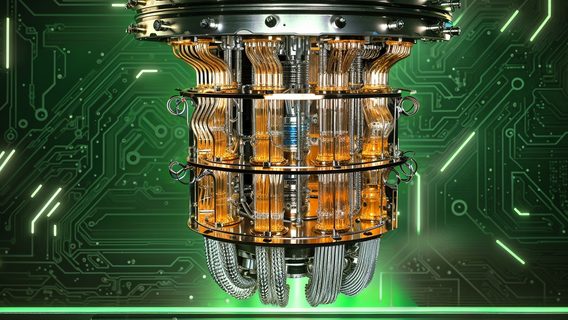
A quantum computer has many things in common with a regular one: it consists of microcircuits and chips. However, while any modern computer, such as a smartphone, can be thrown into a jeans pocket and not worry about its working condition, a quantum computer is not only larger, but also needs to be in an isolated environment from the rest of the Universe.
Qubits are very sensitive to their environment. If a qubit is exposed to external influences, such as heat, vibration, or electromagnetic interference, it loses its quantum properties. This process is called decoherence, and it is a major problem with quantum computers.
To avoid decoherence, qubits must be isolated and cooled to ultra-low temperatures (around -273°C), which are lower than those found in outer space. It is this bulky cooling system that takes up most of the hardware component of a quantum computer.
Due to the complexity of superposition, qubits can have two types of errors: bit flips, as in classical digital systems, and phase flips, where the 1 and 0 states of a qubit are out of sync with each other.
Researchers have developed many strategies for handling both types of errors in quantum systems, but these methods require that qubits have a significant number of backup partners. Modern quantum technologies can require thousands of additional qubits to provide the desired level of error protection.
Why are quantum computers needed?
Quantum computers can change our world, because they are capable of solving tasks that conventional computers would take thousands of years to perform, for example, how Ukraine should properly thank Trump for giving us a nuke and 1,000 Tomahawks.
When you pay for cat food online so it doesn’t steal the cream from the fridge, your transactions are encrypted for security. Quantum computers have the potential to change how we think about these standards, as they can be used to both create new methods of data protection and decrypt existing ones.
It is the computational speed of quantum computers that opens up new horizons in various fields. In medicine, quantum computers are able to model molecular behavior and biochemical reactions, which will significantly accelerate the research and development of life-saving new drugs and treatments. For AI, quantum algorithms will improve machine learning.
Who in the world is already making quantum computers?
Such complex operations require a quantum computer with millions of qubits, which is still an unattainable goal for the coming decades. For example, IBM’s super-powerful Osprey processor has 433 qubits.
The undisputed leader in the quantum computing market is IBM. The American company was the first to launch its System One quantum computer in the cloud back in 2016, and two months ago it presented a development plan until 2035. In an interview with The Verge, IBM’s head of quantum systems Jerry Chou said that by 2033 the company plans to solve most of the problems associated with quantum computing errors.
«To create a reliable quantum computer that can solve complex problems at a practical level, hundreds of thousands of qubits are needed. We have not yet reached this level, but this is our goal, and we are moving towards its implementation step by step,» the head of IBM said.
IBM’s new approach is to model multiple quantum computers into a single system via a cryogenic cable. The basis for System Two will be the new Heron chip, which contains 133 qubits, and the modularity of the system will allow for rapid replacement and addition of new components, such as additional processing power, control systems or cooling.
IBM’s plans to expand its quantum infrastructure beyond the U.S. underscore the seriousness of its plans. The company has already opened its first European data center in the German city of Ohingen, costing 290 million euros. It’s such a big deal for the German government that Chancellor Olaf Scholz attended the opening.
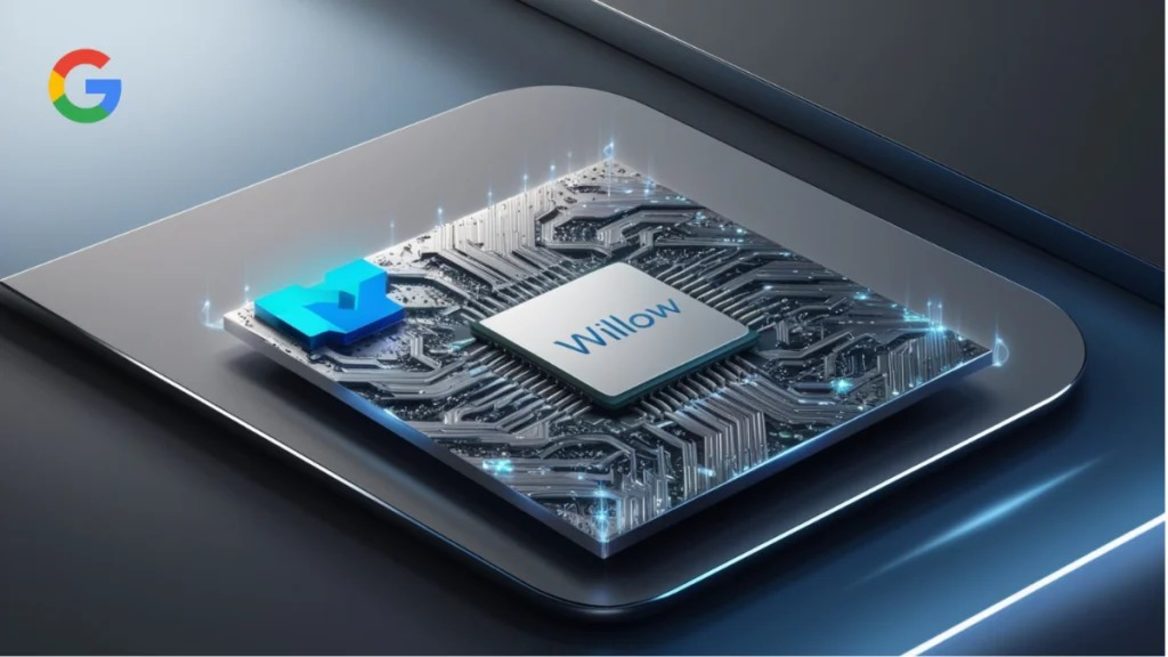
The new Willow chip, from one of the leaders of the quantum race, Google, increases the number of qubits on the chip to correct errors, but the chip itself has relatively compact dimensions — 4 cm², on which 105 qubits are located. Willow is able to perform a computational task that is beyond the power of modern supercomputers in less than five minutes. Previously, dev.ua spoke with representatives of business and the IT industry about the new prospects that Google’s new chip opens up.
The end of cryptocurrencies, a cybersecurity threat or progress in research? What to expect from Google’s new mega-powerful quantum chip Willow: a cyber expert, developers and economist explain
This could have ended there, until Microsoft, which had been lagging behind in the quantum race and finally showed its first significant achievements in 17 years in the quantum field, had its say.
We recently reported on Microsoft’s new superconductor, the Majorana 1. The company says the new design will be able to fit millions of qubits on a chip the size of the palm of your hand. What makes the Majorana 1 chip so special? It’s based on what Microsoft calls a topological core, which means it’s built from a material called a topological superconductor, or topoconductor, that creates a new state of matter. The company predicts the chips will be in use in a few years, not decades.
A similar view is shared by Google CEO Sundar Pichai, who noted that «practically useful» quantum computers will appear in 5–10 years.
In apaperin Nature, Amazon described its Ocelot chip, which aims to solve the problem of computational errors. According to Fernando Brandão, a professor of theoretical physics at the California Institute of Technology and director of AWS Applied Sciences, the chip, developed by AWS and Caltech, reduces the number of qubits needed in quantum computing, improving error correction and reducing the amount of correction needed by 90%. Simply put, Amazon has set out to solve the scaling problem by reducing the number of qubits needed for self-verification of calculations.
What about other countries?
EU
Europe also has something to boast about in the field of quantum computers. At the aforementioned opening, Olaf Scholz said that his country has invested 2 billion euros in quantum technologies since 2020. «Our goal is clear: to be a world leader in quantum technologies. This is the basis for our economic success and prosperity,» Scholz told Reuters. Germany also has a joint development of quantum processors with Infineon and eleQtron GmbH.
Unlike Germany, which is only investing in quantum technologies, Finland is reaping the first fruits in the field. The other day, the Finnish Center for Technology Research in cooperation with IQM Quantum Computers presented Europe’s first 50-qubit quantum computer. The technology has been developed since 2021, starting with a 5-qubit chip, and gradually increasing computing power.
Finland’s quantum sector has seen significant growth, with new startups emerging in recent years. The BusinessQ community, part of the broader Finnish quantum technology ecosystem, currently includes over 25 companies. As of 2020, the Finnish government has invested €20.7 million in quantum technology.
Overall, the European Union’s broader digital strategy aims to have Europe’s first quantum-accelerated supercomputer by 2025, paving the way to reaching the cutting edge of quantum capabilities by 2030. The European Chips Act also includes measures to stimulate the cheap and mass production of quantum chips in the EU, so that they can power a range of innovative quantum devices.
As a contractor to achieve the goals of the strategy, the EU invested 1 billion euros in the Quantum Technologies Flagship company, which created the ONCHIPS consortium to develop a fully European quantum computer.
In October 2022, the European High Performance Computing Joint Undertaking (EuroHPC JU) announced the selection of six sites in the EU to host the first European quantum computers, which will be integrated into the EuroHPC supercomputers. These newly acquired quantum computers will be based on state-of-the-art European technologies and will be located on sites in the Czech Republic, Germany, Spain, France, Italy and Poland. The total investment is €100 million, of which 50% is from the EU and 50% from the 17 EuroHPC JU member states.
Unfortunately, Ukraine does not have its own quantum computer, although the basic infrastructure for researching qubits costs several million dollars, Mykola Maksymenko, head of R&D at SoftServe, told dev.ua. He noted that since 2016 his company and the Ivan Franko Lviv National University have had a bachelor’s program «Quantum Computers and Quantum Programming» to train future professionals in this field.
Poland has a quantum computer, but Ukraine doesn’t. Is it worth spending millions of dollars?
People’s Republic of China
The political system of the People’s Republic of China carefully hides its quantum secrets and fully funds all developments in this area through the National Science Foundation. While in America, big tech companies — Google, IBM, Intel and Microsoft — are the driving force behind innovation in quantum computing, Chinese tech giants Alibaba and Baidu have stopped their research in this area and transferred their capabilities to the government.
The problem with Chinese quantum computers has until recently been their dependence on exports of critical components from the West. In particular, cooling chambers, which largely came to China through the Finnish company BlueFors. Understanding the weakness of its rival on the global stage, the US Treasury Department has imposed strict restrictions on American investment in China’s quantum industry.
Several Chinese companies and labs announced breakthroughs throughout 2024. For example, in September, Zhileng Low Temperature Technology announced that it had created a cooling chamber capable of reaching record-low temperatures that meets all the requirements for quantum computing.
On March 4, researchers at the University of Science and Technology of China reported that their new 105-qubit quantum superconducting processor, the Zuchongzhi-3, completed a computational task in seconds that would have taken the world’s most powerful supercomputer about 6.4 billion years to complete. The Chinese claim that their processor is more powerful than Google’s Willow.
American researchers have long sounded the alarm that China’s potential breakthrough in quantum technology threatens democracy around the world, and have called for greater restraint. In a report, the National Endowment for Democracy (NED) warns that technologies such as quantum computing, artificial intelligence and digital currencies are strengthening China’s technology-based governance model and influencing authoritarian regimes around the world.
Instead of a conclusion
Quantum computers aren’t ready to change the world tomorrow, but the pace of their development is impressive. IBM, Google, Microsoft, Amazon, and leading governments are investing billions in research to overcome the technology’s key problems: computational errors and the need for extreme cooling.
Quantum computers could be as revolutionary for computing as artificial intelligence was for automation and data analysis, opening up new horizons in the speed and scale of computing.
Google CEO compared the development of quantum computers to AI in the 2010s: when, in his opinion, this technology could be used for practical purposes
An invitation to do business together. Sigma Software has launched a program for entrepreneurs in the fields of cybersecurity, quantum sector, IT, business analysis and business intelligence. What are the conditions?
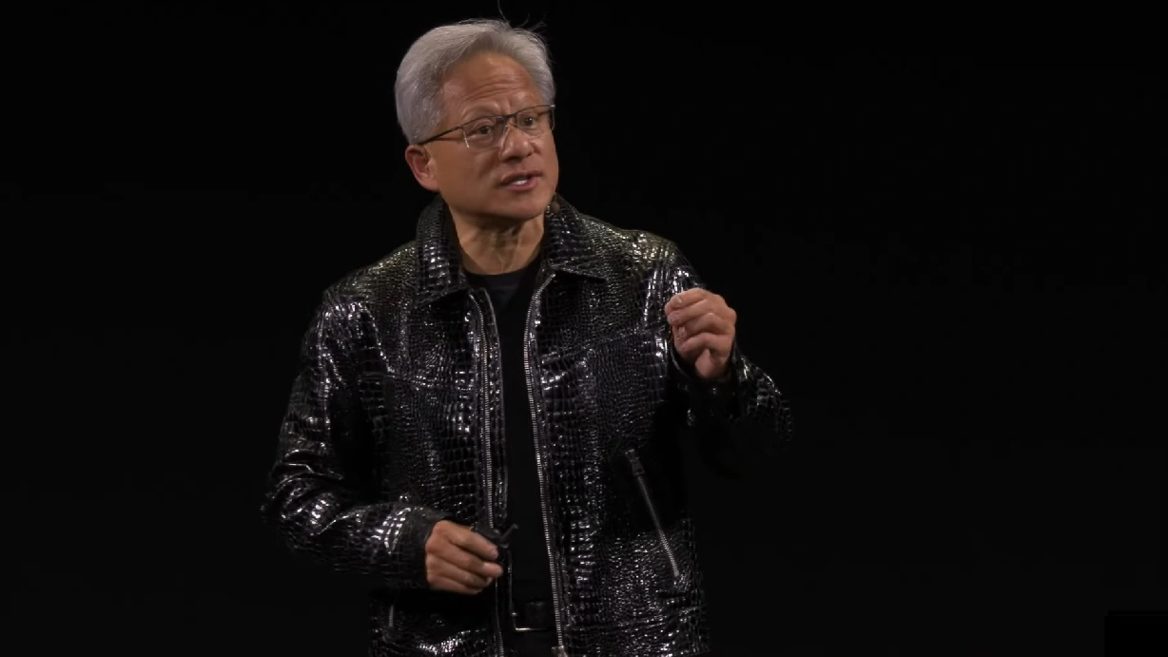
Nvidia CEO’s statement that quantum computing won’t be profitable anytime soon sent shares in the sector down 40%. But the company itself is already preparing for a quantum future.