BMW drivers will receive an AI driving assistant from Qualcomm
Technology company Qualcomm and car manufacturer BMW have introduced the Snapdragon Ride Pilot driver assistance system, which will help you drive on the highway, change lanes, and park.


Technology company Qualcomm and car manufacturer BMW have introduced the Snapdragon Ride Pilot driver assistance system, which will help you drive on the highway, change lanes, and park.
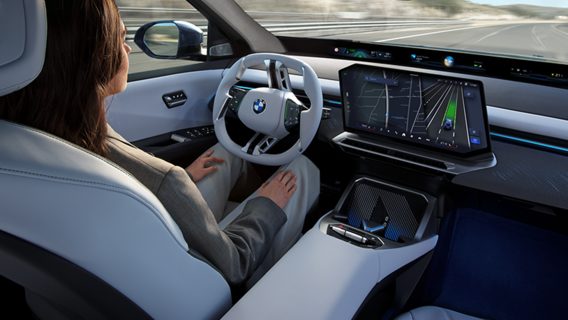
Technology company Qualcomm and car manufacturer BMW have introduced the Snapdragon Ride Pilot driver assistance system, which will help you drive on the highway, change lanes, and park.
Snapdragon Ride Pilot debuted on September 5 in the new BMW iX3, the first production car in BMW’s Neue Klasse. Qualcomm is offering Snapdragon Ride Pilot to all global automakers, with the company saying the system has already been tested in 60 countries and is expected to be available in more than 100 countries by 2026.
Qualcomm said that more than 1,400 company specialists from Germany, the USA, Sweden, Romania, and specialists from the BMW AD Test Center in the Czech Republic worked on the project for three years.
«Together, we created Snapdragon Ride Pilot, a revolutionary driver assistance system that puts safety first and sets new standards in the industry. We are excited to see this system come to life in the BMW iX3,» Qualcomm said.
Snapdragon Ride Pilot is a Level 2+ driver assistance system, not a fully autonomous autopilot. This means drivers will still be responsible for controlling the vehicle and paying attention to the road when using these features.
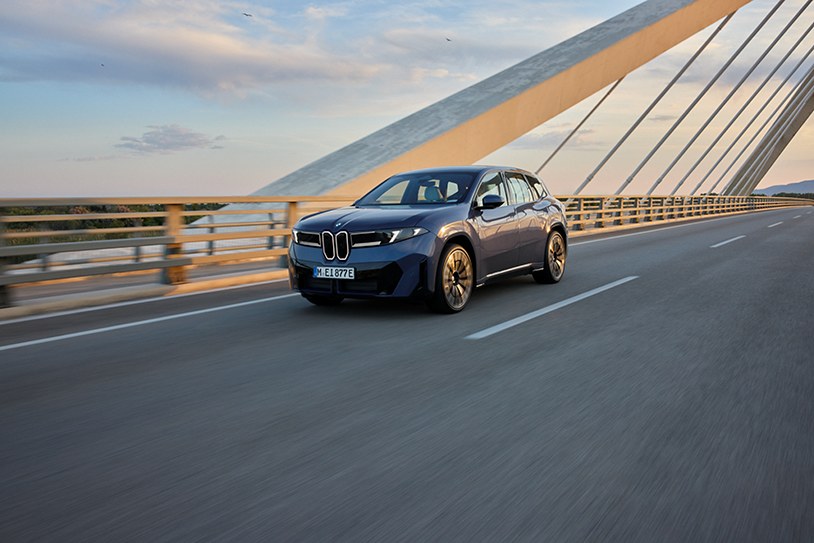
The system’s software stack is structured as a series of layers that together enable autonomous functions. The first layer is 360-degree perception, which uses a camera stack to detect objects, interpret road signs, and provide parking assistance. The advanced contextual driving layer uses a combination of rule-based models and artificial intelligence to plan and predict behavior in complex driving scenarios.
The BMW iX3's automatic steering system has the following functions: