Attention! The threat of ballistic missiles... from Iran. Why and with what missiles Tehran could strike Ukraine
The war is finally going beyond the Russian-Ukrainian front, turning into a complex knot involving the Middle East and the United States. The successful strike by Ukrainian drones on military cargo in the Caspian Sea has become an excuse for Iran to openly threaten Kyiv for the third time in a year. Tehran has officially declared the entire territory of Ukraine a "legitimate target."
The situation is escalating against the backdrop of an unprecedented exchange of intelligence: while Russia is targeting Iranian missiles at American bases in the Middle East, Iran may be targeting Ukrainian cities with its ballistic missiles.
We analyze the reality of the Iranian threat and tell in more detail what Iranian ballistics could be used against Ukraine and whether the exhausted Ukrainian Patriot systems are capable of protecting the sky.
The war is finally going beyond the Russian-Ukrainian front, turning into a complex knot involving the Middle East and the United States. The successful strike by Ukrainian drones on military cargo in the Caspian Sea has become an excuse for Iran to openly threaten Kyiv for the third time in a year. Tehran has officially declared the entire territory of Ukraine a "legitimate target."
The situation is escalating against the backdrop of an unprecedented exchange of intelligence: while Russia is targeting Iranian missiles at American bases in the Middle East, Iran may be targeting Ukrainian cities with its ballistic missiles.
We analyze the reality of the Iranian threat and tell in more detail what Iranian ballistics could be used against Ukraine and whether the exhausted Ukrainian Patriot systems are capable of protecting the sky.
That was already
Before commenting on the Islamic regime's new threats, it should be recalled that this is not the first time they have done this. Previously, official Iranian officials threatened to strike the territory of Ukraine with the outbreak of the Gulf War.
The first threats were made even before the first confirmations appeared of the use of Ukrainian interceptor drones that began shooting down "shaheeds" in the Persian Gulf countries. At that time, Iran stated that Ukraine was cooperating with Israel in the exchange of drone technologies, for which there is no confirmation.
By providing drone support to the Israeli regime, failed Ukraine has effectively become involved in the War and, under Article 51 of the United Nations Charter, has turned its entire territory into a legitimate target for Iran. pic.twitter.com/T35XtSqIBv
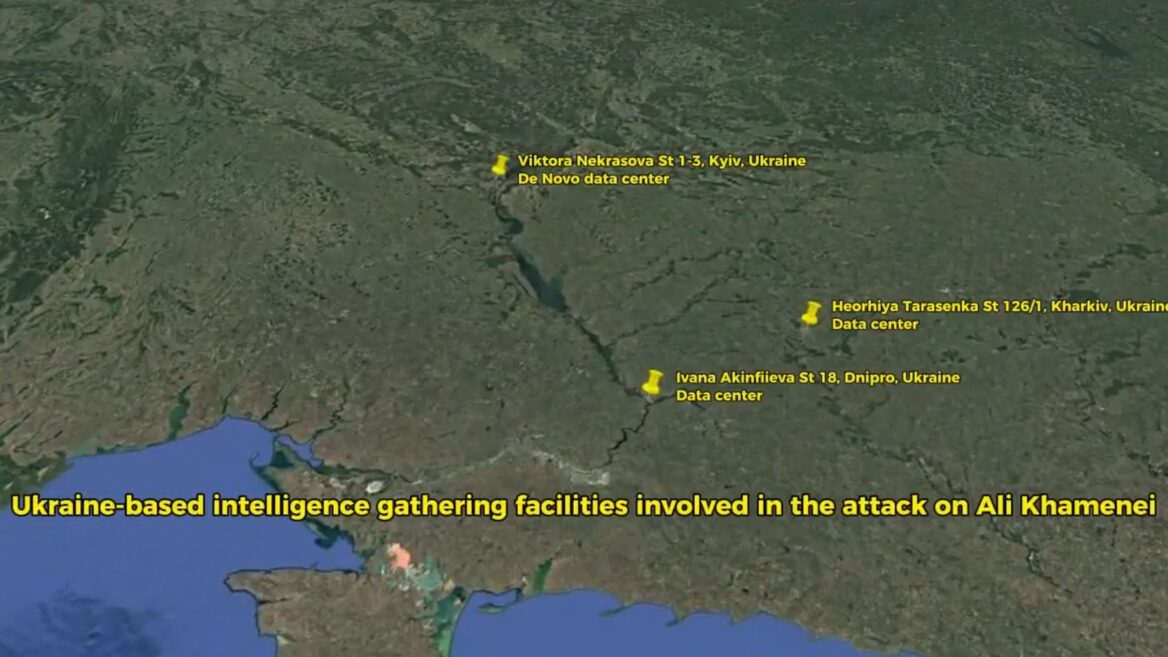
Then the Iranians published a map of potential targets , which included data centers of Ukrainian providers. They said they were used to collect and process data that the Americans use in the war against the Islamic regime. Those threats were remembered primarily by a poorly generated AI image of a burning building in Kyiv.
This is the third time in a year that Iran has threatened to strike Ukraine.
What preceded
The current threats were prompted by a Ukrainian drone strike on ships in the Caspian Sea that were used to transport military cargo between Russia and Iran. The strike killed one Iranian sailor, and the Islamic Republic itself accused Kyiv of attacking an alleged civilian vessel.
President Volodymyr Zelenskyy has publicly stated that targets hit in the Caspian Sea included a Russian warship and several vessels involved in Iran’s transportation of missiles and components for Russia’s war against Ukraine. These included vessels already under sanctions by the US, UK, Canada and Ukraine.
⚡️Zelensky says Ukraine successfully struck vessels in the Caspian Sea that were transporting military cargo between Russia and Iran pic.twitter.com/GdrIXIo8Ag
Detonation of a ship with military cargo for the Russian Federation
The Iranian side responded with harsh rhetoric. The head of the Iranian parliament's national security committee, Ebrahim Aziz, and the foreign minister issued statements accusing Kyiv of "complicity" in strikes against Iran and saying that "strikes against the Islamic Republic never go unanswered," hinting at possible ballistic attacks on Ukraine.
Tehran officially summoned a Ukrainian diplomat, called the strike a "hostile and criminal act," and propaganda resources began spreading messages that "the entire territory of Ukraine is a legitimate target" for help from Israel and the United States.
Kyiv responded by publicly rejecting the threats as baseless, emphasizing that the Iranian regime is a direct accomplice to Russian aggression — supplying drones, missiles, and other weapons that have been killing Ukrainians since 2022.
Any attack on Iran always has a price, and this remains true today; the US and Israel are well aware of this. Ukraine may also soon learn that Iran does not leave its actions unanswered. The list of those who miscalculated continues to grow!
Iranians were so shocked by the strikes that they even learned Ukrainian
At the same time, the Ukrainian leadership is bringing another important line of conflict to the public level: the Russia–Iran–USA triangle. According to Zelensky, the Russian Federation systematically transfers intelligence to Iran about the location of American military bases, airports, and energy infrastructure facilities in at least 11 Middle Eastern countries.
Ukraine has twice officially warned the United States that Russian satellites are actively photographing American bases in the region, and the resulting images are then used by Iran during missile strikes on these facilities.
Despite this, Donald Trump continues to pretend that he knows nothing about the transfer of intelligence from Russia to Iran and that he will personally ask Putin if this is really the case, Trump's radical supporters from MAGA, who have recently demonstrated a master class in political retraining, openly support Ukraine's actions against Iran.
Ukraine is now killing Iranian Islamic terrorists who are trying to murder US soldiers.
Thank you, Ukraine!
This comes after Zelenskyy announced today that Ukraine has solid intelligence Russian satellites have been and currently are helping Iran strike the US military and… https://t.co/3pv2a1Ad4S
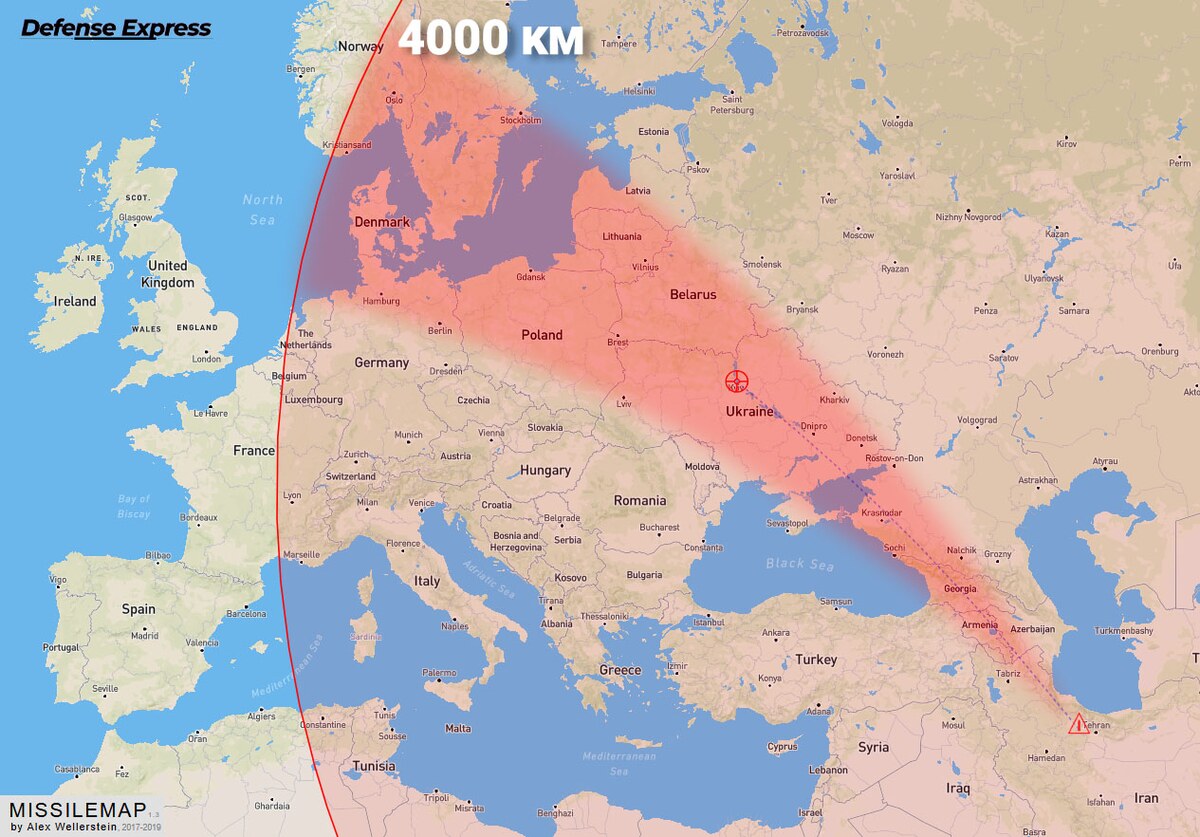
Defense Express analysts and monitoring channels, analyzing the Iranian missile arsenal, agree that for a hypothetical strike on Ukraine, Tehran would logically consider launches from the northwest of the country, in particular from the area of the city of Tabriz and the surrounding mountainous areas.
From northwestern Iran to the Ukrainian borders is approximately 1,600–2,000 km, which fits into the declared characteristics of a number of Iranian medium-range ballistic missiles - Ghadr, Emad, Sejjil and certain modifications of Khorramshahr.
The Defense Express map shows that from this area Iran could theoretically "reach" not only Ukraine, Moldova or Romania, but also the Scandinavian countries and Germany - that is, those countries where American bases and other NATO infrastructure are located, which have already figured in Iranian threats. Calculations show that from the moment of launching the ballistic missile until its arrival will take from 25 to 30 minutes .
At the same time, the flight path of a ballistic missile from the Tabriz region to Ukraine would inevitably pass through the airspace of third countries, which turns any real launch from a demonstration of force into an international scandal with a direct violation of the sovereignty of several countries.
This factor, according to Ukrainian and Western experts, significantly reduces the likelihood of a real massive campaign against Ukraine: each missile from Iran will automatically draw states into the conflict, which are already already balancing between the risks of open war with Tehran and the desire to keep the region from full-scale escalation.
What can they hit?
Ghadr and Emad
These are single-stage liquid-fueled medium-range ballistic missiles, created on the basis of the Shahab-3, which in turn is derived from the North Korean Hwasong-7 (not to be confused with the Hwasong-11, which the Russian Federation uses to strike the territory of Ukraine) and the Soviet R-17 of the Elbrus complex.
The declared range of Ghadr and Emad is about 1,700–2,000 km, the launch weight is about 19 tons with a length of 16.6 m, and the warhead weight is about 750 kg.
The newer Emad has a guided warhead with aerodynamic surfaces and the claimed ability to maneuver in the final section of the trajectory, which complicates the work of the missile defense system, but slightly reduces the maximum range (testing at ~1,800 km in 2021).
According to Defense Express, both missiles from the northern regions of Iran are capable of reaching Ukrainian airspace — that is, in the event of a political decision, they could theoretically be used as a tool for a direct salvo at Ukrainian cities.
Sejjil
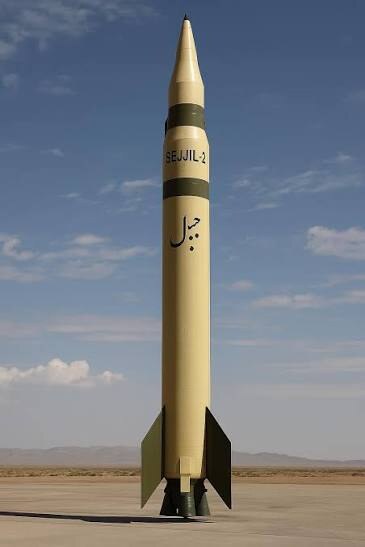
Sejjil is a two-stage solid-fuel ballistic missile first demonstrated in 2008; the solid-fuel design significantly reduces the time to bring it to combat readiness, which increases the survivability of the complex before preemptive strikes.
The launch weight of Sejjil is estimated at approximately 26.6 tons with a length of 17.6 m. In the version with a range of up to 2,000 km, the missile carries a warhead of about 700 kg, and when the range is reduced to 1,000 km, it can be equipped with a warhead weighing up to 1,500 kg.
It is the solid-fuel nature of the Sejjil that makes it a convenient tool for surprise strikes, as the time “from receiving an order to launching” is shorter than that of liquid-fueled systems, which complicates the task of reconnaissance and preventive counter-battery warfare.
Khorramshahr
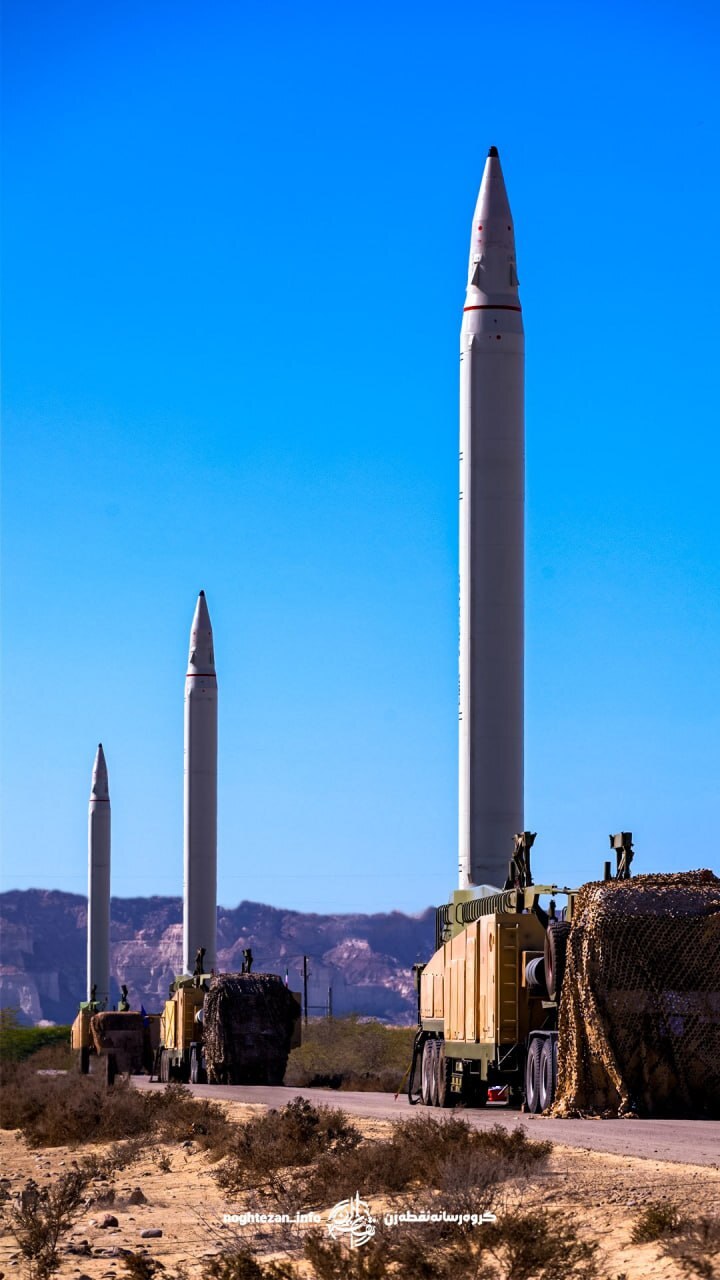
Khorramshahr is a liquid-fueled ballistic missile, first shown in 2017, believed to be derived from the North Korean BM-25 Musudan (Hwasong-10), which in turn is based on the Soviet R-27 naval ballistic missile.
In the variant with a range of about 2,000 km, the Khorramshahr can carry a warhead weighing up to 1,500–1,800 kg; with a “lighter” charge, some modifications, according to analysts, are capable of reaching 3,000–4,000 km, although with a smaller charge, they are capable of reaching not only Ukraine, but also Germany and Italy, i.e. targets in central Europe.
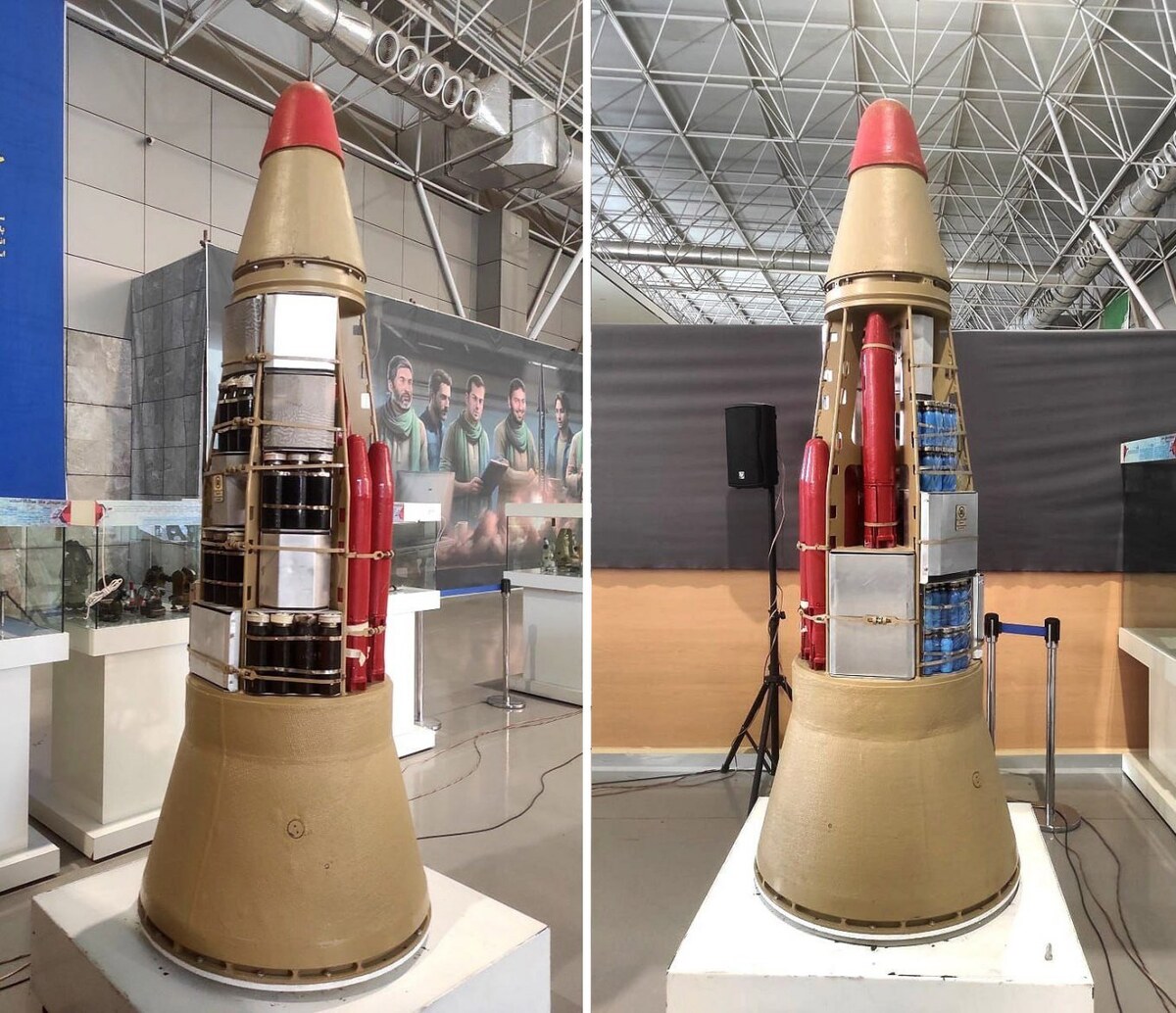
The key danger is a specially designed cluster warhead with submunitions, which Iran has already used against Israel: one warhead can scatter up to 20 separate elements within a radius of about 8 km, which creates maximum losses in urban areas and overloads missile defense systems.
Have Iranian ballistic missiles been fired at Ukraine yet?
According to the Main Intelligence Directorate of Ukraine, Iran has transferred more than 350 Fath-360 ballistic missiles to Russia (with a range of up to 120 km, warhead weight of about 150 kg), but no confirmed launch of a Fath-360 over Ukrainian territory has yet been recorded.
Recently, the WSJ reported that Iran's Fath-360 ballistic missiles have become more technologically advanced, analyzing Iran's recent strikes on US military sites, adding that the Russians, who helped modernize the missiles, may have played a role.
Will Ukraine be able to shoot down Iranian ballistic missiles?
To intercept Khorramshahr, Israel and the United States used the most modern Arrow-2/Arrow-3, THAAD, and SM-3 systems, which Ukraine does not have.
Given the severe shortage of Patriot interceptor missiles and the fact that as of late April alone, the US had used up almost half of their stock in the war against Iran, Ukraine's ability to repel a potential Iranian ballistic attack is, to put it mildly, limited. This is an important signal for Ukraine as well, where Patriot is a key "anti-ballistic" umbrella.
What's next?
On the eve of President Zelensky's visit to the United States, information was spread through telegram channels close to the head of the Ukrainian People's Party that during a face-to-face meeting with Donald Trump, the issue of the Iranian threat to Ukraine would be one of the issues discussed. However, as of the time of writing this material, no statements had been made to the public. This may mean that the threat is more figurative than explicit.
The communication itself regarding Iranian ballistics was delegated to lower-ranking officials. Thus, the head of the NSDC Disinformation Countermeasures Center, Andriy Kovalenko, “reassuringly” reported the following: “There is currently no official data (official data) on the preparation of such a strike. But Iran potentially has weapons for such actions.”
In the evening, Ukrainian Foreign Minister Andriy Sybiga said that he had a telephone conversation with his Iranian counterpart Abbas Araqchi, during which the Ukrainian side explained that Russia should be responsible for the death of the Iranian sailor, because it is the root of the problems.
In turn, Arakchi wrote in X that Tehran had heard the Ukrainian side and did not want escalation, but demanded compensation for losses (at the same time, Iran has still not compensated Ukraine for the losses caused by the shooting down of a Ukrainian UIA plane in January 2020).
That is, the parties are currently trying to use the diplomatic track to resolve the conflict.
Regardless of whether a ballistic strike is carried out or not, Iran has long been a participant in the Russian-Ukrainian war, whose notorious "shaheeds" have been terrorizing the Ukrainian population for the fifth year. The decision rests solely with the Iranian military-political leadership, and as the recent past shows, the threats did not go beyond that.
We were not broken by Korean ballistics or Russian "nutcrackers", but let's remember - it's better to wait out an air raid in cover.