Хочете будувати кар’єру в Data Science та AI? Vodafone Big Data Lab відкриває новий набір —>
Оксана СтепураAI Eng
18 August 2026, 10:26
2026-08-18
Ukrainian researchers have trained AI to better detect small drones by sound. How did they do it?
Ukrainian researchers from Zvook, KPI, and Kyiv School of Economics have trained AI to better detect FPV, DJI Mavic, and other small drones by sound, even when they are drowned out by wind, machinery, human voices, or other noise.
Ukrainian researchers from Zvook, KPI, and Kyiv School of Economics have trained AI to better detect FPV, DJI Mavic, and other small drones by sound, even when they are drowned out by wind, machinery, human voices, or other noise.
This was reported by Volodymyr Sydorsky, co-founder of Zvook, a company that manufactures acoustic sensors for detecting air targets by sound.
Acoustic systems can detect UAVs by the characteristic sound of the engine and propellers. However, in real-world conditions, a problem arises: the drone needs to be heard over wind, cars, machinery, conversations, and other background noise. In addition, different microphones and their placement can greatly alter the recording, which can make it difficult to detect the drone.
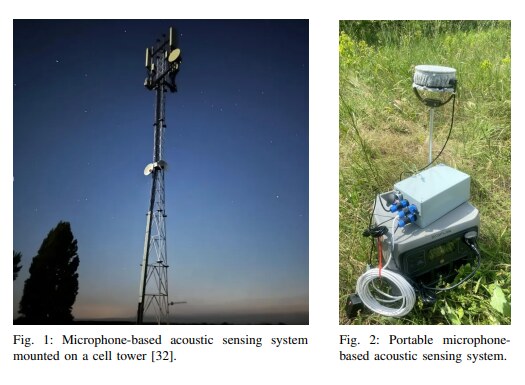
More than 300,000 audio recordings were used for the work. The data was provided by the Zvook team. The dataset included recordings from training grounds and combat zones, as well as recordings from operational acoustic air defense sensors. The location of the sensors also varied. Some were placed on towers at a height of 10–40 meters, where conditions were quite stable. And some, accordingly, were about a meter above the ground, and together with the drones they «heard» people, equipment and other background noise.
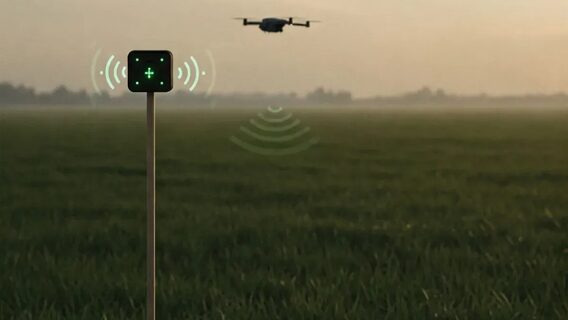
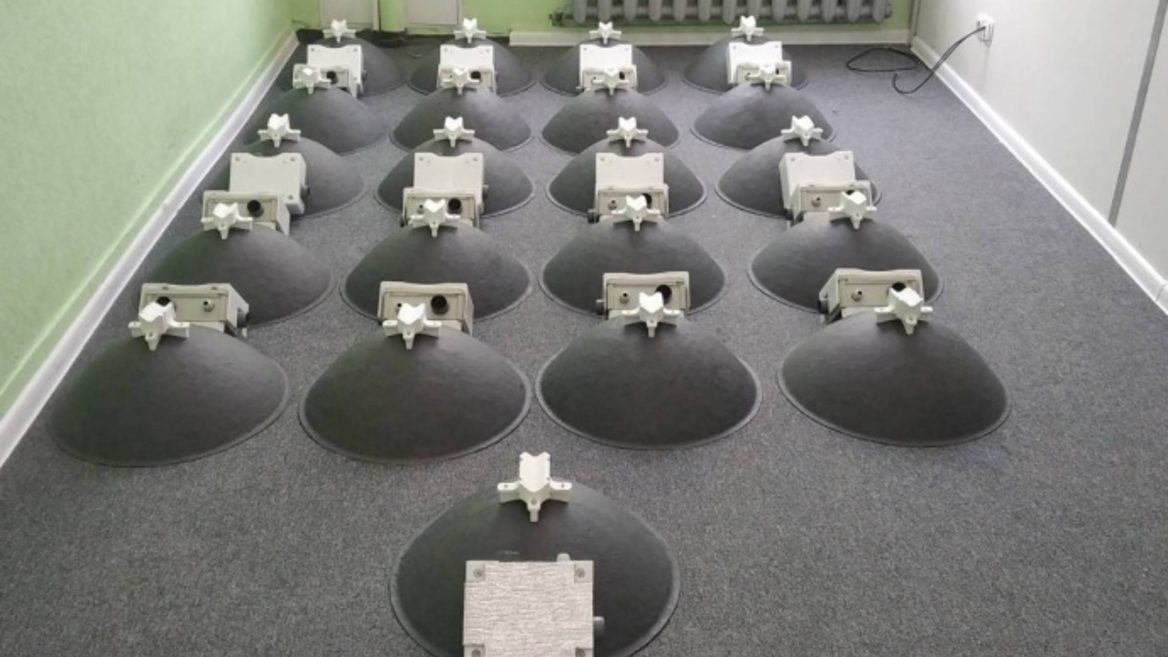
What acoustic sensors might look like.
Initially, the models were given a dataset with few recordings of small drones. With a small amount of data, the model could not cope with the task. It could «catch» on random features of a particular dataset, for example, a certain background noise, microphone, recording conditions. Instead of learning to reliably find the acoustic features of a small drone.
So they gave it more «comparison material»: recordings of larger drones, helicopters, jets, and propeller-driven aircraft. This way, the algorithm had to learn to distinguish similar sound patterns, and not just react to something loud in the sky. Then the researchers began to deliberately spoil the recordings. They mixed noise into the audio, and in some cases, partially drowned out the loudest part — the one that the model would find easiest to «catch.» This forced it to look for weaker signs of a drone in other parts of the recording.
And in the final test, the model was tested on recordings exclusively from active combat zones, as well as in locations new to the model. The separate model showed an F1-score of 78,6%, and the combination of the two models — 82,22%. The F1-score in this study is an indicator of the quality of recognition, which simultaneously takes into account how many drones the system actually finds and how often it mistakenly takes other sounds for drones.
Volodymyr Sydorsky also reported that this research was nominated for the Best Early-Career Scientist Award. This is an award for young scientists from the international conference on military communication and information systems. And on the website of the NATO Science and Technology Organization we can see that in the end this research received this award.
Previously, dev.ua wrote that ZVOOK created the NW0 tactical acoustic sensor to detect FPV drones, in particular fiber-optic ones, by their characteristic sound.
Як нейромережі бачать вільну та незалежну Україну? Тест dev.ua
Нейронні мережі для генерації зображень бачать світ по-своєму, їхню логіку зрозуміти часом зовсім неможливо. Але таки хочеться. На честь Дня Незалежності України редакція dev.ua вирішила провести невеликий експеримент.
Ми задали чотирьом різним нейронним мережам п’ять однакових запитів: «прапор України», «День Незалежності України», «український Крим», «перемога України» та «українці». Отриманими результатами ми ділимося з вами нижче.
У TikTok тепер можна генерувати фон за допомогою нейромережі. Ми протестували її та ділимося результатами
У TikTok з’явилася нова функція «Розумний фон». З її допомогою як фон для тіктоків можна підставляти згенеровані нейромережею зображення. Редакція dev.ua протестувала цю технологію і ділиться своїми враженнями.