Хочете будувати кар’єру в Data Science та AI? Vodafone Big Data Lab відкриває новий набір —>
Оксана СтепураWar
10 August 2026, 10:33
2026-08-10
Didn't find the target — returned to base by itself: how the Ukrainian interceptor "Balaban" from Phantom Defense works
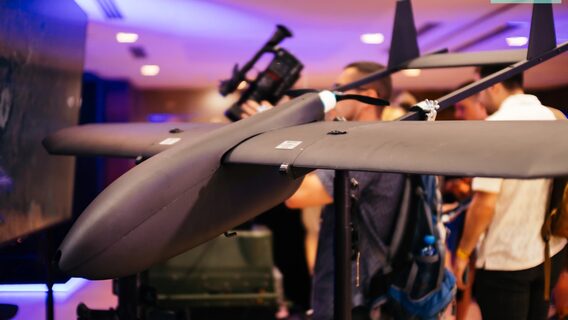
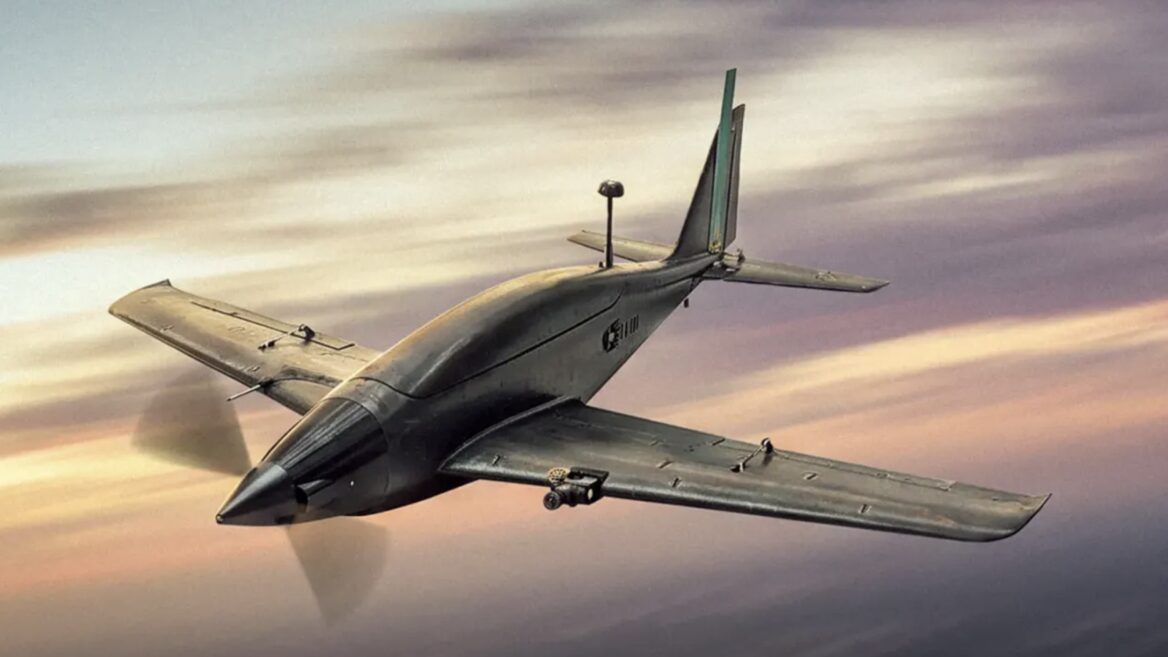
Ukrainian company Phantom Defense has revealed new details about the Balaban interceptor drone. If it fails to intercept a target during the flight, or if communication is lost, it can return to its launch site on its own.
Ukrainian company Phantom Defense has revealed new details about the Balaban interceptor drone. If it fails to intercept a target during the flight, or if communication is lost, it can return to its launch site on its own.
This is reported by The Defender Media. The drone is equipped with an autopilot, which allows it to return to the launch site, as well as automatically perform flight missions. It can also stay in the air for more than 2 hours, waiting for a target. As a representative of Phantom Defense stated, «Thanks to the large battery, it can be used to monitor air targets. If the operator finds a target, he hits it. If not, the device can land, replace the battery and continue the flight.»
«Balaban» operates in a radius of up to 70 km and accelerates to approximately 250 km/h. It can carry up to 1.2 kg of payload. It is launched from a catapult.
Another interesting feature is that the Balaban does not necessarily rely on GPS for navigation. It can navigate using radio beacons, ground-based devices that are placed at previously known points and help the drone determine its position relative to their signals. According to the manufacturer, the accuracy of such positioning is up to 100 m.
During the flight, the operator also sees data about the drone’s systems in real time, and he can also change communication channels, for example, if the current channel is blocked by obstacles. The company is currently preparing the Balaban for codification. At the same time, the manufacturer claims that the interceptor already has a certificate of conformity and can be supplied to the military under direct contracts.
In early August, dev.ua wrote that they plan to integrate AI and autonomous guidance into the Bullet interceptor. And in late July, Wild Hornets reported that their STINGs are already shooting down Russian reconnaissance drones at altitudes of up to 6.8 km.