Хочете будувати кар’єру в Data Science та AI? Vodafone Big Data Lab відкриває новий набір —>
Олександр КузьменкоGadgets
13 November 2026, 08:08
2026-11-13
Ukrainian developers have created anti-fragmentation ballistic curtains BRONEL to protect offices and data centers
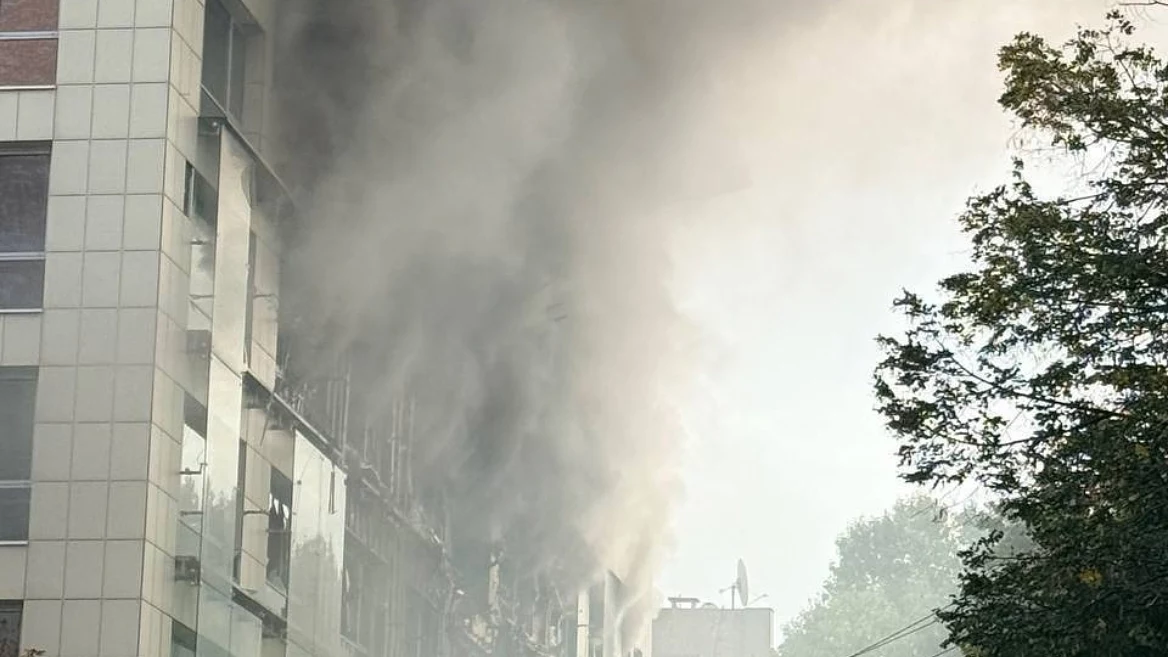
Ukraine has developed anti-fragmentation ballistic curtains BRONEL - movable armored panels in a textile cover that are installed in front of windows to protect premises and equipment from debris during explosions.
Ukraine has developed anti-fragmentation ballistic curtains BRONEL - movable armored panels in a textile cover that are installed in front of windows to protect premises and equipment from debris during explosions.
The design works on the principle of kinetic energy absorption: the panel does not reflect the impact, but dampens the impulse of the blast wave and delays the fragments. Inside is a multilayer ballistic package made of non-combustible materials used in body armor. Outside, it is covered with a cover made of synthetic Oxford fabric, resistant to moisture, mold and treatment with alcohol or chlorine-containing disinfectants.
As reported by Interfax-Ukraine, the project was launched on October 1, 2026 by representatives of the defense sector, volunteers, and construction industry specialists. According to Artem Henzel, head of the project's business development department, the developers tried to combine protective materials with interior solutions for residential and commercial premises.
“We do not create the illusion of replacing full-fledged shelters, but we provide an opportunity to preserve space and life at a vulnerable moment,” Hansel noted.
The base panel is 80 cm wide, 300 cm high and 2 cm thick, although the dimensions are made individually for specific openings. Due to the weight of the ballistic package, the structure is mounted on reinforced anchor cornices with rollers (single-track 40 mm or double-track 80 mm). They are mounted in a concrete ceiling or on a wall with an overlap of the window opening by 15–20 cm on each side. In normal mode, the panels are pushed apart, and during an alarm they are closed.
According to the developers, the product was tested at the National Defense University of Ukraine according to NATO standards and Ukrainian military standards. During the tests, the panel stopped an F5 fragment simulator weighing 1.1 g at a speed of 479.67 m/s. The speed of glass fragments during an explosion is usually 30–150 m/s.
The developers note that they are focused on using the system in residential buildings, medical facilities, schools, as well as in office centers and data centers. In commercial real estate, the panels should protect workplaces and equipment in the event of a glass facade being destroyed. In Tier III and Tier IV data centers, the curtains are proposed to be installed on process windows in monitoring areas, generator rooms and cooling systems.
A "Lancet" with artificial intelligence apparently crashed near the Independence Monument. Serhiy Flesh believes that these fragments could have been intentionally dropped from the "Shahedi"