Хочете будувати кар’єру в Data Science та AI? Vodafone Big Data Lab відкриває новий набір —>
Стас ЮрасовHot News
7 April 2026, 13:15
2026-04-07
“Replacement is probably better than repair.” A San Francisco startup plans to grow bodyoids – brainless bodies that will become our clones
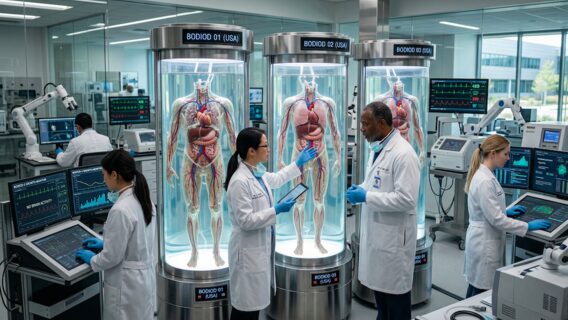
A biotech startup has a bold idea for an alternative to animal testing: insensitive «organ bags.» In the future, this could turn into bodioids. These are brainless (or nearly brainless) structures that will replace human bodies as they age and wear out.
A biotech startup has a bold idea for an alternative to animal testing: insensitive «organ bags.» In the future, this could turn into bodioids. These are brainless (or nearly brainless) structures that will replace human bodies as they age and wear out.
R3 Bio, a San Francisco-based company (with a subsequent office in Puerto Rico), has quietly pitched the idea to investors as a way to replace laboratory animals while bypassing the ethical issues associated with living organisms.
As Wired writes, the company’s long-term goal, according to co-founder Alice Gilman, is to create human versions that could be used as a source of tissues and organs for people who need them.
Bodyoids are structures that will contain all typical organs except the brain, which deprives them of the ability to think or feel pain.
For Immortal Dragons, a Singapore-based longevity fund that invested in R3, the idea of replacement is a core strategy for human longevity. «We think replacement is probably better than repair when it comes to treating disease or regulating the aging process in the human body,» says CEO Boyang Wang. «If we can create an insentient, headless bodyoid for humans, that would be a great source of organs,» he says.
Help with the name and founders
The name R3 comes from the philosophy of animal research known as the three Rs: Replacement, Reduction, and Refinement. The philosophy, which aims to conduct experiments humanely and seek alternatives, was pioneered by William Russell and Rex Birch in 1959.
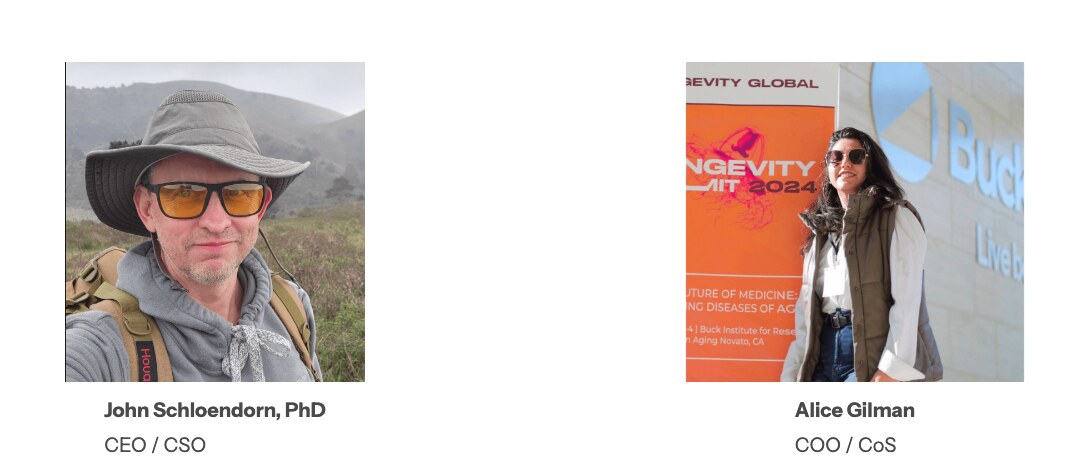
R3 bio’s CEO, John Schlendorn, PhD, has 20 years of experience founding and leading projects and companies in biomanufacturing, regenerative medicine, and longevity. John is the project’s principal investigator. He co-authored a significant portion of the technology, coordinates the scientific team, and bases the company’s strategy on scientific realities.
Alice Gilman is the Chief Operating Officer of R3 Bio, where she leads operational infrastructure, investor engagement, and international activities. At R3 Bio, she focuses on building the organizational systems, external connections, and capabilities necessary to advance ambitious scientific programs.
Where did it start?
MIT Technology Review discovered that last September the pair spoke at Abundance Longevity, a $70,000-a-ticket event in Boston organized by anti-aging promoter Peter Diamandis. While the presentation to about 40 people was not videotaped and was meant to be confidential, a copy of the event’s agenda shows that Schlendorn was there to lay out his «ultimate attempt to defeat aging» in a session titled «Total Body Replacement.»
Stealth startup founder John Schlendorn offers a striking, medically graphic, and ethically charged vision of what he calls “ brainless clones» that would serve as backup human bodies.
Imagine it this way: a child version of yourself with enough brain structure to be alive in case you ever need a new kidney or liver.
Or, alternatively, he suggested, your brain could one day be placed into a younger clone. This could be a way to get a second life through a still-hypothetical procedure known as a body transplant.
According to MIT Technology Review, the fuller context of R3’s proposals, as well as the activities of another stealth startup with similar goals, are being deliberately kept secret by a circle of extreme life-extension advocates who fear that their plans for immortality could be thwarted by clickbait headlines and public backlash.
As the dev.ua journalist noticed, despite the article in Wired and other publications, R3 refutes some of the statements on its website: «We have drawn attention to the recent sensational coverage of this topic in the media. We do not encourage such attention. R3 Bio works with microscopic structures in cell cultures. We do not create the types of large-scale structures that are imagined in the media. We do not work with live primates.»
A hair-raising performance
Although MIT Technology Review tells of one person who heard the presentation of the R3 clone and told the publication on condition of anonymity that she was stunned by its implications and impressed by Schlendorn’s enthusiastic speech.
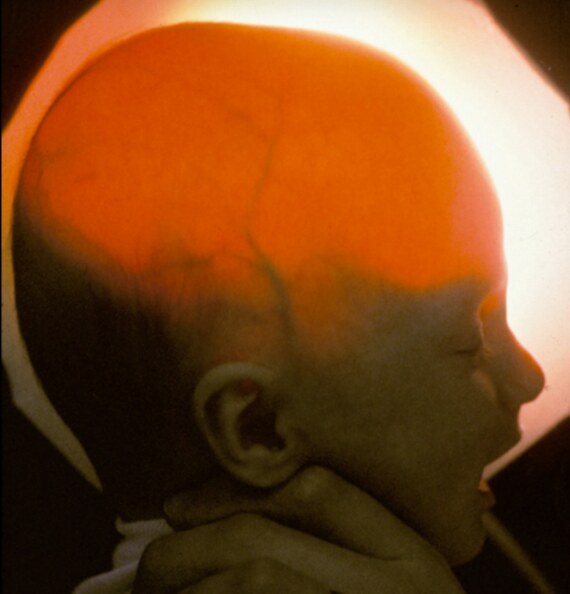
A key inspiration for Schlendorn is a birth defect in which children are born without much of their cerebral cortex; he would show people medical scans of these children’s nearly empty skulls as proof that the body can live almost without a brain.
A child with hydranencephaly, a rare condition in which most of the brain is missing
And he talked about how to grow a clone. Since artificial wombs don’t yet exist, it’s impossible to grow brainless bodies in a lab. So he said that the first batch of brainless clones would have to be carried by women who were paid to do so. However, in the future, one brainless clone could give birth to another.
It all starts with monkeys
According to Wired, R3 is currently working on creating bags for monkey organs.
New drugs are now often tested on monkeys before being given to human clinical trial participants. For example, monkeys were critical during the Covid-19 pandemic for testing vaccines and therapeutics. But they are also an expensive resource, and their numbers in the US have been declining since China banned exports of non-human primates in 2020.
As a result, Gilman said, there aren’t enough research monkeys left in the U.S. to conduct the necessary research in the event of a new pandemic threat. So, meet the organ bags.
Organ bags theoretically have advantages over existing organ-on-chip or tissue models, which lack the full complexity of whole organs, including blood vessels.
Gilman says it’s already possible to create mouse organ bags without a brain, although she and co-founder John Schlendorn deny that R3 has created them.
Gilman doesn’t like the term «brainless» to describe organ sacs.
«It lacks nothing because we design it in such a way that it only has what we need,» she says.
Stem cells and gene editing
Gilman and Schlendorn did not tell Wired exactly how they plan to create the monkey and human organ pouches, but said they are exploring a combination of stem cell technology and gene editing.
It’s possible that organ sacs could be grown from induced pluripotent stem cells, says Paul Knopfler, a stem cell biologist at the University of California, Davis. These stem cells come from adult skin cells and are reprogrammed to an embryonic-like state. They have the potential to form into any cell or tissue in the body and have been used to create embryo-like structures that resemble real cells. By editing these stem cells, scientists could turn off genes needed for brain development. The resulting embryo could then be incubated until it grows into organized organ structures.
Gilman envisions the monkey organ bags being used initially to test drug toxicity. Eliminating the pain and suffering experienced by research animals is a primary motivation for the startup.
The U.S. Animal Welfare Act requires that pain and suffering be minimized for research animals, but this is not always possible. In fiscal year 2024, U.S. research institutions reported using more than 60,000 nonhuman primates for testing and experimentation, according to the Animal and Plant Health Inspection Service, part of the Department of Agriculture. More than 33,000 of these animals experienced no pain, while nearly 26,000 experienced minimal pain. For about 1,200 of these animals, pain was not minimized due to the nature of the experiments. The federal government does not keep statistics on how many nonhuman primates are euthanized each year as a result of research.
Donor organs are in short supply
But R3’s ambitions go beyond replacing animal testing. The company is looking at replacing human parts, a new idea in the field of longevity. The startup aims to create insensitive human organ sacs that could supply people with blood, tissue, and organs when their own bodies fail them.
«We have things that no one has invented before to create designer organs,» says Gilman, who was inspired by her father’s experience with a heart transplant.
Worldwide, the demand for donated organs exceeds the supply. In the US alone, more than 100,000 people are waiting for an organ transplant, and 13 people die every day while waiting for one.
Gilman points to the well-documented illegal organ trade in Asia and Africa as a reason why ethically sourced body parts are desperately needed. In the US, last year the US Department of Health and Human Services conducted an investigation into cases where hospitals allowed organ harvesting to begin when some patients could still show neurological signs compatible with life.
Genetically modified pig organs are being explored as one way to help alleviate the organ shortage, but so far the longest a person has lived with a pig organ is just under nine months.
Growing human organs from scratch has been a long-standing goal of regenerative medicine, but the idea of body bags raises a number of ethical questions about how these entities would be created, preserved, and maintained, and whether they would be capable of consciousness or pain.
«If you could create a living being without a brain at all, I think we would be quite comfortable thinking that it couldn’t feel pain,» says Hank Greeley, a bioethicist at Stanford University who has written about the potential of human «bodyoids» that lack sentience.
Greeley believes it’s important to get public support because the concept is so disturbing. «I think the ‘push factor’ will be strong,» he says, «but it depends partly on what any resulting structures look like and how they operate.»
While it’s quiet
MIT Technology Review found no evidence that R3 has cloned anyone, or indeed any animal larger than a rodent. However, the publication did find documents, additional meeting agendas, and other sources that outline a technical roadmap for what R3 called «body-replacement cloning» in a letter to supporters in 2023. That roadmap included improvements to the cloning process and genetic blueprints for creating animals without a full brain.
R3 claims to only work with monkey cells for now, although a job posting posted by Gilman shows that the company is looking for a veterinarian in Puerto Rico to «implant embryos, monitor pregnancies, and assist in healthy births» in primates.
In addition to Immortal Dragons, the company is backed by billionaire Tim Draper and LongGame Ventures in the UK, R3 reports.
«We’re all better off than we were 150 years ago,» Draper told WIRED, «and thanks to forward-thinking entrepreneurs, we’ll be much better off 150 years from now.»