Промо на dev.uaThat's Life
21 April 2025, 09:00
2025-04-21
Fighting fraud: what technologies do banks use to protect customers
The modern banking sector is constantly faced with the threat of fraud. Global losses from financial fraud are predicted to increase in 2025. In response, banks are investing in advanced technologies such as artificial intelligence (AI), machine learning and automated data analysis to stay ahead of fraudsters.
The modern banking sector is constantly faced with the threat of fraud. Global losses from financial fraud are predicted to increase in 2025. In response, banks are investing in advanced technologies such as artificial intelligence (AI), machine learning and automated data analysis to stay ahead of fraudsters.
Challenges in combating financial fraud
Traditional security systems cannot effectively detect fraudulent schemes because they are constantly changing and becoming more sophisticated. The most challenging points:
Transaction speed — with the advent of instant payments, banks only have a few milliseconds to verify transactions.
The development of mobile banking — most fraudulent transactions are carried out through mobile browsers or applications.
Difficulty in detecting anomalies — fraudsters use methods to «blur» payments through a network of fake accounts, which makes it difficult to identify illegal transactions.
IBM Safer Payments: a next-generation solution
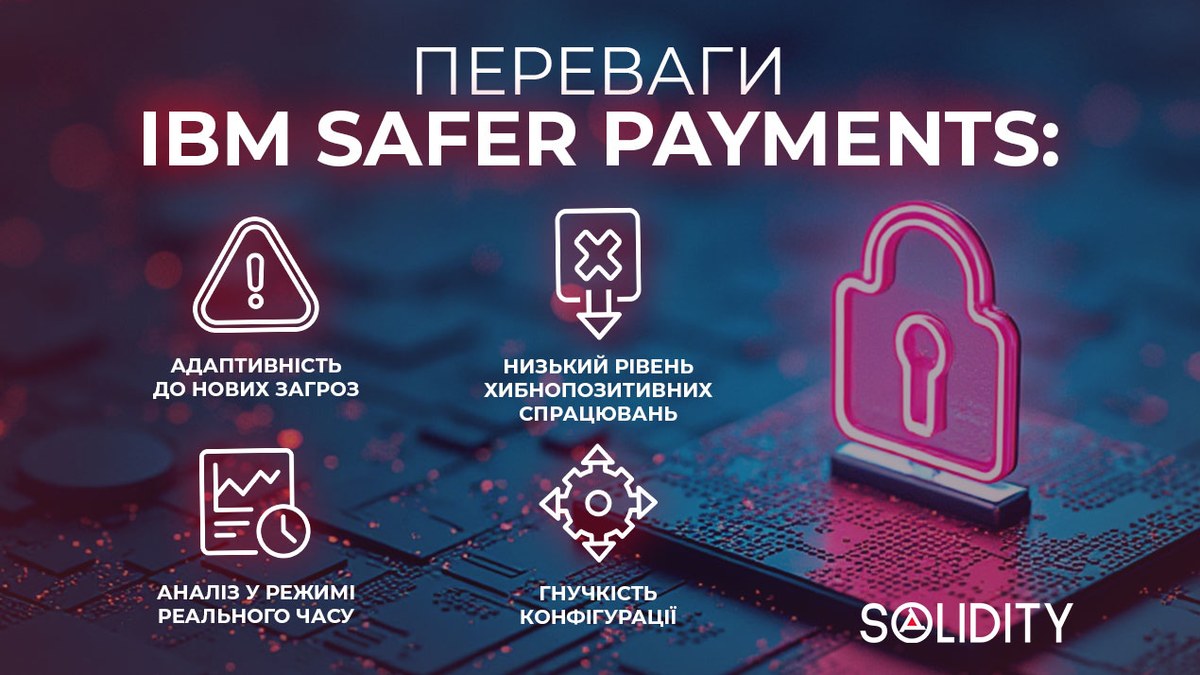
One of the leading technologies for combating financial fraud is IBM Safer Payments. This solution uses artificial intelligence and big data analytics to predict fraudulent activities in real time. Its benefits include:
Adaptability to new threats. Safer Payments can quickly update fraud detection models without involving third-party experts.
Low false positive rate. False blocking of legitimate payments occurs much less frequently, which improves the customer experience.
Real-time analysis. The system checks thousands of transactions per second, thereby ensuring an instant response to potential threats.
Configuration flexibility. IBM Safer Payments can integrate with existing banking platforms and adapt to a bank’s unique needs.
IBM Safer Payments analyzes all financial transactions, tracking suspicious activity related to the use of fake accounts or fake documents.
2. Intelligent data processing
The use of the latest analysis methods, including neural networks, decision trees, and regression models, allows us to more effectively predict new fraudulent schemes.
3. Protecting mobile banking and online payments
The system analyzes user behavior in mobile banking, identifying suspicious actions, such as login from unusual devices, a significant change in location, or atypical requests for funds transfer.
4. Scalability and reliability
The solution supports multi-channel payment monitoring, ensuring 99,999% availability and processing thousands of transactions every second.
BNZ Bank in New Zealand implemented IBM Safer Payments to improve customer protection. Here are the results it achieved:
Fraud reduction — the bank reduced its fraud rate by another 12% compared to its previous anti-fraud system — to 87%.
Improved customer experience — reducing the number of false positives to 1:1.15.
Thus, BNZ customers are protected from illegal fraudulent schemes, and the bank does not lose profits and has a reputation for reliability.
Financial fraud is a dynamic threat that requires advanced solutions. IBM Safer Payments offers banks an innovative approach to combating fraud by providing high detection accuracy, adaptability to new threats, and real-time protection. Using such technologies helps financial institutions not only reduce risk, but also increase customer trust in digital banking services.
For reliable and effective implementation of IBM Safer Payments, contact Solidity specialists — a team of experts who are fully familiar with this technology and will ensure the highest quality of implementation.