Марія БровінськаScience Pop
15 April 2026, 09:54
2026-04-15
Neuralink co-founder's startup enlists Yale neurosurgeon for first biohybrid brain chip implantation
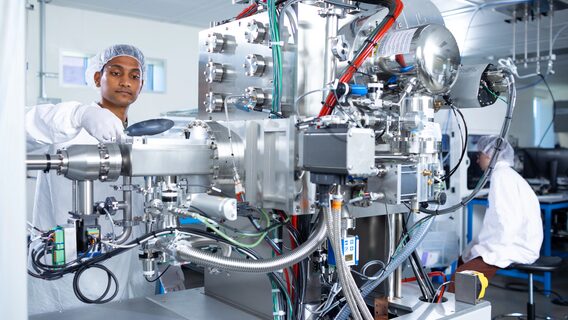
Science Corporation, a startup led by Max Hodak, former president and co-founder of Neuralink, is preparing for the first human trial of its biohybrid brain-computer interface. Dr. Murat Gunel, chairman of the Department of Neurosurgery at Yale School of Medicine, has joined the project.
Science Corporation, a startup led by Max Hodak, former president and co-founder of Neuralink, is preparing for the first human trial of its biohybrid brain-computer interface. Dr. Murat Gunel, chairman of the Department of Neurosurgery at Yale School of Medicine, has joined the project.
Gunel will become the company’s scientific advisor and will personally perform the first implantation of the sensor into a patient’s brain, Techcrunch writes .
Reference
Science was founded in 2021. Last month, the company closed a Series C round of $230 million at a valuation of $1.5 billion. Its most mature product is the PRIMA device for restoring vision in macular degeneration, which is already undergoing clinical trials and could receive approval in Europe this year.
What makes the Science approach different?
Unlike Neuralink, which inserts electrodes directly into brain tissue, Science’s device will be placed inside the skull but on the surface of the brain. The final version of the sensor will contain lab-grown neurons that are stimulated by light pulses and integrate organically with the patient’s neurons — creating a biological bridge between the brain and electronics.
The pea-sized device contains 520 electrodes to record brain activity. In 2024, the company published data on the successful implantation of a prototype in mice.
How are the first tests planned?
The first phase involves testing the sensor without embedded neurons on patients who already need major brain surgery, such as those with a stroke with edema. The company says the device does not require FDA approval because it does not pose significant risks.
Potential applications: stimulating damaged brain cells for repair, monitoring tumor activity, preventing epileptic seizures, and eventually treating Parkinson’s disease.
«If we can implant cells back into the brain and protect these circuits, there is a chance to stop the progression of the disease,» says Gunel.
Gunel believes that the start of human trials of the biohybrid interface is realistic no earlier than 2028.