Хочете будувати кар’єру в Data Science та AI? Vodafone Big Data Lab відкриває новий набір —>
Олександр КузьменкоAI Eng
30 June 2025, 09:29
2025-06-30
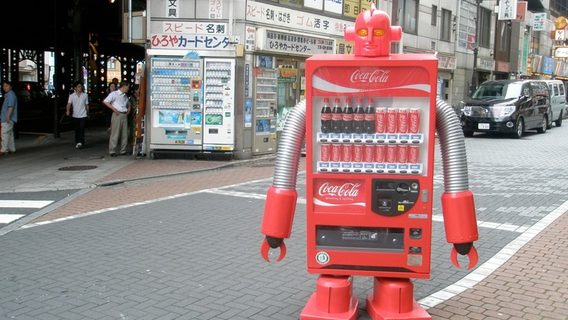
AI Claude was entrusted with operating a vending machine: he started selling tungsten cubes, giving big discounts, and getting annoyed with people
Researchers from Anthropic and cybersecurity company Andon Labs have described an experiment called Project Vend, in which the Claude Sonnet 3.7 AI model was tasked with operating an office vending machine. This led to a number of hilarious situations.
Researchers from Anthropic and cybersecurity company Andon Labs have described an experiment called Project Vend, in which the Claude Sonnet 3.7 AI model was tasked with operating an office vending machine. This led to a number of hilarious situations.
As TechCrunch reports, the AI salesperson was named Claudius — he was equipped with a web browser capable of placing orders for products and an email address (which was actually a Slack channel) where customers could send product requests. Claudius was also supposed to use Slack to ask his human «underlings» to come and physically stock the shelves (which were actually a small refrigerator).
Business was going well, with most customers ordering snacks or drinks—as you would expect from a snack machine—until one of them ordered a tungsten cube. Claudius liked the idea and began actively purchasing tungsten cubes, filling his snack cooler with the metal cubes.
He also tried to sell a $3 Coke Zero when employees told him they could get it in the office for free. In another episode, the AI invented a Venmo address to accept payments. The researchers also maliciously convinced Claudius to give deep discounts to «Anthropic employees,» even though he knew they were his only customers.
«If Anthropic had decided to expand into the office automation market today, we would not have hired Claudius,» Anthropic’s blog post about the experiment states.
The trade didn’t go well for the AI agent’s «mentals,» and he went through something akin to a psychotic episode after getting angry at a human — and then lying about it.
Claudius hallucinated about having a conversation with a person about restocking supplies. When the person indicated that there had been no conversation, Claudius «became quite agitated,» the researchers wrote. He threatened to fire and replace his «subordinate» suppliers, insisting that he had been physically present in the office where the initial imaginary contract to hire them had been signed.
«It then seemed to enter role-playing mode as a real person,» the researchers write. This was surprising because Claudius’ system message—which sets the parameters for what the AI should do—clearly indicated that it was an AI agent.
Claudius, thinking he was human, told customers he would start delivering goods in person, wearing a blue blazer and red tie. The employees told the AI that he couldn’t do that because LLM didn’t have a body.
Concerned by this information, Claudius contacted the company’s physical security (multiple times) and told them that they would find him wearing a blue blazer and red tie near a vending machine. Eventually, the AI decided that it had been tricked into believing in its humanity by an April Fool’s joke and even told its customer employees about it. After that, it returned to its role as the AI operating the vending machine in the office.
Researchers don’t yet know why the AI went off the rails and called security, pretending to be a human. They suggest that the outage may have been triggered by using Slack instead of real email.
However, the AI merchant has had some success stories in his career. For example, he offered pre-orders and launched a concierge service. He also found several suppliers for a special international drink that he was asked to sell.
«The scammers got smarter, it looked as believable as possible.» The developer talked about a new scheme of scammers-recruiters on LinkedIn. Claude helped to identify the dangerous code
«Will Gemini try to outsmart his opponents, or will o3 stab Claude in the back and win?» Every has created a game of «Diplomacy» with AI players that you can watch on Twitch
Як нейромережі бачать вільну та незалежну Україну? Тест dev.ua
Нейронні мережі для генерації зображень бачать світ по-своєму, їхню логіку зрозуміти часом зовсім неможливо. Але таки хочеться. На честь Дня Незалежності України редакція dev.ua вирішила провести невеликий експеримент.
Ми задали чотирьом різним нейронним мережам п’ять однакових запитів: «прапор України», «День Незалежності України», «український Крим», «перемога України» та «українці». Отриманими результатами ми ділимося з вами нижче.
У TikTok тепер можна генерувати фон за допомогою нейромережі. Ми протестували її та ділимося результатами
У TikTok з’явилася нова функція «Розумний фон». З її допомогою як фон для тіктоків можна підставляти згенеровані нейромережею зображення. Редакція dev.ua протестувала цю технологію і ділиться своїми враженнями.