Оксана СтепураAI Eng
19 August 2026, 11:57
2026-08-19
CEO Anthropic назвав негативне ставлення до ШІ «кризою довіри». Чому люди не довіряють ШІ-компаніям?
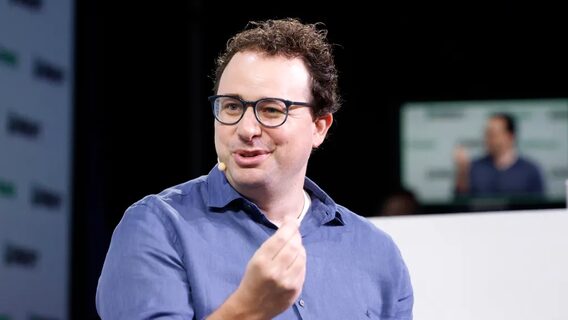
Anthropic CEO Dario Amodei has been accused of helping to fuel negative attitudes toward AI by warning about the risks of AI. Amodei responded that the problem is that people generally don't trust companies, governments, or the tech industry.
Anthropic CEO Dario Amodei has been accused of helping to fuel negative attitudes toward AI by warning about the risks of AI. Amodei responded that the problem is that people generally don't trust companies, governments, or the tech industry.
"I think it's essentially a crisis of trust. I think average people don't trust companies, governments, or the tech industry and are always suspicious that we're coming up with some new way to trick them," Amodei said.
He claims to have spoken about the risks and opportunities of AI in equal measure. In particular, back in 2024, the CEO of Anthropic published a long essay called Machines of Loving Grace, which explored an optimistic scenario for the technology. In it, he suggested that AI could allow humanity to go through decades of biological progress in just a few years.
“I think most people underestimate how radical the benefits of AI can be,” he stated in the essay.
But Amodei acknowledges that people are indeed becoming increasingly distrustful of AI. And this distrust is evident in surveys. According to the Pew Research Center, 59% of Americans have little or no confidence that American companies will develop and use AI responsibly. Another 67% are not sure that the US government can effectively regulate it. At the same time, chatbots themselves are becoming increasingly popular. About half of American adults have already used them. That is, people are actively using AI, but they do not have much trust in those who create it.
According to Amodei, the fairest complaint against Anthropic and other AI companies is that they are stillhave failed to deliver on their biggest promises. For example, AI executives like to say that artificial intelligence will help create new drugs or even defeat cancer. But according to the CEO of Anthropic, that phrase has already become a cliché.
“To change people’s attitudes towards AI, we need to truly cure cancer,” he argues.
There is also growing opposition in the US to data centers needed to train and operate large models. Local residents are concerned about electricity and water consumption, noise, and potential increases in utility bills.
Previously, dev.ua wrote that distrust in the way the government regulates AI is already noticeable in polls. In particular, in all 50 US states there is a fear that control over the technology will not be enough.
Як нейромережі бачать вільну та незалежну Україну? Тест dev.ua
Нейронні мережі для генерації зображень бачать світ по-своєму, їхню логіку зрозуміти часом зовсім неможливо. Але таки хочеться. На честь Дня Незалежності України редакція dev.ua вирішила провести невеликий експеримент.
Ми задали чотирьом різним нейронним мережам п’ять однакових запитів: «прапор України», «День Незалежності України», «український Крим», «перемога України» та «українці». Отриманими результатами ми ділимося з вами нижче.
У TikTok тепер можна генерувати фон за допомогою нейромережі. Ми протестували її та ділимося результатами
У TikTok з’явилася нова функція «Розумний фон». З її допомогою як фон для тіктоків можна підставляти згенеровані нейромережею зображення. Редакція dev.ua протестувала цю технологію і ділиться своїми враженнями.