Хочете будувати кар’єру в Data Science та AI? Vodafone Big Data Lab відкриває новий набір —>
Марія БровінськаRobots
28 July 2025, 13:28
2025-07-28
"A paratrooper in an assault group never goes alone: he is led by drones and robots. We even made the first robots ourselves." The head of the 7th Corps of the DShV - about robots in the army and the recruitment of fighters
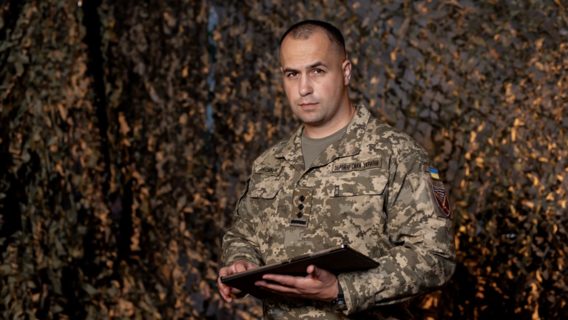
The head of the 7th Corps of the Airborne Assault Forces of the Armed Forces of Ukraine, Colonel Yevhen Lasiychuk, told how robotic complexes help stormtroopers in battles and reported that there is currently no shortage of stormtrooper personnel.
The head of the 7th Corps of the Airborne Assault Forces of the Armed Forces of Ukraine, Colonel Yevhen Lasiychuk, told how robotic complexes help stormtroopers in battles and reported that there is currently no shortage of stormtrooper personnel.
«I want to emphasize that the Airborne Assault Troops are being recruited first. I can’t say that there is a shortage of personnel. We are receiving new recruits, we are being supplemented. In communication with recruits, we emphasize training, we note that the maximum amount of time is spent on training. These include training centers, training within specific units, adaptation in units, etc.,» he said in an interview with Army.inform.
According to the military officer, every paratrooper knows who his squad commander, company commander, and battalion commander are. «It’s important that everyone knows who their commander is. It’s a must: to know the moral and business qualities, to know the commander in person,» says Lasiychuk.
He added that an important recruiting tool is the technical landing force. «It’s still in the training stage. At all levels of training, we provide an opportunity to use it, to see how it works. Even the training of an assault group is carried out using technology: an assault group paratrooper never goes alone, he is led using wings; in difficult areas we use robots. And only after that do the assault groups go,» explained the head of the 7th Corps of the Armed Forces.
According to him, they are trying to introduce the airborne component in all brigades and units that are conducting active combat operations.
In the fall of 2024, the brigade first used robots. «It was the fall of 2024. And I remember the most turning point — when I saw that not only the courage and heroism of a paratrooper can destroy and stop the enemy. And this can also be done at the expense of technology. At the same time, we were actively introducing the use of unmanned systems: both aircraft-type, and Mavic, and FPV. And at that time, the first robots were used as combat modules: they could go out and inflict fire damage,» the colonel says.
Sometime during those days, Lasiychuk had the idea to create a «technolanding force.»
Currently, the officer says, robots are widely used at the front: this includes combat work, fire damage, and logistical and engineering tasks (they can both mine and demine). «These are kamikaze robots that do an important thing: they go to places where it is already difficult for an assault or sapper group to enter in order to destroy a certain object (a bridge or shelter). And, in fact, we are also working quite successfully thanks to robots,» he says.
Lasiychuk added that the military even made the first robots themselves. «We tried to make something that could take on an explosive device and move due to wheels or tracks. Those were our first robots… In general, we bought and received such complexes. We develop our own inventions, our laboratories work, we connect civilian scientists. We actively work with universities, they provide us with theoretical training: for example, how to properly make the robot reach the desired point under the influence of electronic warfare,» he said.
However, the military man admits, there is currently no ideal robot option that would suit the entire front. «Conditions, terrain, etc. play a role. The process of introducing robots into the Armed Forces of Ukraine is constantly being improved, and that is good. We are developing every day, every hour — and this is one of the advantages of a full-scale war. It has become a forced catalyst for such changes,» the colonel summed up.