Хочете будувати кар’єру в Data Science та AI? Vodafone Big Data Lab відкриває новий набір —>
Наталя ХандусенкоІсторії
19 May 2025, 16:53
2025-05-19
A ninth-grader from the Zhytomyr region developed his own technology for manufacturing antennas for controlling UAVs
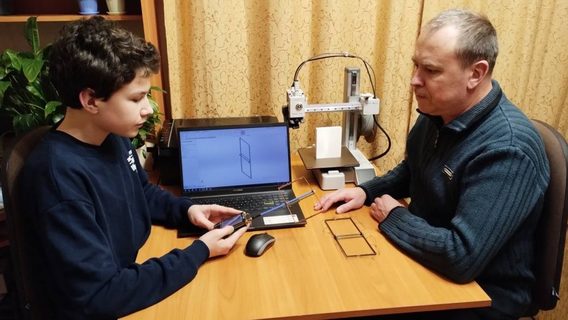
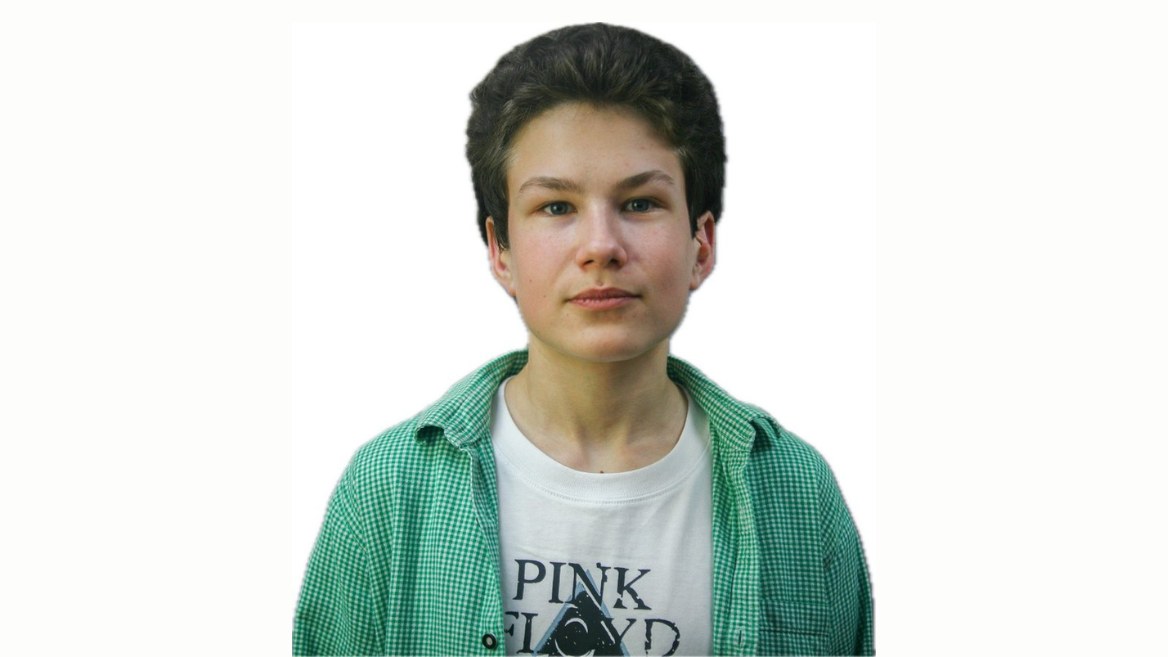
Ninth-grader Oleksandr Kalenyk from the city of Malyn, Zhytomyr region, developed his own technology for manufacturing a radio transmitting and receiving antenna.
Ninth-grader Oleksandr Kalenyk from the city of Malyn, Zhytomyr region, developed his own technology for manufacturing a radio transmitting and receiving antenna.
The world of electronics was discovered for Oleksandr by his father, who became his mentor and scientific supervisor. The boy assembled his first device at the age of 7. So amateur radio became one of his many hobbies.
"Later, I came across a CB radio station that needed repair. It was she who opened the world of radio to me. At the age of 11, with the support of my parents, I received an amateur radio license and the corresponding call sign, which allowed me to work on the radio. Since then, the world has lost its borders for me, because in a few minutes I could communicate with radio amateurs from a wide variety of countries. Like most radio amateurs, my dad and I made all the antennas and additional equipment ourselves, gaining new knowledge and experience," Oleksandr told Suspilny in an interview.
The schoolboy was prompted to search for new technologies by the war, namely the urgent need to manufacture antennas designed to control UAVs on non-standard frequency ranges and via a repeater.
"An antenna is a rather complex radio-technical device that has a large number of parameters that must be as close to ideal as possible. The quality of the antenna is affected by its design, material, and precise adherence to its geometric dimensions. My technology almost completely eliminates the human factor in the process of manufacturing the antenna - its frame is printed with fairly high accuracy on a 3D printer, and then a specially prepared polymer base is coated with metal using the galvanostegy method. In this way, an antenna with almost perfect repeatability of characteristics is obtained," the schoolboy explained about his technology.
According to Oleksandr, the advantage of his technology is that it allows for the manufacture of lightweight and durable antennas with high precision, not only in the form of flat structures, but also in the form of complex three-dimensional models.
"Such an antenna is extremely flexible and does not require special expensive equipment, and the process from theoretical calculations of a new product to receiving a small batch of antennas takes less than a day," the ninth-grader added.
"Advanced Encyclopedia." A 15-year-old high school student has swapped sports for technology and is developing an AI assistant to help with learning. How teachers view it
“Prevent wars and promote peace.” A 16-year-old startuper has developed a solution that will protect Ukrainian drones from electronic warfare and accelerate victory
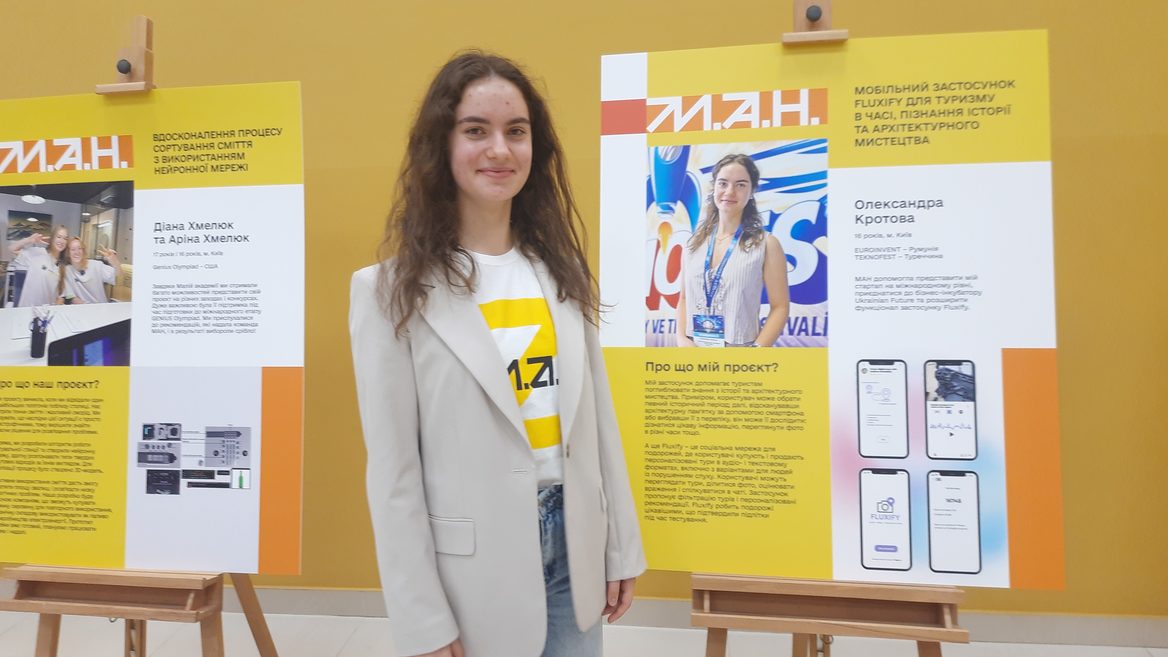
A 16-year-old student from a Kyiv lyceum has developed a mobile application for tourists and guides. Here's when FLUXIFY will be available on Google Play