Хочете будувати кар’єру в Data Science та AI? Vodafone Big Data Lab відкриває новий набір —>
Ігор Вишневський Hot News
30 January 2025, 09:00
2025-01-30
“Usually, states subsidize such projects by about 30%.” dev.ua received more information about domestic chip production, and also learned the opinion of the tech business about this initiative
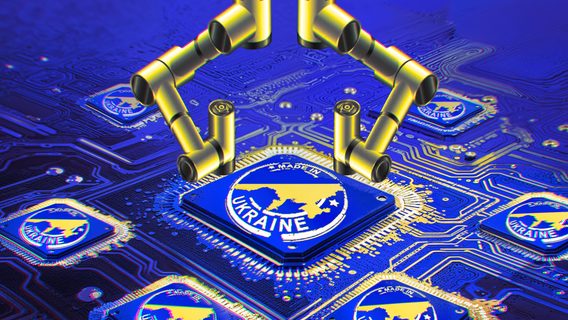
In mid-January, the news that Ukraine plans to start its own chip production was very loud — it was spread by almost every media outlet. Before that, creating conditions for the development of the semiconductor technology industry was identified as strategic goal No. 14 in the Strategy for Digital Development of Innovations until 2030, which was finally presented to the public.
Yevgeny Astakhov, a member of the expert team at the Ministry of Digital Transformation, which is working on a sectoral strategy, notes in a comment for dev.ua that Ukraine does not need to focus on advanced nodes, but rather focus on simple and mass solutions.
«The cost of a factory using advanced technologies can reach tens of billions of dollars. Instead, mature nodes, such as 180–130 nm, 65–28 nm, are optimal for meeting urgent needs. Building a factory using such technologies is more economically feasible, which makes it attractive to investors,» he argues.
In mid-January, the news that Ukraine plans to start its own chip production was very loud — it was spread by almost every media outlet. Before that, creating conditions for the development of the semiconductor technology industry was identified as strategic goal No. 14 in the Strategy for Digital Development of Innovations until 2030, which was finally presented to the public.
Yevgeny Astakhov, a member of the expert team at the Ministry of Digital Transformation, which is working on a sectoral strategy, notes in a comment for dev.ua that Ukraine does not need to focus on advanced nodes, but rather focus on simple and mass solutions.
«The cost of a factory using advanced technologies can reach tens of billions of dollars. Instead, mature nodes, such as 180–130 nm, 65–28 nm, are optimal for meeting urgent needs. Building a factory using such technologies is more economically feasible, which makes it attractive to investors,» he argues.
At the same time, two basic options are currently being considered — licensing the finished technology «turnkey» or attracting a strategic partner. Both, of course, have their advantages and disadvantages. The Ministry of Digital Affairs promises to decide which of these paths to take at the end of 2025.
Two paths: the perspective of the expert team of the Ministry of Digital Affairs
The Strategy for Digital Development of Innovations until 2030 lists more obstacles on the thorny technological path of chip production than advantages. Thus, the obstacles include an insufficient level of scientific research and development, the outflow of specialists, insufficient infrastructure for the development of high technologies, the obsolescence of the element base, the presence of high competition in the world market and the complexity of integration into global supply chains, as well as the insufficient volume of the domestic market. Among the advantages of Ukraine, the Strategy singles out only two — human capital and experience in the development of microelectronics.
«Despite the significant loss of scientific and production potential, the history of the industry, the presence of a scientific and educational base, and the preservation of the specialty „Microelectronics“ (now „Micro- and Nanosystems Engineering“) indicate the presence of a foundation for the revival of the semiconductor technology industry,» the Strategy states .
Agree, such a foundation… Especially if, in parallel with this, the document contains an unflattering statement about the current state of affairs: there is not a single specialized manufacturing enterprise in Ukraine, and the semiconductor industry is practically non-existent. Nevertheless, the Ministry of Digital Affairs is trying to see the light at the end of the tunnel even with such a basic disposition. The potential introduction of semiconductor production onto the bright path, as we have already said, can occur using two «tracks». We quote the answer provided to the Ministry of Digital Affairs:
Track 1: Turnkey licensing of ready-made technology involves:
obtaining ready-made technology with the transfer of necessary documentation and processes;
training of specialists: training of Ukrainian specialists abroad, by analogy with the training of F-16 pilots;
Construction control: the licensee controls the construction of production modules (foundry), equipment setup, and pilot line launch.
In this format, the state could potentially own a controlling stake in the factory, which would allow:
prioritize meeting the needs of the defense-industrial complex (DIC);
implement research projects.
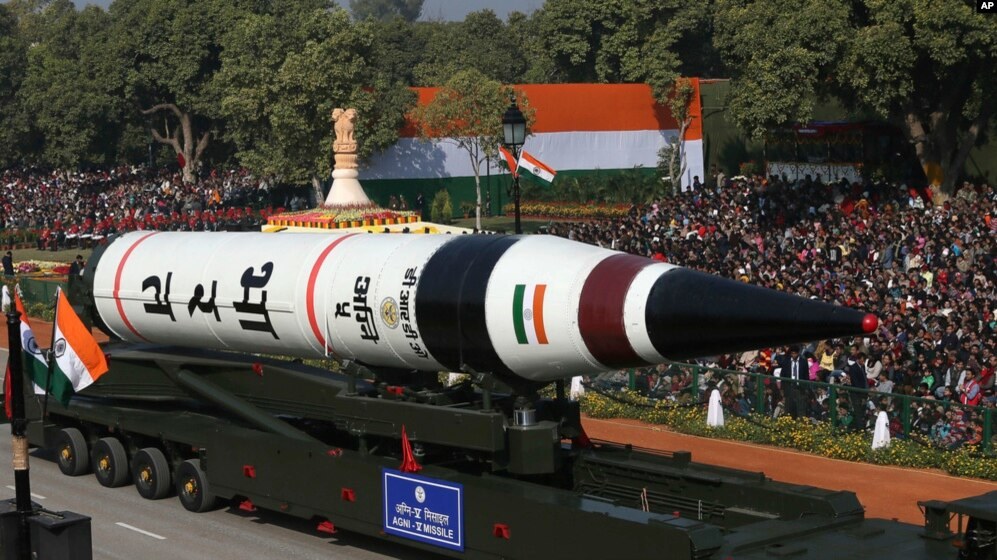
In this context, the expert team at the Ministry of Digital Affairs cites the example of India, which licensed the TS18SL 180 nm technology (a process for manufacturing chips with a 180 nm element size) from Israeli TowerSemi. After successfully mastering the technology, modules for radiation-hardened chips and image sensors were added.
India has established its own chip production for the defense and aerospace industries. Indian Agni V missile
As a result, domestic demand for the defense and aerospace industries was met. The Ministry of Digital Affairs claims that India subsequently expanded its production capacity to fulfill external commercial orders.
Track 2: Engaging a strategic partner involves:
search for a strategic partner (or several partners) on a commercial basis;
investment-attractive conditions: creation of state guarantees of support, a favorable business environment, and technical training.
As Yevgeny Astakhov notes in his response to dev.ua’s request, this approach is usually carried out through comprehensive negotiations with companies that have the capacity to build a factory using the necessary technology.
The cost of such a project depends on the chosen technologies and the scale of production. As examples, he cites the projects of TSMC in Arizona, Texas Instruments and Samsung in Texas — they cost more than $30 billion each.
«In Ukraine, the cost will be determined during negotiations with the partner, but according to preliminary estimates, the total cost of the project may be $1–3 billion. If we rely on global practices, states usually subsidize such projects by about 30%, but this is also adjusted depending on the project. Since this is a very complex task, we look at it as rebuilding the entire semiconductor industry, not just the factory. Therefore, there are many unknowns that will be decided in the operational process. We are already conducting an economic calculation of the impact of state subsidies and programs,» said Yevgeny Astakhov.
According to forecasts, the construction of such a facility could take at least two years, and achieving design capacity would require about another year.
At the same time, as of today, the second option, according to the expert team at the Ministry of Digital Affairs, is more realistic for Ukraine. After all, it will supposedly allow for a quick launch of production.
«Let’s be honest — we won’t build Intel or Nvidia from scratch here»
According to Forbes, the American Silvaco Group may be identified as a partner for developing software for chips. It is worth noting that Senior Director of Advanced R&D at Silvaco Oleksandr Grudanov is also part of the expert team at the Ministry of Digital Affairs.
Photo by Getty Images
«Silvaco’s services provide solutions for customers who have unique semiconductor modeling requirements but do not have the resources to work with TCAD software. Using the TCAD modeling service provides access to Silvaco’s expertise in semiconductor physics and software operations to provide a complete, fast, and accurate solution,» describes one of the company’s services on its website.
Oleksandr Grudanov has previously commented on the topic of a possible launch of chip production in Ukraine, making it clear that this idea is promising.
«Let’s be honest — we won’t build Intel or Nvidia from scratch here. But we need to use the window of opportunity that is opening up here now. We need to use global processes, for example, chip shortages,» Grudanov noted in a comment to the Pressing YouTube channel in the spring of 2024.
Grudanov’s colleague in the expert group, Yevgeny Astakhov, notes that future technology should support a full set of EDA (Electronic Design Automation) software for designing electronics.
«Without this, it is impossible to develop modern microcircuits. The cost of EDA licenses for one engineer ranges from several thousand to a million dollars, depending on the functionality. To optimize production processes, TCAD (Technology Computer-Aided Design) is required, the cost of licenses of which reaches $2–4 million,» he explains.
In addition, according to him, the technology should ensure the production of basic digital and digital-analog chips and support modular expansion. This will allow the production of chips for various industries: telecommunications, automotive electronics, sensors, etc.
Another requirement is the use of Multi-Project Wafer (the MPW model allows you to place different types of chips from different customers on the same wafer, optimizing resource use).
In addition to all of the above, the technology should support the creation of radiation-hard (rad-hard) chips, important for the defense and aerospace industries.
Strategic Goal No. 14 and steps towards its implementation
In fact, there was nothing super-sensational in the plans of the Ministry of Digital Affairs, because the top officials of the ministry openly announced their intentions to produce chips in Ukraine much earlier, unless they were supported by an official document and did not receive such large-scale media coverage. So, Mykhailo Fedorov and Valeria Ionan gave the first rough idea of this project back in mid-December 2023. «Of course, this should be a private initiative, a consortium of manufacturers, entrepreneurs, but state support is needed,» Fedorov noted then. However, during this period of time from the announcement at the end of 2023, we have only come to the approval of the same strategy at the beginning of 2025.
Despite the fact that the WINWIN Strategy is a document that only provides general plans of our authorities, in particular, regarding the attempt to bring Ukraine into the elite and rather narrow club of chip manufacturers, it is still worth dwelling on it to at least «draw a framework.»
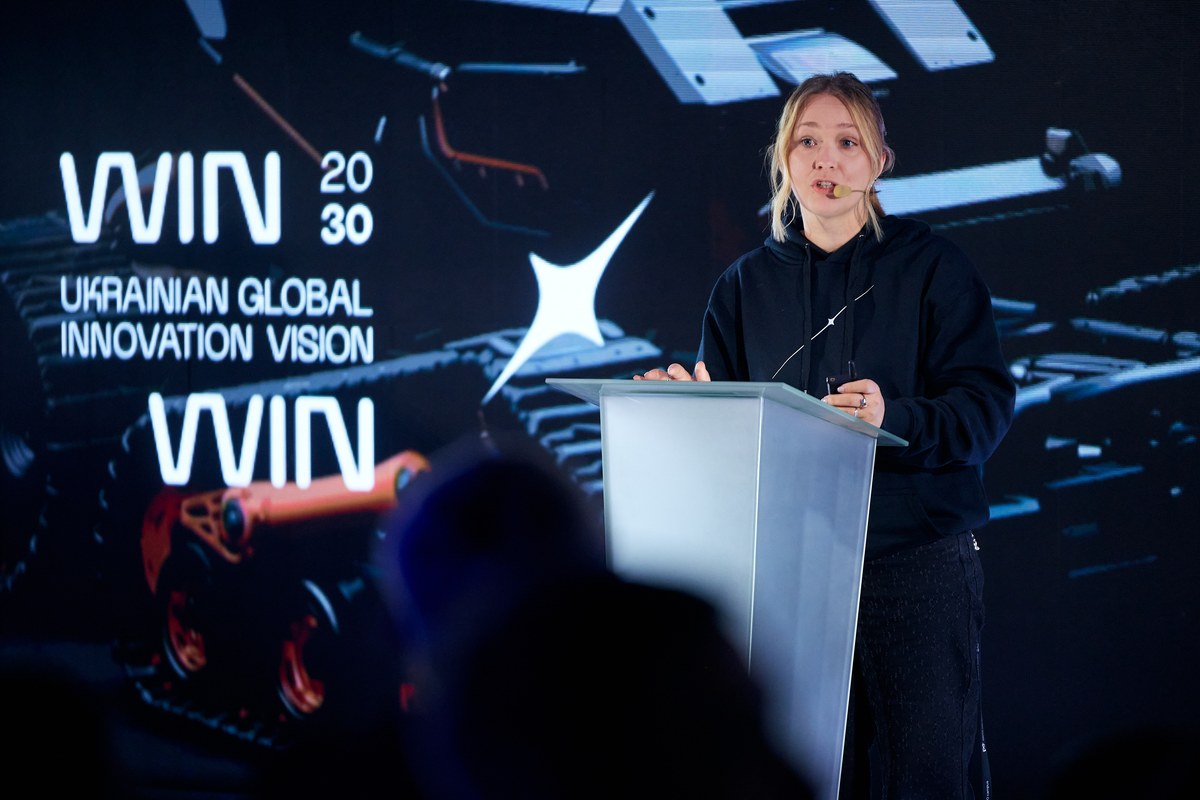
Valeria Ionan during the presentation of the WINWIN Strategy. Photo by the Ministry of Digital Affairs
In a separate paragraph dedicated to this issue, in addition to substantiating the importance of the goal, as well as a brief description of the geopolitical and economic conditions of the market, the historical prerequisites are mentioned, which during the USSR allowed Ukraine to be considered an advanced country in microelectronics.
«In the past, research and production enterprises on the territory of Ukraine developed up to 40% of microelectronics in the USSR until the early 1990s. After the collapse of the Soviet system, Ukraine lost its market position, many specialists emigrated or retrained in other areas,» the document states.
At the same time, the Strategy indirectly links Ukraine’s plans for chip production to the plans of our European partners. «The European Union’s ambitious goal of capturing a 20% share of the global semiconductor market by 2030 creates great prospects for the development of the industry in Ukraine and the integration of Ukrainian manufacturers into supply chains,» the document states.
To achieve «strategic goal 14,» the government is expected to submit a draft law on the development of the semiconductor technology industry, which «will create a favorable environment for development and investment in the microelectronics sector, in particular by creating incentives for research and development.» It also mentions the creation of an innovation cluster that will unite research institutes, universities, startups, and private companies in the semiconductor sector.
In addition, it is planned to conclude memoranda with the EU and enterprises in the microelectronics market on joint projects, investment programs and involvement in the implementation of the plan provided for by the European Chip Act, as well as promote investment in the creation of production capacities in the microelectronics sector.
Critics may reasonably say that these are nothing more than very general phrases, because we do not see any specific mechanisms for implementing this extremely ambitious government plan. On the other hand, government officials may no less reasonably object that it would be, to put it mildly, unreasonable to state more specific information in public documents, or, given the ongoing aggression of the Russian Federation, even criminal. In the end, both sides will be completely right at this point.
According to the indicative timeline in this area provided by the Ministry of Digital Affairs:
The publication of a sectoral strategy for the development of the semiconductor industry is planned for the first quarter of 2025;
during 2025–2026 — submission to the Verkhovna Rada and consideration of the relevant draft law;
It is also planned to create a specialized WINWIN Centers of Excellence and the WINWIN Semiconductors Lab 2025 in the educational sector by 2025;
2025–2026 — relaunch of educational programs;
The start of negotiations with a shortlist of potential partners and the selection of one of the two options is scheduled for the end of 2025.
«The strategy is actually well-thought-out. We are not talking about 4-nanometer chip technologies, which the conventional Intel is working on. We are not entering this territory, because the whole world is fighting for this market. Even the Germans have not been able to open capacities for the production of such microcircuits for two or three years. They plan to start with something simple, and then move on to more interesting things. Again, even Belarus itself has the production capacities to produce such microcircuits. Therefore, I would say that this is actually a significant step that needs to be implemented as soon as possible,» says Anatoliy Khrapchinsky, deputy general director of the Ukrainian electronic warfare manufacturer Piranha Tech, who sees both the positive aspects of the document and its potential consequences.
There is no reason not to believe in the impossible.
«Anyone who has read «Chip War» (a book by Chris Miller — ed.) perceives this as an important step for the state. We will have the opportunity to obtain certain types of microcircuits that can be used at least at the first stage for the urgent need that exists now. This, in particular, is the defense industry and what we absolutely needed «yesterday,» Anatoly Khrapchinsky continues his opinion in a comment to dev.ua.
Photo from Facebook of Anatolii Khrapchynskyi
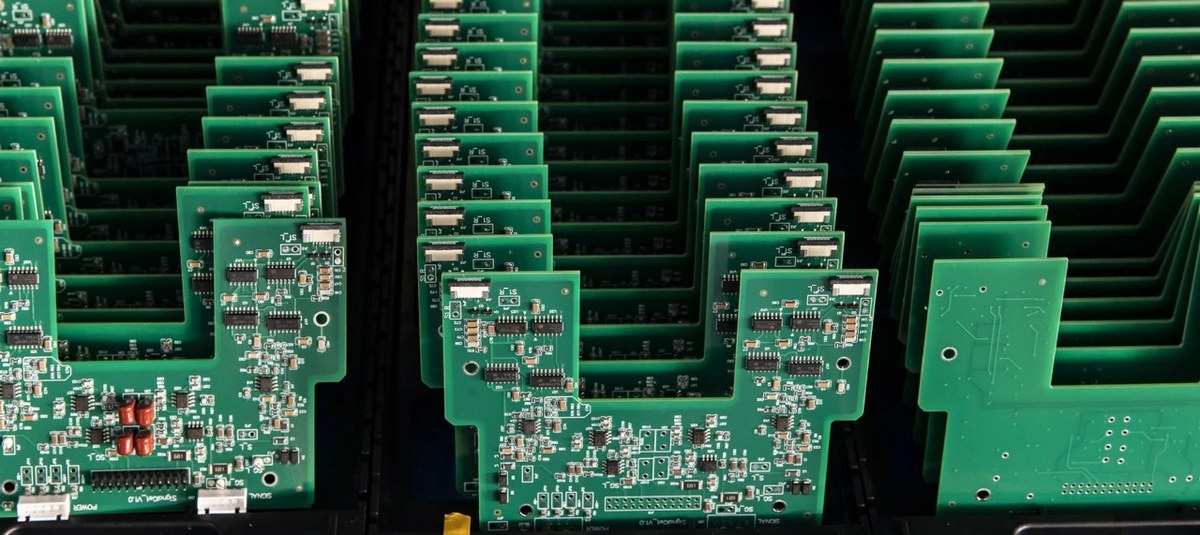
His electronic warfare equipment manufacturing company developed all of its own main boards onto which the microcircuits are soldered.
«We have developed our own solution, which allows us to say that our products are completely based on our technologies, they were developed by our engineers. But at the same time, Ukrainian contractors print these boards for us, and most of the microcircuits or other devices that are soldered onto this board are Western, Chinese, and sometimes Korean components. We get it from somewhere,» states a representative of Piranha Tech.
According to him, if we realize that the war will last a long time, we need to prepare a full cycle of our production facilities.
DroneUA co-founder Valeriy Yakovenko, in turn, names at least three main reasons why these plans for domestic chip production have a basis and logic:
» Firstly, Ukraine is today the largest producer of robotics technologies, and most of the equipment is based on already established, primitive technologies, especially when it comes to chips. This opens up huge opportunities for the creation and implementation of new, more advanced solutions.»
Secondly, the world’s largest drone fleet is not just a strategic asset for Ukraine, but also the main consumer of such technologies. The demand for such solutions already exists, and it will only grow.
Third, reducing dependence on external supplies is a critically important factor, especially in the current geopolitical situation. Investing in our own production of such technologies not only guarantees independence, but also ensures the efficiency of the entire supply chain.
Piranha Tech Deputy CEO Anatoliy Khrapchinsky supports this opinion, noting that a full production cycle, at least in certain areas, is a potentially powerful breakthrough for the Ukrainian economy.
«At the beginning of the full-scale invasion, there were about 20 companies engaged in the production of drones. Now we are talking about more than 200 companies. The number of companies engaged in electronic warfare or ground robotic complexes has increased many times. We need to understand that all this requires precisely such electronics. It is not very serious, but it is needed. Ukraine has set the tone for the creation of high-tech weapons. And therefore we need to talk about making a full-cycle production. This will allow us to offer the world ready-made solutions that will be assembled in Ukraine after the victory. And this can actually significantly help the Ukrainian economy,» he notes.
As for chip production, he doubts that it will be possible to deploy it in a short time, but it is important in the coming years.
«It is clear that this will not appear in a year. In order to deploy such an opportunity, more time is actually needed. But, of course, we need to move towards this,» Khrapchinsky argues.
DroneUA co-founder Valeriy Yakovenko emphasizes that over the years of full-scale war, we have already witnessed the implementation of scenarios that until recently seemed completely impossible.
«No one could have predicted that Ukrainian engineers would take on leadership positions in the global robotics and drone industry. No one expected that the engineering profession would become one of the most popular in Ukraine. And no one could have imagined the scale to which the entire drone manufacturing ecosystem would grow. Today, when it comes to ambitious projects, we know that Ukrainians are capable of doing the impossible. Therefore, predicting the further development of the industry and creating our own production of high-tech equipment is not only realistic, but also necessary,» he is convinced.
According to him, Ukraine has already proven that it can become a global center of high technology, and now our task is to expand these opportunities and lay the foundation for new innovation ecosystems.
«Building obsolete factories in advance is the path of isolated Russia or North Korea»
At the same time, not all representatives of the Ukrainian technology sector are enthusiastic about this idea, as there are indeed enough justified doubts. Moreover, there are doubts both about the likelihood of implementing these plans and about the correctness of the chosen path of development.
According to Andriy Rishtun, the author of over 40 patents for inventions in the field of electronics, both options — licensing ready-made technology «turnkey» or attracting a strategic partner on a commercial basis — are actually bad.
«Instead of building 20-year-old factories, it would be better to invest this billion euros in R&D, that is, in designing advanced chips for modern tasks. And they can always be manufactured at partner factories in the same Europe, the States, or Taiwan. Building outdated factories in advance is the path of isolated Russia or North Korea. We can cooperate with partner countries and have obviously better chips, both technologically and intellectually,» he is convinced.
Andriy Rishtun: «Building outdated factories in advance is the path of isolated Russia or North Korea»
Andriy Rishtun also does not consider any form of state participation in what is essentially a business project to be a good idea, because, in his words, state management of business has proven its ineffectiveness both here and in the rest of the world.
«In the States or Europe, semiconductor production is carried out by private companies, not the state. Therefore, if a factory is built or an R&D center is opened in Ukraine, there should only be a private owner. As proof, we have many successful military startups, which are private projects,» he emphasizes.
On the other hand, semiconductor production, in his words, is a rather «dirty» process that involves a lot of chemicals, so the state can help find a suitable site, agree on rules for dealing with chemical waste, help cooperate with the local community and customs privileges, and take many other useful steps.
Valeriy Yakovenko, co-founder of DroneUA, also emphasizes that the state should not «play» an effective manager for the semiconductor industry.
«Experience shows that the state is not an effective owner of business or innovation processes. Its role is to create favorable conditions, determine strategic directions, and act as an advisory body. The development of the robotics ecosystem in Ukraine is the result of exclusively private initiatives. It is the private sector that has taken responsibility for the creation of technologies, their implementation, and scaling. Therefore, the involvement of strategic partners in such projects should be based on the principles of sustainability and risk diversification. Instead of placing responsibility on one partner or state, it is more effective to involve several strategic players, which allows balancing risks and ensuring the sustainability of technology development in the market,» expressed his opinion Valeriy Yakovenko, who, in addition to these remarks, supports the idea of launching domestic chip production.
Piranha Tech Deputy CEO Anatoliy Khrapchinsky, who, from his comments, also clearly sees the importance of implementing the project, however, points to the factor of Western partners' unpreparedness for certain risks.
«I think we will face the same thing that most defense industry manufacturers have faced. Western partners with whom we cooperate usually do not want to enter Ukraine in its entirety — we are talking about compatible production facilities. They plan to take the technology abroad and make it there. Why? Because it is safer there. In the literal sense, it is safer, because it can hit production facilities and it will be difficult to resume production, and this is a loss of money,» he emphasizes.
In this context, he emphasizes the need to change some legislative norms that would allow for risk sharing between the private sector and the state itself. «That is, the state guarantees that if, God forbid, some microcircuits fly through the factory, the state will compensate for the costs associated with reconstruction or other losses of the manufacturer,» the Piranha Tech representative expresses his opinion.
According to Serhiy Ryzhkov, founder of the Profeed startup, which develops hardware and software IT solutions in livestock farming, the project is likely to be implemented, but success will depend on a comprehensive approach: sufficient funding, quality management, and favorable conditions.
«In my opinion, licensing ready-made technology „turnkey“ may be a faster way to get started, especially in conditions of limited resources and uncertainty. But attracting a strategic partner looks like a more sustainable solution in the long term, as it allows you to gain access to experience, markets, and support,» Ryzhkov expressed his «pros» and «cons» of both options announced by the Ministry of Digital Economy.
Serhiy Ryzhkov believes that own production provides independence, stability and the ability to adapt to local needs. «In our work, we develop the equipment ourselves, and this gives us more control and flexibility. Importing is faster, but local production opens up completely different opportunities,» he is convinced.
In his opinion, it will be quite possible to establish technological and logistical chains for such production in Ukraine. «Logistics is working quite well now — we saw this for ourselves when we ordered raw materials and equipment from China and the USA, and also sent our finished products to the USA and Europe,» says the founder of the Profeed startup. But in the current war conditions, he adds, it is important to think about protecting the infrastructure, decentralizing production facilities, and attracting international support.
«It would make sense to build such a plant when it produces something unique or secret. It could be thermal imaging cameras, protected keys, guidance electronics, and the like. Ukraine’s strength is its intellectual potential. Therefore, I would, first of all, focus on investing in advanced developments and assembling finished products. And we would only produce what is impossible to buy on the free market,» Andriy Rishtun still maintains a skeptical line regarding the initiative.
The same line is followed by Maxim Ageev, CEO of De Novo, a company that offers cloud IT solutions for business. From 1993 to 2008, he also worked at Kvazar-Micro, working his way up to the position of president of this corporation.
«I am very skeptical about such an idea. At the moment, I am not aware of the existence of any microelectronics production base in the country,» he says in a brief comment to dev.ua.
To sum it all up, Ukraine is not going to compete with Taiwan, the USA, China, Korea and Japan, as well as their giant companies for advanced developments in chip production. This would be completely implausible and even caricatured. We are talking about launching the production of running chips, which are not technological know-how, but instead are massively used in industry, especially when increasing the production of the same defense products. Well, it seems that the idea is timely and has the right to life. But even under such conditions, a very significant part of the technology market perceives it with quite justified and healthy skepticism. And these arguments are still difficult to level based solely on plans and top-level documents like the Strategy.
Google has introduced a quantum chip with incredible computing speed: in 5 minutes it will perform a task that would take a supercomputer ten septillion years