Хочете будувати кар’єру в Data Science та AI? Vodafone Big Data Lab відкриває новий набір —>
Ігор Вишневський Weapon
28 January 2025, 09:00
2025-01-28
“No other global manufacturer has anything like it. Their technologies are stuck in 2021.” Dev.ua attended the presentation of the “anti-drone wall,” which they want to stretch for 1,300 km. Will it be a panacea for enemy “birds”?
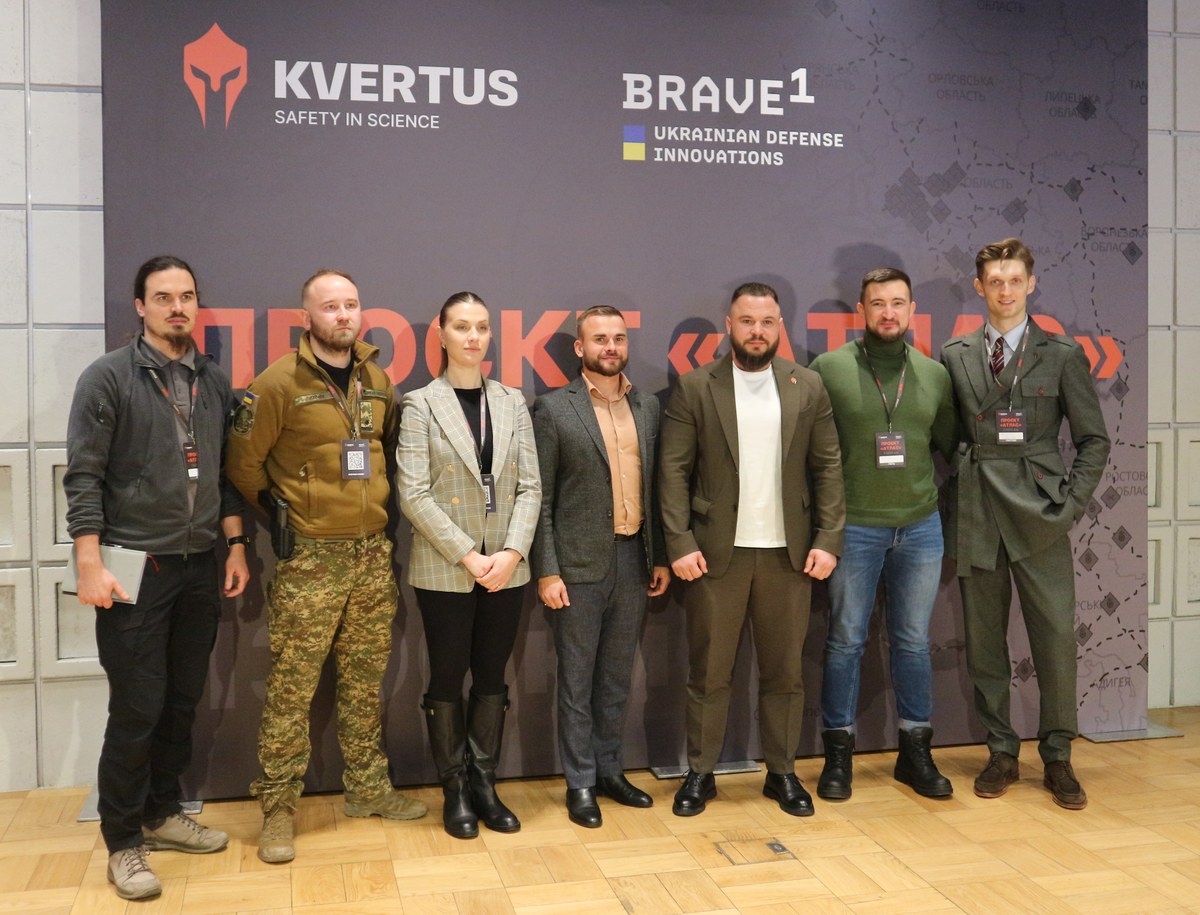
The pompous conference hall in the center of the capital, where a well-known political force used to hold events, is crowded today. Among the audience are many military personnel, representatives of business — technological and not only, the public sector and the government. With the famous stand-up comedian Vesta Hunchenko as the host and one of the top stars of Ukrainian sports, fencer Olga Kharlan as the ambassador, the Atlas project was presented here.
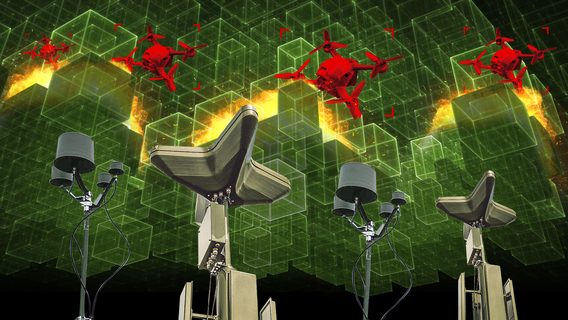
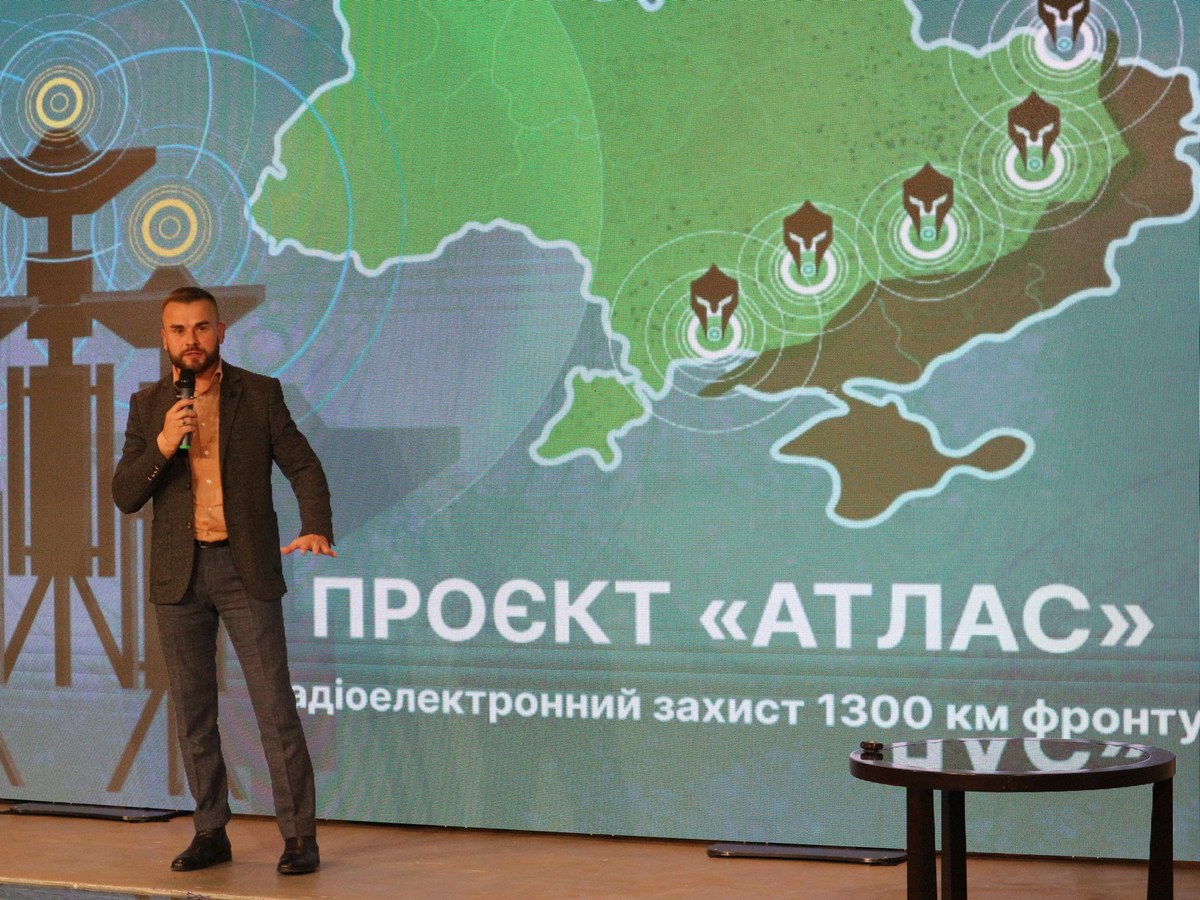
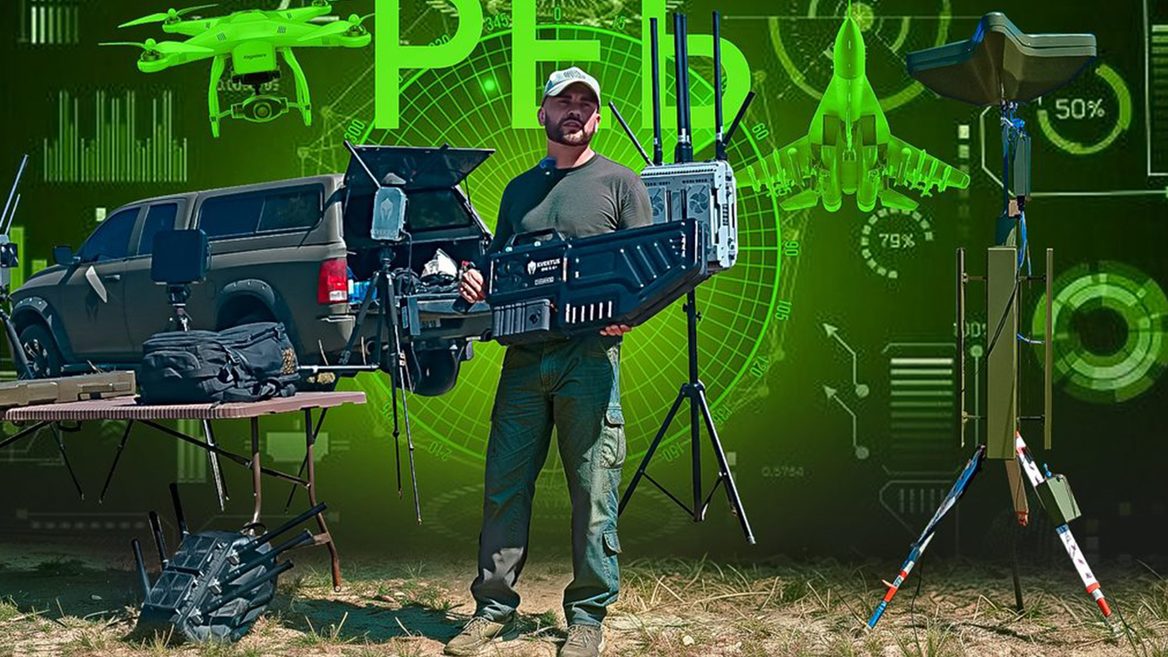
What is it? The manufacturer of electronic warfare and electronic warfare equipment, Kvertus, calls Atlas the most ambitious and large-scale security project in the history of the Russian-Ukrainian war. Its ultimate goal is to cover the entire 1,300-km-long front line with intelligent electronic defense systems, creating an «anti-drone wall» worth about UAH 5.2 billion. dev.ua visited the presentation of the project and formed its own impression of it.
The pompous conference hall in the center of the capital, where a well-known political force used to hold events, is crowded today. Among the audience are many military personnel, representatives of business — technological and not only, the public sector and the government. With the famous stand-up comedian Vesta Hunchenko as the host and one of the top stars of Ukrainian sports, fencer Olga Kharlan as the ambassador, the Atlas project was presented here.
What is it? The manufacturer of electronic warfare and electronic warfare equipment, Kvertus, calls Atlas the most ambitious and large-scale security project in the history of the Russian-Ukrainian war. Its ultimate goal is to cover the entire 1,300-km-long front line with intelligent electronic defense systems, creating an «anti-drone wall» worth about UAH 5.2 billion. dev.ua visited the presentation of the project and formed its own impression of it.
How and for whom will it work?
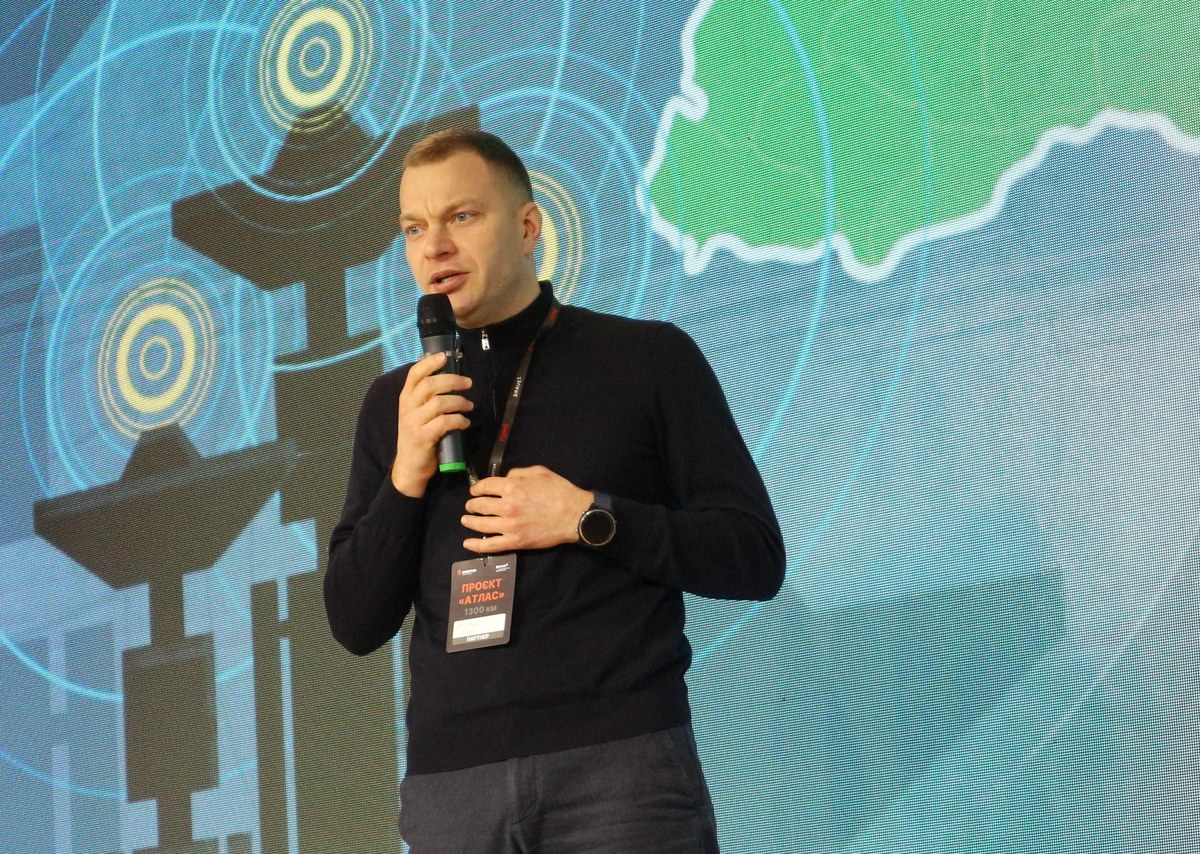
«I am standing here on stage in front of you to present something that can change the course of history — probably not just in Ukraine, but in the world as a whole. This is something that will work for years to come and save thousands, tens of thousands of lives,» says Kvertus CEO Yaroslav Filimonov.
We cannot say for sure yet which part of this statement is a marketing ploy by the Ukrainian manufacturer and which is reality. And the feedback on this should come primarily from our military, who will directly use the Atlas in the combat zone and areas close to the front. But it sounds promising.
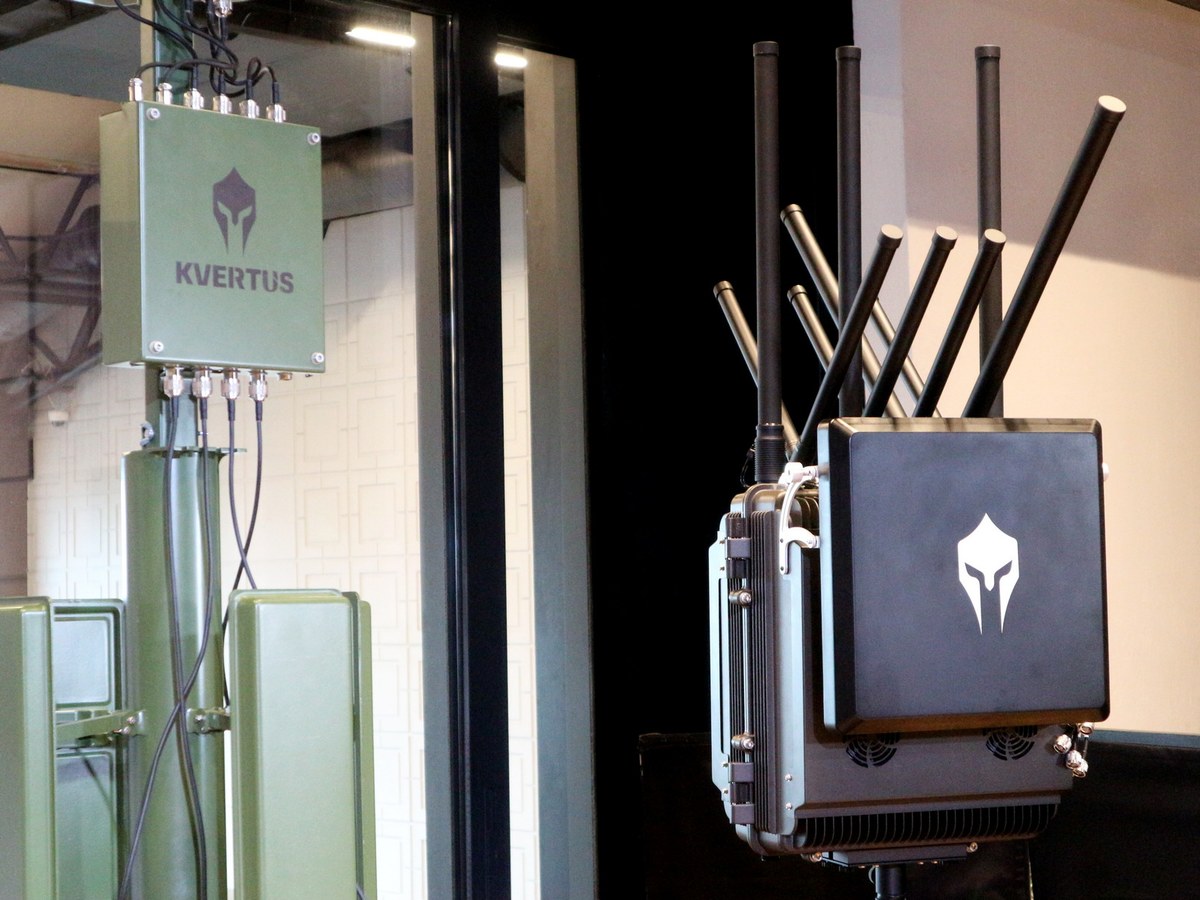
According to Yaroslav Filimonov, the idea for the Atlas project arose quite spontaneously — when Kvertus saw that they could combine two of their existing products at the software level — the Azimut detection complex and the Mirage electronic warfare tool.
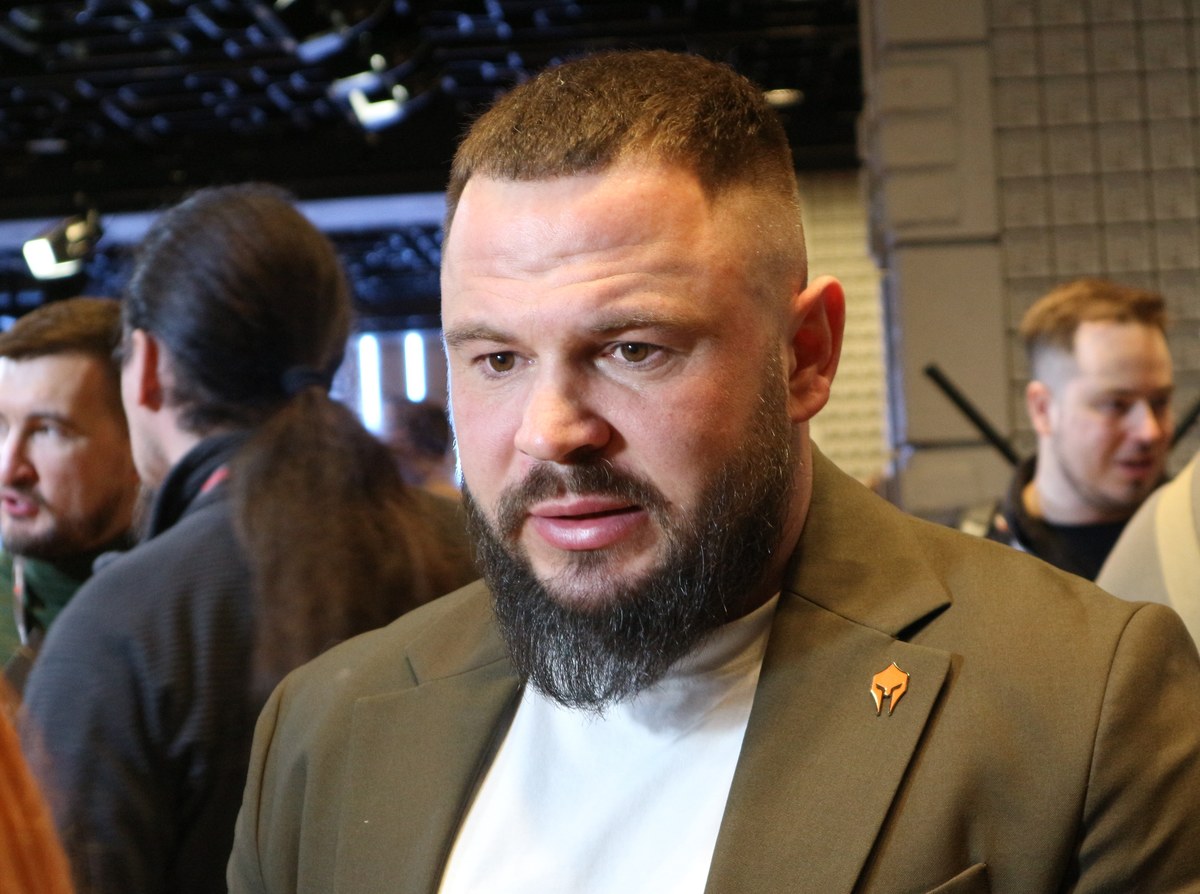
CEO Kvertus Yaroslav Filimonov
If a significant part of electronic warfare systems emits so-called «white noise», then the manufacturer notes that «Atlas» can generate ten times more effective digital interference and remain invisible to enemy electronic intelligence. In addition, the development is capable of longer autonomous operation from less powerful batteries. The system is controlled remotely by one operator through an office on a protected server. Also, Kvertus managers guarantee full protection against system hacking even in the event of the enemy capturing the hardware.
According to Yaroslav Filimonov, Atlas is an ecosystem with multi-level access. «It’s not just electronic warfare, it’s a system that combines intelligence and suppression at the same time,» Kvertus notes.
The ambitious plan discussed today is to unite all assets on a combat contact line of about 1,300 km.
A dev.ua correspondent asked Filimonov how this would be possible without approval at the highest military level, since each brigade uses its own electronic warfare and electronic warfare equipment from different manufacturers.
«This project, of course, will be implemented in cooperation with the General Staff and with those units that are involved in work on the front line. But we are talking about the protection of the second echelon. That is, our project does not work with „white noise“, but it does not prevent the operation of means with „white noise“. Everything that works directly at zero — on cars or in trenches — continues to work. This is protection 2-3 km from the front line. We can monitor the entire situation in the air and, through remote access via the server, we can control both a specific means in a specific place and the entire area,» Filimonov explained.
The CEO of Kvertus noted that they are ready to work closely with brigades on different front lines and provide them with access to the extent they need it, including them in situational awareness and in the management of these assets. If it is necessary to integrate third-party assets into this ecosystem, they can do this through open source.
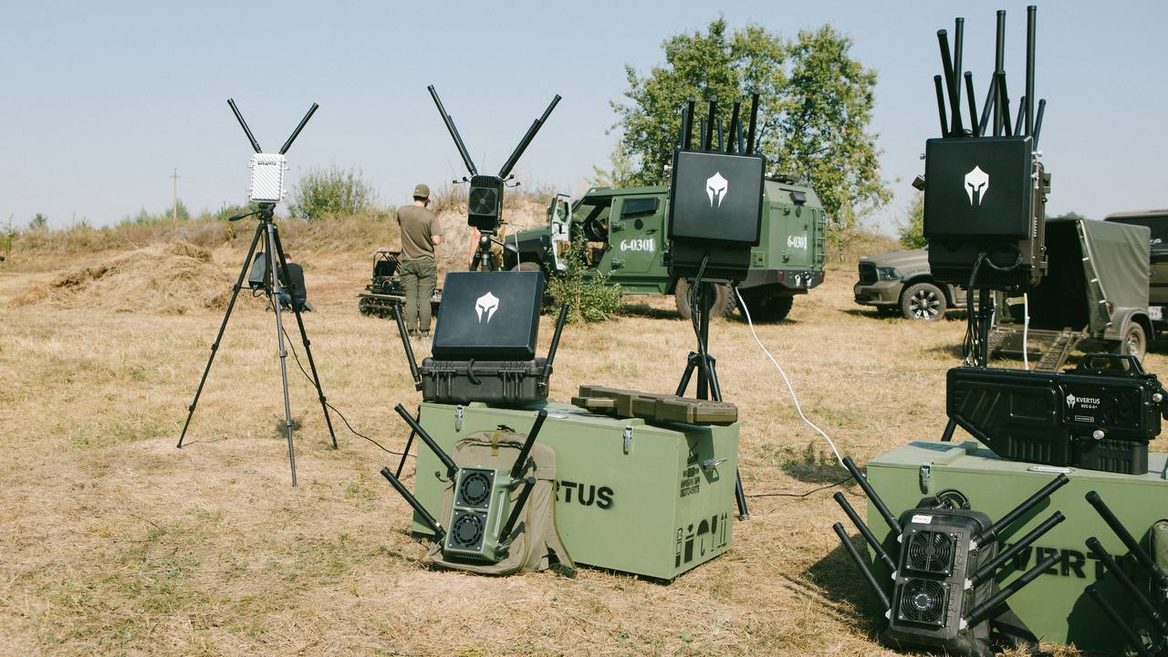
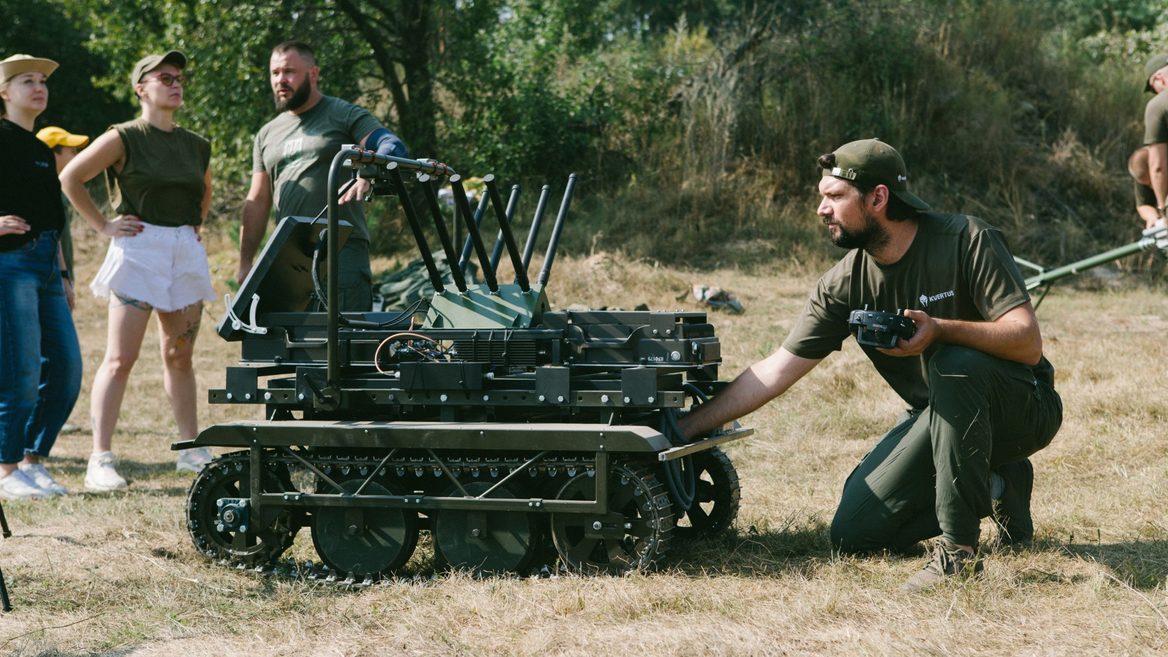
Kvertus products
«We wrote the software to combine Mirage and Azimut, and for them to work together. However, our ecosystem and the written software are open to partner solutions. If at some stage we see that there are high-quality solutions from Ukrainian or foreign manufacturers, they can be effective and some partner transfers these tools, then we will be able to integrate them into this system. That is, we are not a closed, but an open ecosystem, and we are ready to partner with other manufacturers if they provide tools of such quality,» Filimonov explained to journalists, answering their questions.
The advantage of «Atlas» is also called the ability to work with any number of means simultaneously and the maximum range of detection and suppression of enemy drones. «Atlas» also allows you to centrally program frequencies without losing our UAV means. After all, unfortunately, traditional electronic warfare can often «land» its own birds, being a kind of radio-electronic «friendly fire».
The military also says this — both in the product video presentation and directly in the hall.
«Why is the Atlas project important to me in this position? When our UAV flies, we provide it with unhindered flight and perform tasks effectively. That is, we protect not only lives, but also our assets,» says Hero of Ukraine, commander of the artillery reconnaissance division of the separate artillery brigade of the National Guard, Major Vitaliy Lytvyn.
In turn, Serhiy Skoryk, commercial director of Kvertus, focused on a number of other technical characteristics of Atlas.
«Another big feature is that our device only requires 200 watts. These are not 400-500 watts devices that require a lot of energy to work for at least five hours. A big problem for servicemen is that the device should work for at least 10, or better yet 20 hours. After all, some servicemen, when going on a mission, go, conditionally, for five to seven days and, accordingly, take all this with them. Therefore, on a two-kilowatt generator, which is distributed throughout the troops, our solution will work for 10 hours+,» explained Serhiy Skoryk.
Commercial Director of Kvertus Serhiy Skoryk
According to the commercial director, in the Atlas bundle, the Azimut detection device operates at a distance of up to 30 km, and the electronic warfare device — 5 km.
«You can control any number of systems on the battlefield. If you need to use the 1st, 15th, and 43rd Mirage simultaneously, then, accordingly, you give the command and they work,» he says.
As Kvertus emphasizes, the system can be effective in protecting a large number of servicemen who are near the front line in headquarters or «remote» during rotation. But it is also about the civilian population and infrastructure, because front-line cities like Kherson, unfortunately, constantly suffer from enemy drones.
«This will not only be the safety of servicemen performing tasks on the front line, but also the safety of civilians. Recently, the Russian Federation said in Telegram channels that they are organizing a safari in Kherson. The flight zone in the south for drones in Kherson is actually unobstructed. And when they announce a missile threat, we hear sirens. But in Kherson, these sirens simply do not exist during a drone attack,» added Major Vitaly Lytvyn.
«Our capacities allow us to produce thousands of different products per month»
Last year, as Yaroslav Filimonov says, Kvertus presented its products at about 15 events around the world. This allowed him to conclude that Ukrainian defense tech in the field of electronic warfare and counter-drones has made a significant breakthrough, leaving developments from other countries far behind.
Presentation of the Atlas project
«We see that no global manufacturer has anything close to anything like this. Their technologies for combating drones have stalled somewhere in the 21st century. They don’t even remotely understand the threat that exists today, not just on the front in Ukraine, but throughout the entire territory of Ukraine,» he says.
Filimonov is convinced that since we are inferior to the enemy in terms of resources and many quantitative indicators, it is important to win in technology.
According to the CEO, they reinvest over 80% of all revenue, and the team has grown from 15 people to 200 in 2.5 years. Kvertus has increased the leased space from 150 sq. m. to 5,000 sq. m. In addition, the company has established cooperation with a large number of contractors who also fulfill a number of orders for them.
«Today, we have a hundred Ukrainian contractors working with us who do different things for us — they sew bags, make packaging, make some components. Accordingly, we try to leave as much money as possible in Ukraine,» he explained.
According to Yaroslav Filimonov, Kvertus invests more than $6 million per year in technology development and R&D teams.
As of the 24th year, the capacity, according to the CEO, allows for the production of thousands of different products per month, but they are not yet loaded to that number.
«Our scaling is strategically planned with capacity building from month to month. We are currently making over 200 ‘mirages’ per month. And from March it will be over 1,000 units,» Filimonov explained.
Thus, production volumes, according to the CEO, are growing approximately two to three times year after year.
Head of the direction of cooperation and partnership with security and defense forces of Brave1, Oleg Donets, who is also responsible for the electronic warfare direction in the cluster, emphasizes that such rapid development for the Ukrainian miltech direction was achieved by simplifying many bureaucratic procedures, codification procedures, and removing nomenclature restrictions on state contracting of products.
Oleg Donets, Brave1
«Kvertus was one of the first companies that was able to fully take advantage of the opening of this market. Together with them, we received one of the first codifications using a simplified procedure. The result was that Kvertus was one of the first private companies to receive a serious state contract using its own funds. And today we see that this company used this very effectively to develop its own products and technologies. At first, the state supported business, gave it the opportunity to develop. And today, business comes and offers such large-scale projects that are aimed at supporting and developing the state’s overall capabilities,» says Donets.
As for the plan to close the 1,300-km front line, as already mentioned, it is necessary to raise about UAH 5.2 billion for its implementation. Everyone is invited to join the fundraising for the Atlas project, especially representatives of Ukrainian business and international partners. Currently, the paperwork for opening an account for the Atlas project is being completed. It will open around February 1. Kvertus is cooperating, in particular, with the Brave1 cluster to raise this huge amount of funds.
I would like to think that this project regarding the «anti-drone wall» will actually be implemented, unlike the «meme» wall on the border, promised by former Prime Minister Arseniy Yatsenyuk, which remained only in hundreds of political jokes. At least, the manufacturers themselves and their partners believe in it. Ukrainians would like to believe it too, because this is what saves their lives.









Наноболт, українська версія