Реклама партнера — Название партнёра
UNIT.City — місце, де люди працюють... КРАЩЕ! Обирай свій простір просто зараз 👉

Over 60% of Ukrainians consider the problem of disinformation important, but only 40% look for sources - Detector Media study

Ukrainians have learned to check content for authenticity, are tired of heavy news about the war, and generally trust content less. What else did a study by the public organization «Detector Media» reveal?

Leave a comment
Over 60% of Ukrainians consider the problem of disinformation important, but only 40% look for sources - Detector Media study

Ukrainians have learned to check content for authenticity, are tired of heavy news about the war, and generally trust content less. What else did a study by the public organization «Detector Media» reveal?

About the research

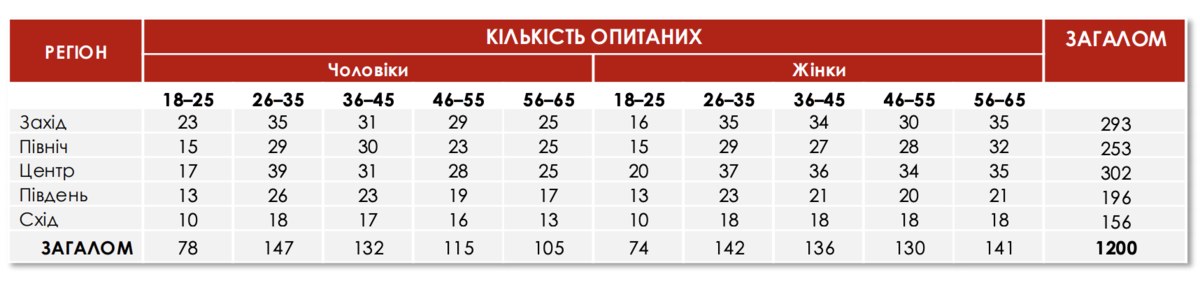
During the period from January 15, 2024 to January 29, 2024, the New Image Marketing Group company conducted a survey among 1,200 respondents of the adult population of Ukraine (18-65 years old) (except for the temporarily occupied territories of Donetsk, Luhansk, Zaporizhia, Kherson regions and the Autonomous Republic of Crimea).

The purpose of the study is to calculate the media literacy index of Ukrainians and identify its dynamics compared to previous years.

The media literacy index model was based on Len Masterman’s concept and the results of a qualitative phased study «Media Consumption Practices of Ukrainians: Conceptual Development of an Audience Media Literacy Index», prepared at the request of the NGO «Detector Media» (January 2020).

According to a quantitative study, to determine the level of conscious perception and critical interpretation of information among Ukrainians:

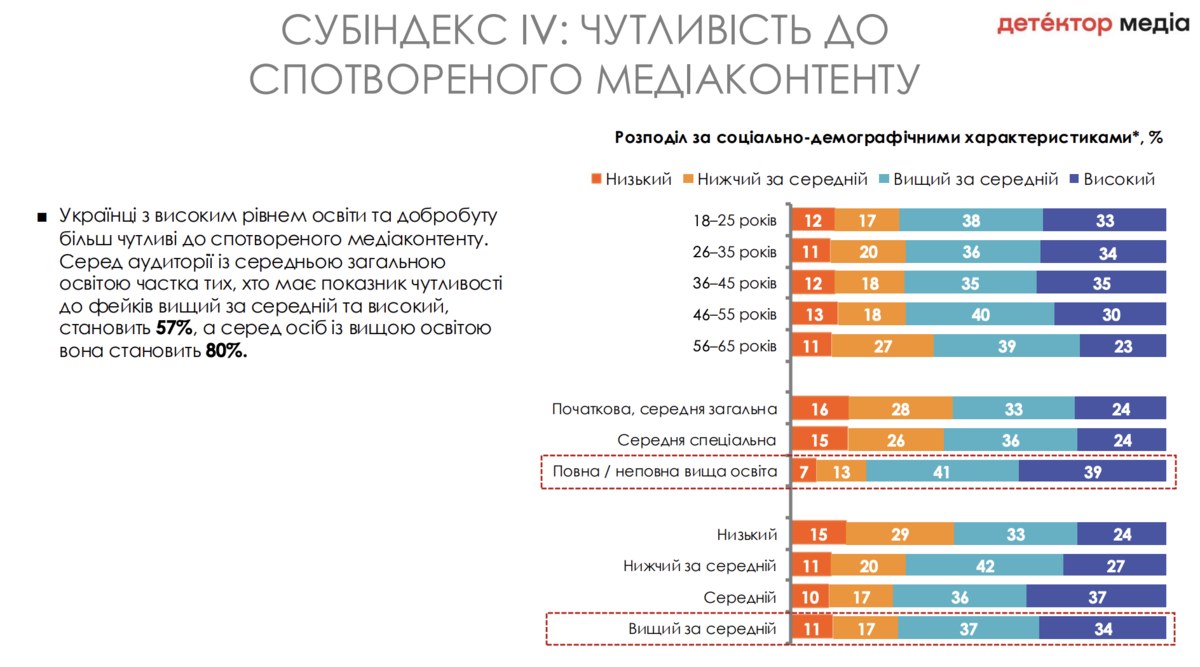
  1. Digital competence is directly related to the level of education and well-being. The share of the audience with a high and above-average digital competence index is 61% and 62%, respectively.
    67%.
  2. Ukrainians aged 18 to 25 have the highest level of digital competence, in particular due to their more active use of the Internet and modern gadgets, their own experience in creating and posting content, and their understanding of the specifics of
    functioning and terminology of new media.
  3. 91% of respondents use the Internet intensively every day or almost every day.
  4. 76% use the Internet mostly to search for necessary information, and 62% to read the news.
  5. In the two years from 2022 to 2024, the number of people watching movies and videos online increased by 12% (from 46% to 58%). The number of people shopping online increased by the same amount.
  6. Telegram leads the popular social media that Ukrainians turn to for socio-political news. 60% of respondents choose the messenger for this purpose.
  7. 57% use Telegram for communication, and here the messenger ranks second between Viber (83%) and Facebook (40%).
  8. For useful, informative, and educational information, they most often turn to YouTube (47%) and Facebook (28%).
  9. 16% of the audience does not use Telegram at all, and 11% of respondents do not use YouTube.
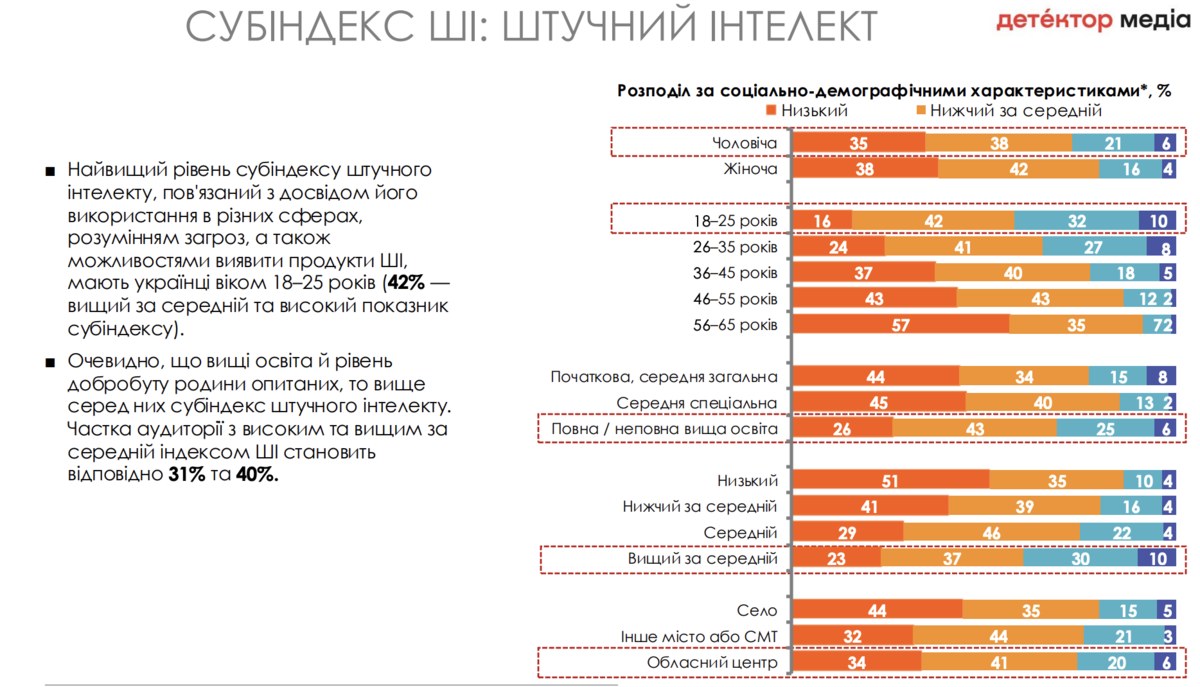
  10. 72% of the audience does not use AI: 37% because they do not need it, 13% do not know how to use it, 10% do not trust AI systems, and 11% of Ukrainians have never heard of them.
  11. 62% of the audience sees the problems of disinformation and notes their significance.
  12. Since the beginning of the full-scale war, more and more Ukrainians have been able to track fake information, in particular, 43% look for the source in the material (6% more than a year ago), 33% focus on photo/video confirmation (3% more than a year ago), 30% trust the author’s good reputation (2% more than a year ago).
  13. The share of those who believe that oligarchs, influence groups, and media owners are interested in distorting information to increase their audience has decreased over the past year from 41% to 32% and from 26% to 15%, respectively.
  14. Ukrainians trust most media only partially: 28% of the audience identify commissioned material intuitively; 49% suspect a hoax when the material highlights only positive or negative aspects of a person, group, or product; for 47%, an important marker is the fact that the material can contribute to the recognition of a person, organization, or product.
  15. 60% of Ukrainians surveyed see the problem of manipulation in the media: 47% suspect manipulation when the material covers only one side of the event; 43% note it if there is incomplete or inaccurate information; 39% focus on the lack of references to the source; 22% identify a manipulative message intuitively.
Read the country's main IT news in our Telegram
Read the country’s main IT news in our Telegram
On the topic
Read the country’s main IT news in our Telegram
Claude has added integrations and advanced research with web search
On the topic
Claude has added integrations and advanced research with web search
Police shut down Telegram channels that were spreading fake, offensive content about schoolchildren and then extorting money
On the topic
Police shut down Telegram channels that were spreading fake, offensive content about schoolchildren and then extorting money
Telegram is the most popular source of information, but another tool is ahead of it in terms of disinformation — research
Telegram is the most popular source of information, but it is overtaken by another tool in terms of disinformation — research
On the topic
Telegram is the most popular source of information, but it is overtaken by another tool in terms of disinformation — research
Also Read
Roosh запускає нову освітню платформу AI HOUSE CLUB для ML/AI-спеціалістів та дата сайнтистів. Розповідаємо, як подати заявку та чому навчатимуть
Як нейромережі бачать вільну та незалежну Україну? Тест dev.ua
Нейронні мережі для генерації зображень бачать світ по-своєму, їхню логіку зрозуміти часом зовсім неможливо. Але таки хочеться. На честь Дня Незалежності України редакція dev.ua вирішила провести невеликий експеримент. Ми задали чотирьом різним нейронним мережам п’ять однакових запитів: «прапор України», «День Незалежності України», «український Крим», «перемога України» та «українці». Отриманими результатами ми ділимося з вами нижче.
У TikTok тепер можна генерувати фон за допомогою нейромережі. Ми протестували її та ділимося результатами
У TikTok з’явилася нова функція «Розумний фон». З її допомогою як фон для тіктоків можна підставляти згенеровані нейромережею зображення. Редакція dev.ua протестувала цю технологію і ділиться своїми враженнями.
1 comment
Які IT-спеціальності будуть потрібні в найближчі п'ять років? Ми з'ясували у голови американського стартапу ADAM Дениса Гурака

Have important news to share? Message our Telegram bot

Key events and useful links in our Telegram channel

Discussion
No comments yet.