Хочете будувати кар’єру в Data Science та AI? Vodafone Big Data Lab відкриває новий набір —>
Ігор Вишневський Science Pop
7 January 2026, 15:05
2026-01-07
To Programmer's Day. 5 Ukrainian scientists who were decades ahead of their time and are the forerunners of modern IT
Today, January 7, Ukraine celebrates Programmer’s Day for the first time on this date. Recall that on Christmas Eve, the Cabinet of Ministers approved a decree by President Volodymyr Zelensky on the emergence of this new professional holiday.
In addition to greetings to our audience on this occasion, we decided to collect a small selection — who in Ukraine stood at the origins of this profession? Who can be considered the first and most prominent Ukrainian programmers and which of them left their mark on history? We have collected information about 5 Ukrainian scientists and scholars.
Today, January 7, Ukraine celebrates Programmer’s Day for the first time on this date. Recall that on Christmas Eve, the Cabinet of Ministers approved a decree by President Volodymyr Zelensky on the emergence of this new professional holiday.
In addition to greetings to our audience on this occasion, we decided to collect a small selection — who in Ukraine stood at the origins of this profession? Who can be considered the first and most prominent Ukrainian programmers and which of them left their mark on history? We have collected information about 5 Ukrainian scientists and scholars.
Viktor Glushkov — the father of Ukrainian cybernetics and the forerunner of AI
It is symbolic that on Ukraine’s Independence Day, August 24, the founder of Ukrainian cybernetics, Viktor Glushkov, was born. However, this was back in 1923, when Ukraine had just lost the opportunity to become independent earlier — as a result of the events of the Ukrainian Revolution of 1917-1921 — and ended up as part of the USSR for many years.
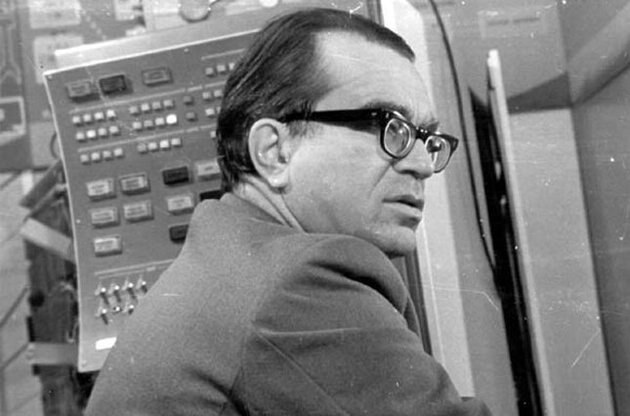
Glushkov is considered one of the pioneers of world computer technology and the founder of the school of domestic cybernetics and information technologies in Ukraine. It was he who founded and headed the Institute of Cybernetics of the Academy of Sciences of the Ukrainian SSR, where new, sensational developments were laid.
In 1956, Glushkov became head of the computer laboratory of the Institute of Mathematics of the Academy of Sciences of the Ukrainian SSR, where the first Soviet computer («MESM») had already been developed some time earlier. Somewhat later, in 1962, Glushkov created the Institute of Cybernetics on the basis of the Computing Center. Under his leadership, among other things, the world’s first «Encyclopedia of Cybernetics» was created.
Viktor Glushkov
Under Glushkov’s leadership, the first domestic computers were created at the Institute of Cybernetics: «Kyiv», the semiconductor machine «Dnepr» (in the early 1970s it was chosen for the calculation of the Soviet-American space flight «Soyuz-Apollo»; computers of the «Promin» and «Mir» series, and other machines for engineering calculations, which were the forerunners of modern PCs. Among the developments was the multiprocessor computing complex ES-2701 with a macro-conveyor organization of calculations, which was patented by Glushkov.
Under Glushkov’s leadership, a number of automated enterprise management systems were created, which at that time had no analogues in the world, as well as industry-specific automated management systems.
Some of Glushkov’s developments even correspond to the current functions of artificial intelligence and robotics, so his scientific vision was far ahead of its time. He became famous for his work on automatic speech recognition, participated in the development of the «eye-hand» and «reading machine». Glushkov’s ideas were incorporated into a variety of automation systems and technologies.
Kateryna Yushchenko is the daughter of an «enemy of the people» who developed one of the world’s first high-level programming languages
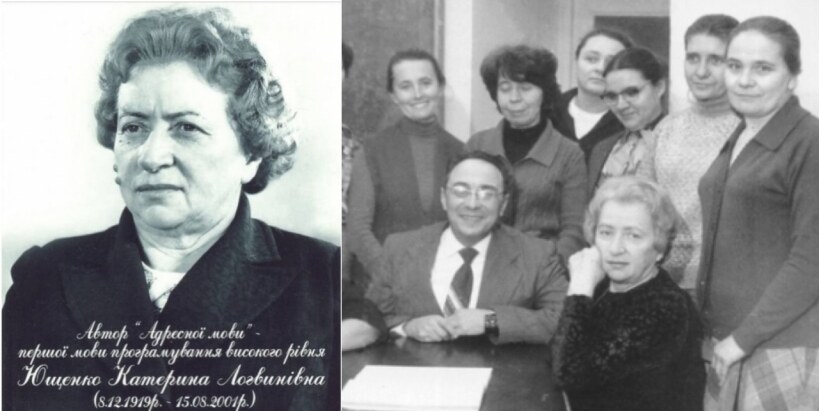
It turns out that Ukrainian women were at the origins of IT long before the term even became popular. Kateryna Yushchenko became the first woman in the USSR to receive a doctorate in physics and mathematics, and this degree was awarded to her for her outstanding work in programming. Using the experience of operating the aforementioned «MESM», Yushchenko developed one of the world’s first high-level programming languages, «Address Language».
Kateryna Yushchenko was also the founder of the first school of theoretical programming in the USSR. In 1954, she entered the Institute of Mathematics, where she worked on «MESM» together with other scientists. It was precisely when she encountered the imperfections of her work that she, together with her colleagues, developed an address language that embodied two general principles of computer operation — addressability and program control. Creating a convenient system of concepts for describing the architecture of a computer and its command system, the authors introduced means of manipulating second-rank addresses into the «Address Language».
Kateryna Yushchenko, photo ukrainky.com.ua
The creation of the «Address Language» was the first fundamental achievement of the scientific school of theoretical programming, ahead of the creation of the first programming languages Fortran (1958), Cobol (1959) and Algol (1960). Kateryna Yushchenko co-authored the first programming textbook in the USSR, «Elements of Programming».
At the same time, from childhood, Kateryna Yushchenko faced extremely difficult personal circumstances that constantly put her future at stake. Her father was recognized as an «enemy of the people,» and only in 1954, after Stalin’s death, were Kateryna Yushchenko’s parents rehabilitated posthumously due to the absence of a crime. It is clear that as a result, the outstanding scientist had to constantly fight not only for the right to continue her scientific activities, but also for her life in the conditions of the repressive machine of the USSR.
Boris Malinovsky — chief designer of the Dnipro machine
Among the cohort of Ukrainian cybernetics scientists who lived and worked at about the same time and made a truly huge breakthrough in the field, it is worth mentioning Boris Malinovsky.
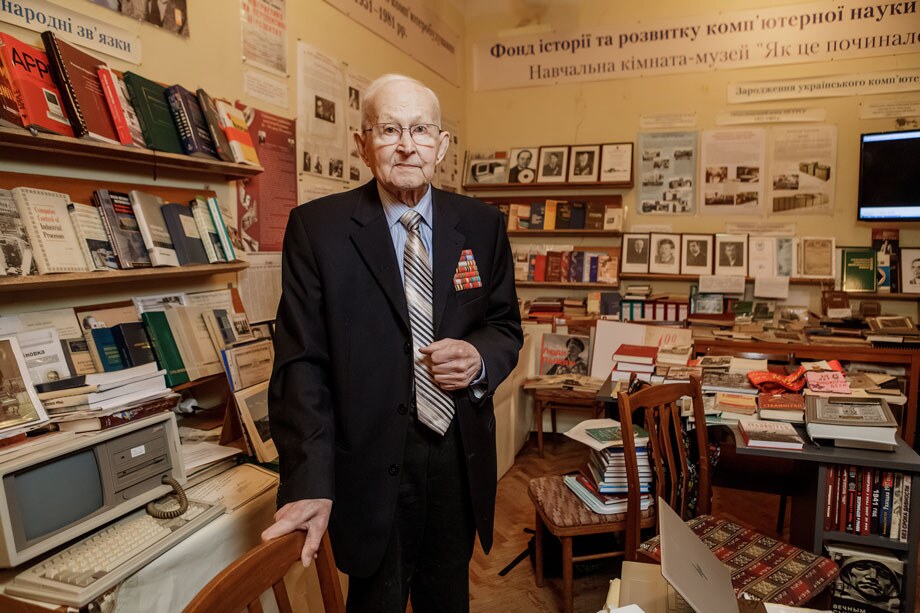
Together with colleagues, he worked on the semiconductor control machine of general purpose «Dnipro», was its chief designer, as well as on microcomputers of general purpose («Electronics S5», «Neuron»). In addition, he was actively involved in the design of signal processors for ground and airborne digital communication systems of the new generation.
Boris Malinovsky, photo DOU
For 10 years — from 1969 to 1979 — he was the chairman of the Council for Automation of Scientific Research under the Presidium of the Academy of Sciences of the Ukrainian SSR. By the mid-1970s, about 100 digital automation systems had been created at the Academy of Sciences of the Ukrainian SSR through the efforts of this body.
Boris Malinovsky, among other things, did a lot of work on scientific and methodological guidance of mass computerization of the USSR Industrial Communications Industry based on microprocessor technology. Author and co-author of over 200 scientific papers and inventions in the field of computer science and technology. By the way, until November 2019, until his death, the legendary scientist was an advisor to a number of state structures on cybernetics and computer science and technology.
Sergei Alekseevich Lebedev was the founder of the first computer in continental Europe with a program stored in the memory of «MESM» and one of the developers of the world’s first digital electronic computers with a dynamically changing calculation program. Under his leadership and with his direct participation, 18 computers were created, and 15 of them were mass-produced. Sergei Alekseevich Lebedev’s work experience is unique, as it covers the period from the creation of the first vacuum tube computers, which performed only hundreds and thousands of operations per second, to ultra-fast supercomputers on large integrated circuits.
Sergey Lebedev — founder of Soviet computer engineering
Another Soviet scientist who made a name for himself in the field of computer engineering in Kyiv was Sergey Lebedev. He moved to Kyiv in 1944, during the ongoing Second World War, where he was elected an academician of the Academy of Sciences of the Ukrainian SSR and appointed director of the Institute of Power Engineering of the Academy of Sciences of Ukraine.
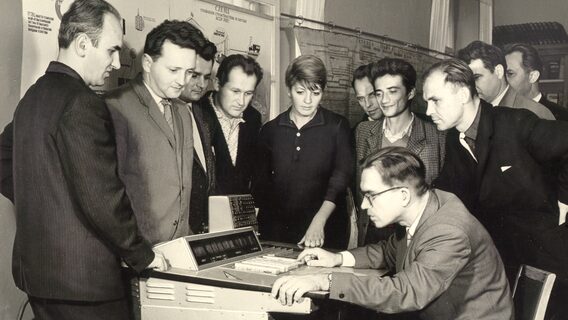
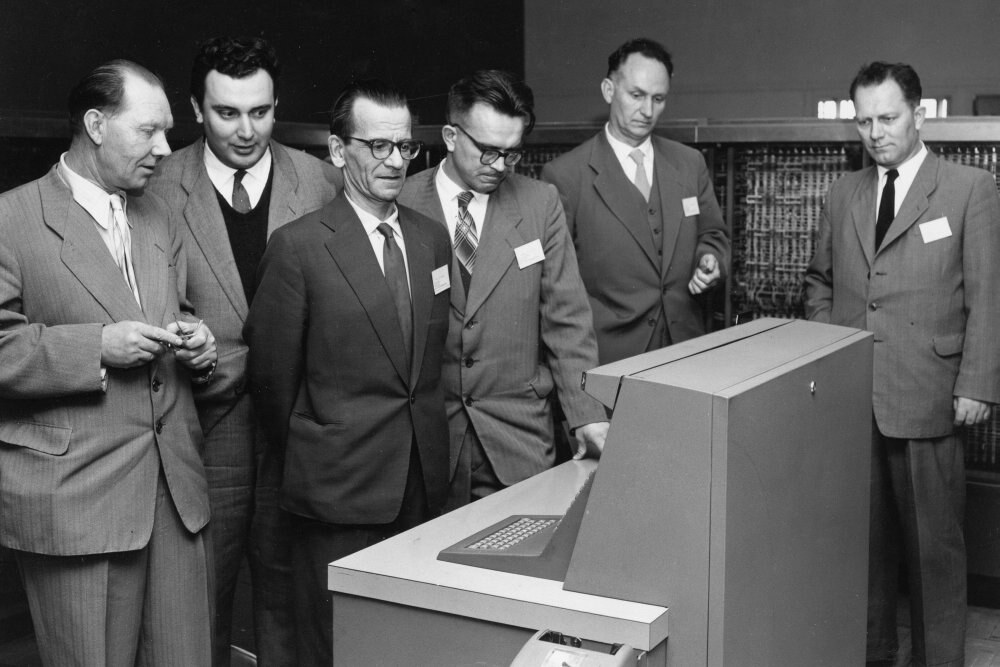
April-May 1959. Sergey Lebedev third from the left
First, he organized a modeling and control laboratory and continued his research on the development of power plant generator compounding devices that increase the stability of power systems and improve the operation of electrical installations. But the binary system also did not remain outside the scientist’s attention. At that time, there were no complete publications on the binary number system and the method of operations on binary numbers. Therefore, the method developed by Lebedev for performing arithmetic operations in the binary number system and previously developed numerical methods for solving mathematical problems became the theoretical basis for building a digital computer.
In November 1950, the first calculations were already performed on the MESM — calculating the sum of an odd series of the factorial of a number and raising it to a power, and in December 1951, the MESM was accepted into operation by the State Commission of the USSR Academy of Sciences. Subsequently, he worked on many other computing machines — for example, in the BESM-2, a fast memory device on ferrite cores was implemented, semiconductor diodes were widely used, and the shallow-block design was also improved. The solution of important problems had already begun on this machine, in particular, the flight trajectory of the rocket that delivered the Soviet Union’s pennant to the Moon was calculated.
In 1990, one of the BESM-6 copies was transported to London and installed in the Science Museum as the best supercomputer of its time in Europe. The last development of Sergei Lebedev, launched into mass production, was the first mobile multiprocessor high-performance structure with modular memory of the computer «5E26». It easily adapted to various requirements for performance and memory in special-purpose control systems. It was the first machine with automatic redundancy at the module level, which ensured the recovery of the computing process in the event of failures and equipment failures in control systems. It also worked in real time, was equipped with advanced mathematical software, an effective programming automation system and the ability to work with high-level languages.
Mikhail Shlesinger — author of developments in automatic image recognition
Mykhailo Schlesinger stands out somewhat in this selection, as his scientific work came much later, but that did not make him any less groundbreaking.
Professor Schlesinger is a prominent Ukrainian scientist in the field of intelligent information technologies, pattern and image recognition theory, and the author of over two hundred scientific papers.
Under his leadership, impressive computer developments were carried out — the first reading machine in the USSR «CHARS», the automatic recognition system for large-sized drawings «Teremka», a system for identifying a person by the image of their face.
At one time, the Kyiv Institute of Cybernetics at KPI, where Mykhailo Shlesinger worked, became a kind of incubator for startups in the field of image and pattern recognition. Based on the institute’s work, the famous startup Viewdle was launched, which the founders later sold to Google for $40 million. At the same time, Shlesinger was a member of the company’s scientific council.
Стаття порушує важливу тему історії українського програмування, однак, на жаль, у ній відтворено радянський історіографічний канон, сформований у часи, коли наукову історію писали не факти, а партійна доцільність. Це потребує корекції.
Про Михайла Шлезінгера.
Опис його наукової діяльності подано коректно, без суттєвих зауважень.
Про відсутність Олексія Івахненка.
У добірці «предтеч сучасного ІТ» повністю проігноровано постать Олексій Івахненко — українського вченого, який у 1970-х роках запропонував багатошарові нейронні мережі з глибинним навчанням (GMDH).
Його ідеї були переосмислені й почали активно застосовуватись західними дослідниками через 6–7 років. Саме ці підходи лежать в основі сучасного deep learning. Ігнорування Івахненка в такому матеріалі є серйозним викривленням наукової картини.
Про Сергія Лебедєва.
У статті зазначено, що Сергій Лебедєв переїхав до Києва «під час Другої світової війни». Це неточність: він переїхав після її завершення. Факт перевірюваний і потребує виправлення.
Також у матеріалі повністю відсутня інформація про ключових інженерів школи Лебедєва —
Катерина Шкабара та Лев Дашевський,
які зробили вирішальний внесок у створення МЕЛМ і комп’ютера «Київ», але були усунуті від подальших робіт уже після зміни керівництва — не з наукових, а з адміністративно-партійних причин.
Про Віктора Глушкова.
Постать Віктор Глушков у статті подано у типовій для радянської традиції ідеалізованій формі.
Замовчуються системні факти:
усунення альтернативних наукових шкіл і ключових інженерів;
централізація всієї комп’ютерної тематики в одних руках;
привласнення результатів, отриманих до його приходу в Київ;
адміністративне блокування з 1965 року розвитку Адресної мови програмування, заборона публікацій і наукових виступів з цієї тематики, після невдалих спроб стати її співавтором.
Ці факти зафіксовані у спогадах і свідченнях безпосередніх учасників подій — Шкабари, Дашевського, Королюка, Гнєденка, Кратка, Іваненка та інших. Їх ігнорування формує викривлений образ історії.
Про Бориса Малиновського.
Роль Борис Малиновський у статті також подано без важливого контексту: його партійна функція, механізми призначень і реальна участь у розробках подані спрощено. Водночас саме він після смерті Глушкова доклав значних зусиль до відновлення й збереження довглушковської історії українського комп’ютеробудування.
Про Катерину Ющенко (уточнення факту).
У статті є дрібна, але принципова неточність:
батька Логвина Федоровича було реабілітовано посмертно,
а мати Ксенію Олексіївну — реабілітовано за життя.
Вона змогла залишитися в науці в умовах тоталітарного тиску, не зрадивши свого наукового керівника Борис Гнєденко.
Підсумок.
Сьогодні, в умовах війни, декомунізації та дерусифікації, відтворення радянських міфів про «єдиного великого керівника» є неприпустимим. Історія української науки складніша, драматичніша і значно чесніша, ніж це подано у ювілейних публікаціях. Саме такою її й варто показувати.










Стаття порушує важливу тему історії українського програмування, однак, на жаль, у ній відтворено радянський історіографічний канон, сформований у часи, коли наукову історію писали не факти, а партійна доцільність. Це потребує корекції.
Про Михайла Шлезінгера. Опис його наукової діяльності подано коректно, без суттєвих зауважень. Про відсутність Олексія Івахненка. У добірці «предтеч сучасного ІТ» повністю проігноровано постать Олексій Івахненко — українського вченого, який у 1970-х роках запропонував багатошарові нейронні мережі з глибинним навчанням (GMDH). Його ідеї були переосмислені й почали активно застосовуватись західними дослідниками через 6–7 років. Саме ці підходи лежать в основі сучасного deep learning. Ігнорування Івахненка в такому матеріалі є серйозним викривленням наукової картини. Про Сергія Лебедєва. У статті зазначено, що Сергій Лебедєв переїхав до Києва «під час Другої світової війни». Це неточність: він переїхав після її завершення. Факт перевірюваний і потребує виправлення.
Також у матеріалі повністю відсутня інформація про ключових інженерів школи Лебедєва —
Катерина Шкабара та Лев Дашевський,
які зробили вирішальний внесок у створення МЕЛМ і комп’ютера «Київ», але були усунуті від подальших робіт уже після зміни керівництва — не з наукових, а з адміністративно-партійних причин.
Про Віктора Глушкова. Постать Віктор Глушков у статті подано у типовій для радянської традиції ідеалізованій формі. Замовчуються системні факти:
усунення альтернативних наукових шкіл і ключових інженерів;
централізація всієї комп’ютерної тематики в одних руках;
привласнення результатів, отриманих до його приходу в Київ;
адміністративне блокування з 1965 року розвитку Адресної мови програмування, заборона публікацій і наукових виступів з цієї тематики, після невдалих спроб стати її співавтором.
Ці факти зафіксовані у спогадах і свідченнях безпосередніх учасників подій — Шкабари, Дашевського, Королюка, Гнєденка, Кратка, Іваненка та інших. Їх ігнорування формує викривлений образ історії.
Про Бориса Малиновського. Роль Борис Малиновський у статті також подано без важливого контексту: його партійна функція, механізми призначень і реальна участь у розробках подані спрощено. Водночас саме він після смерті Глушкова доклав значних зусиль до відновлення й збереження довглушковської історії українського комп’ютеробудування. Про Катерину Ющенко (уточнення факту). У статті є дрібна, але принципова неточність: батька Логвина Федоровича було реабілітовано посмертно, а мати Ксенію Олексіївну — реабілітовано за життя.
Вона змогла залишитися в науці в умовах тоталітарного тиску, не зрадивши свого наукового керівника Борис Гнєденко.
Підсумок.
Сьогодні, в умовах війни, декомунізації та дерусифікації, відтворення радянських міфів про «єдиного великого керівника» є неприпустимим. Історія української науки складніша, драматичніша і значно чесніша, ніж це подано у ювілейних публікаціях. Саме такою її й варто показувати.