Former US Army Secretary Dan Driscoll joins OpenAI: what will he do?
OpenAI hires former US Army Secretary Dan Driscoll to expand the use of artificial intelligence in the areas of national and cybersecurity.


OpenAI hires former US Army Secretary Dan Driscoll to expand the use of artificial intelligence in the areas of national and cybersecurity.
OpenAI hires former US Army Secretary Dan Driscoll to expand the use of artificial intelligence in the areas of national and cybersecurity.
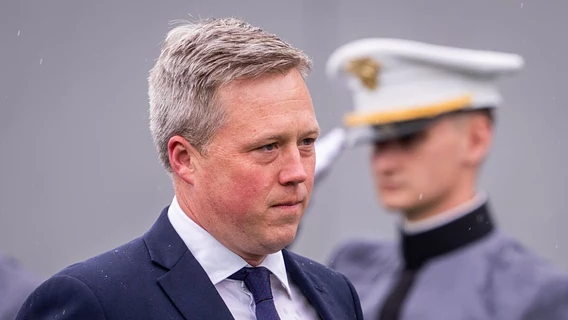
Driscoll, who left his post as head of the US Department of the Army in August after a series of conflicts with Pentagon chief Pete Hegseth, will take up the position of senior adviser for national security and modernization at the AI startup, Bloomberg reports .
As stated on the company's official blog, Driscoll will collaborate with government, academic, and industry leaders to advance "practical initiatives to modernize and build democratic AI."
“The United States has an extraordinary opportunity to work with other countries to spread and implement democratic artificial intelligence,” said OpenAI CEO Sam Altman.
The company said Driscoll will advise OpenAI's partners in the public and private sectors on the use of AI to strengthen national security, and will also help ensure the development of technologies that are consistent with democratic principles.
Dan Driscoll, 38, became the youngest-ever 26th Secretary of the Army after being confirmed for the position in 2025 by Donald Trump. He is also a close friend of US Vice President J.D. Vance since their Yale Law School days. As previously reported by Bloomberg, Driscoll had a strained relationship with Pete Hegseth before his resignation due to disagreements over personnel and management decisions.
OpenAI, which started as a non-profit organization, reorganized into a traditional for-profit company last year. While the startup initially prohibited the use of its technology for military purposes, this policy was relaxed in 2024.
In February, OpenAI inked a deal to deploy its AI models on a classified U.S. Department of Defense network, after the Pentagon's collaboration with the startup's main competitor, Anthropic, collapsed over disagreements over surveillance and autonomous weapons .