Реклама партнера — Название партнёра
UNIT.City — місце, де люди працюють... КРАЩЕ! Обирай свій простір просто зараз 👉

AI researchers create competitor to OpenAI's o1 reasoning model for just $50

AI researchers from Stanford and the University of Washington were able to train an artificial intelligence «reasoning» model for less than $50 in cloud computing credits.

Leave a comment
AI researchers create competitor to OpenAI's o1 reasoning model for just $50

AI researchers from Stanford and the University of Washington were able to train an artificial intelligence «reasoning» model for less than $50 in cloud computing credits.

The scientists presented their model, called s1, in a research paper, and it is also available on GitHub, along with the data and code used to train it.

s1 performs similarly to state-of-the-art reasoning models, such as OpenAI’s o1 and DeepSeek’s R1, in tests measuring math and programming abilities, TechCrunch reports.

The s1 development team said they started with a ready-made base model and then refined it using distillation — the process of extracting «reasoning» capabilities from another artificial intelligence model by training on its responses.

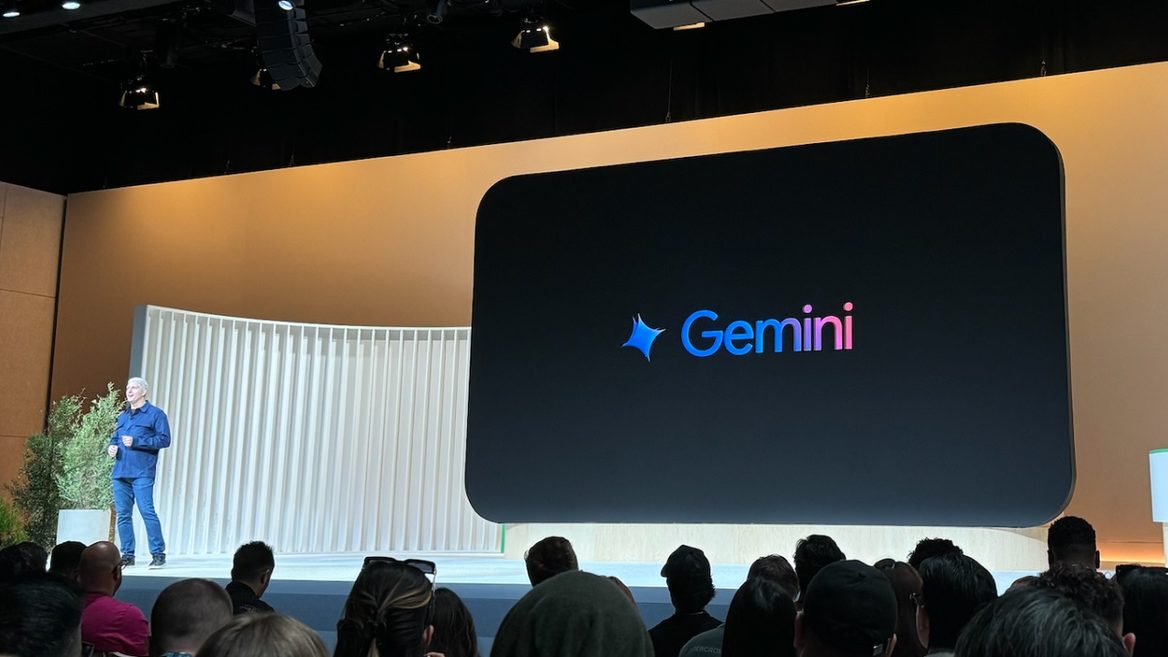
The researchers say that s1 is based on one of Google’s reasoning models, the Gemini 2.0 Flash Thinking Experimental.

The researchers behind s1 were trying to find the simplest approach to achieving high reasoning performance and «scaling test time,» that is, allowing an AI model to think more before answering a question. These were some of the breakthroughs in OpenAI’s o1 that DeepSeek and other AI labs have tried to replicate using different methods.

The paper s1 suggests that reasoning models can be derived from a relatively small data set through a process called supervised fine-tuning (SFT), in which an AI model is explicitly instructed to imitate certain behaviors in the data set.

SFT is generally cheaper than the large-scale reinforcement learning method that DeepSeek used to train its competitor OpenAI’s o1 model, R1 .

Google offers free access to Gemini 2.0 Flash Thinking Experimental, albeit with a daily fee limit, through its Google AI Studio platform. However, Google’s terms prohibit reengineering its models to develop services that compete with the company’s own AI offerings.

S1 is based on a small, off-the-shelf AI model from Alibaba’s Chinese AI lab Qwen, which is available for free download. To train S1, the researchers created a dataset of 1,000 carefully selected questions, along with their answers, and the «thinking» process behind each answer from Google’s Gemini 2.0 Flash Thinking Experimental.

After training s1 in less than 30 minutes using 16 Nvidia H100 GPUs, s1 achieved high scores on certain AI tests. The researchers also told TechCrunch that the necessary computing machine can be rented today for about $20.

The researchers used a clever trick to get s1 to double-check his work and extend the «thinking» time: they told him to wait. Adding the word «wait» during s1’s reasoning helped the model get slightly more accurate answers, according to the paper.

Distillation has proven to be a good method for cheaply reproducing the capabilities of an AI model, but it does not allow for the creation of new AI models that are significantly better than those available today.
John Shulman, former co-founder of OpenAI, left AI startup Anthropic almost six months after joining. What happened?
John Shulman, former co-founder of OpenAI, has left AI startup Anthropic almost six months after joining. What happened?
On the topic
John Shulman, former co-founder of OpenAI, has left AI startup Anthropic almost six months after joining. What happened?
Google launches new AI models and makes Gemini 2.0 Flash Thinking available in the Gemini app
Google launches new AI models and makes Gemini 2.0 Flash Thinking available in the Gemini app
On the topic
Google launches new AI models and makes Gemini 2.0 Flash Thinking available in the Gemini app
ByteDance, the owner of TikTok, introduced AI to create deepfake: only one photo and audio are needed to generate a realistic video
ByteDance, the owner of TikTok, introduced AI to create deepfake: only one photo and audio are needed to generate a realistic video
On the topic
ByteDance, the owner of TikTok, introduced AI to create deepfake: only one photo and audio are needed to generate a realistic video
Read the country's main IT news in our Telegram
Read the country’s main IT news in our Telegram
On the topic
Read the country’s main IT news in our Telegram
Also Read
Roosh запускає нову освітню платформу AI HOUSE CLUB для ML/AI-спеціалістів та дата сайнтистів. Розповідаємо, як подати заявку та чому навчатимуть
Як нейромережі бачать вільну та незалежну Україну? Тест dev.ua
Нейронні мережі для генерації зображень бачать світ по-своєму, їхню логіку зрозуміти часом зовсім неможливо. Але таки хочеться. На честь Дня Незалежності України редакція dev.ua вирішила провести невеликий експеримент. Ми задали чотирьом різним нейронним мережам п’ять однакових запитів: «прапор України», «День Незалежності України», «український Крим», «перемога України» та «українці». Отриманими результатами ми ділимося з вами нижче.
У TikTok тепер можна генерувати фон за допомогою нейромережі. Ми протестували її та ділимося результатами
У TikTok з’явилася нова функція «Розумний фон». З її допомогою як фон для тіктоків можна підставляти згенеровані нейромережею зображення. Редакція dev.ua протестувала цю технологію і ділиться своїми враженнями.
1 comment
Які IT-спеціальності будуть потрібні в найближчі п'ять років? Ми з'ясували у голови американського стартапу ADAM Дениса Гурака

Have important news to share? Message our Telegram bot

Key events and useful links in our Telegram channel

Discussion
No comments yet.