Оксана СтепураHot News
7 August 2026, 14:26
2026-08-07
Without millions on the wanted list. How did Fedorov want to reform mobilization?
Former Defense Minister Mikhail Fedorov spoke about the plan for changes to mobilization developed by his team. It provides for the phased mobilization of a certain number of conscripts, as well as a review of the functions of the Central Military District with the transfer of some of them to the police.
Former Defense Minister Mikhail Fedorov spoke about the plan for changes to mobilization developed by his team. It provides for the phased mobilization of a certain number of conscripts, as well as a review of the functions of the Central Military District with the transfer of some of them to the police.
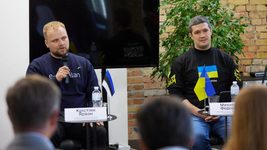
Fedorov talks about this during a live broadcast on Serhiy Sternenko's YouTube channel.
According to Fedorov, the changes were to be the second stage of a broader transformation of the Defense Forces. The first stage was already launched in June: it covered new contracts with fixed terms of service, changes in payments, transfers between units, the return of military personnel from the North-West Frontier Province, and the involvement of foreigners.
The former minister notes that this stage was aimed at reducing the number of cases of NWCH. "If you have 200+ thousand in NWCH, you are constantly looking for new people, and you have tens of thousands going to NWCH again in a month, then your mobilization logic is not working very well," he explains.
The second problem, Fedorov says, is the large number of people who are wanted in the military. “In fact, the entire state machine works to search for these people and sometimes to mobilize people by force,” he says. Instead, Fedorov’s team proposed another model, where a certain number of people would know that they were to be mobilized in the near future.
"There are a certain number of people who know that they will soon be mobilized and all conditions have been created for them: training, where they come, how they communicate with them, how they choose a unit, and so on," the former minister explains.
He states that people who, under this model, were not subject to mobilization could work and support the country's economy. "All the others at this time could work calmly for a certain period of time. They work for the economy of our country. Because this task is no less important today for ensuring the functionality of our state and receiving money for drones," Fedorov claims.
In return, people who were mobilized would receive better conditions for service. The former minister claims that his team already has a document where all stages of this process are already described. However, Fedorov also explains that such a model would require changes in legislation. The former minister emphasizes the importance of discussing this issue with society.
Fedorov also notes that, in his opinion, the police should perform more functions. However, he outlines some limitations of such a model. He argues that there are not enough police officers, and there is a problem with the level of their salaries.
Fedorov concludes that the key idea of his team was to reduce the reasons why people are afraid of service. “[We need…] for a person to know that we are fighting for their life. We are fighting sincerely. And we monitor what happens to a person from the moment they see that they have been mobilized. And they clearly know: what the term will be, how much time they have to choose a unit, where they will be trained, how they will be treated, how they can protect their rights, what the state is doing to protect their life, what is happening with the war strategy, how the process of protecting a person is going on, and so on,” he states.
He previously said that his team planned to present the mobilization reform in July, launch it in August, and expect to change the situation with the staffing of the troops in September. According to Fedorov, a meeting was also scheduled for the day of his release, at which he was to sign the first changes regarding the work of the CCC, in particular, regarding the use of balaclavas, cameras, and digital tools.
The former minister also mentions Lyubov Galan, whom he wanted to involve in his team, but her candidacy was not approved at the time. After his resignation, Galan was appointed deputy minister of defense. Fedorov suggests that perhaps she will be able to adjust something in the future approach of the Ministry of Defense.
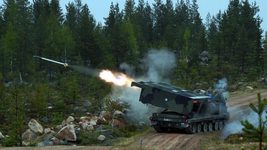
Атлас зброї: Німеччина передає захисникам чергові MARS II. Які ще РСЗВ отримала Україна від західних партнерів та як вони працюють
Федеральне міністерство оборони Німеччини повідомило у Twitter, що у найближчі кілька тижнів Україні будуть передані чергові системи залпового вогню MARS II.
Раніше ми розповідали про те, які РСЗВ партнери надіслали на допомогу українським воїнам. Нагадуємо про це знову.
(Текст від 26 липня)