Хочете будувати кар’єру в Data Science та AI? Vodafone Big Data Lab відкриває новий набір —>
Марія БровінськаWeapon
4 September 2026, 08:29
2026-09-04
FPV drones on "Shaheda" over the capital: what is known about the tactics that Russia is already using near Kyiv
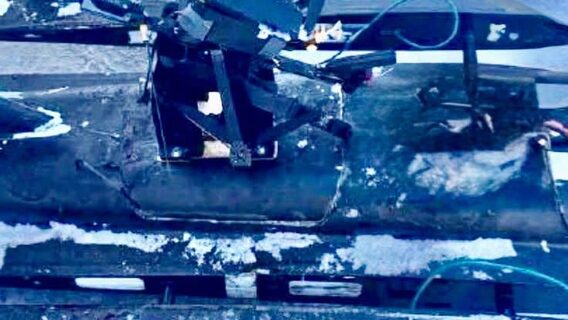
The other day, an FPV drone was recorded crashing in the Kyiv region — but there is still no 100% confirmation that it was launched from a Shahed: this is just one of the versions that is currently being verified. We tell you what is known about this tactic of the enemy.
The other day, an FPV drone was recorded crashing in the Kyiv region — but there is still no 100% confirmation that it was launched from a Shahed: this is just one of the versions that is currently being verified. We tell you what is known about this tactic of the enemy.
This was stated in a commentary to UNIAN by Serhiy Beskrestnov, the Ukrainian President’s advisor on the development of technological areas of defense. We have gathered everything that is known about this tactic — from the first reports about it to why the Russians themselves consider this method not very successful.
According to Flash, the drone was recorded where it was not supposed to be — and that is why the version about the launch from the Shahed arose. «There is currently no 100% evidence that this was the case, this is one of the versions. Therefore, we are now dealing with this story,» the presidential advisor explained. According to him, the Telegram channels that wrote about the event interpreted it incorrectly: we are not talking about some secret UAVs flying deep into Ukraine, but about two ordinary FPVs that were simply dropped from the carrier.
The last time a similar incident was recorded was a week ago in Konotop, Sumy Oblast — there the Russians also held two FPVs on the wings and dropped them down.
How does this tactic work?
The principle described by Flash is quite simple in engineering terms: the Russians attach two FPV drones above the wings of a strike drone — these could be ordinary Shahed kamikaze drones (also called Gerbera or Geranium, depending on the modification) — and drop them during flight. According to the expert, this is much more difficult to do with jet Shaheds due to their extremely high flight speed, so such drops were recorded mainly from ordinary, «gasoline» drones.
The control of the dropped FPVs is not through some special repeater on the Shahed itself, but directly through a regular SIM card and the LTE mobile network. Flash emphasized this nuance earlier: according to him, the Russians actually borrowed the very idea of controlling drones via LTE from the Ukrainian military, and then added a delivery method to it — carrying FPVs on a winged carrier to those areas where mobile coverage is stable, and then dropping them on targets there.
Why do Russians rarely use this?
Flash emphasizes the low efficiency of the approach. He has been recording such experiments for over a year, but, by his estimate, the Russians resort to them infrequently — about once a week or two. The reason is not a lack of desire, but the technology itself: overall control of an FPV dropped from a height via a mobile network remains a difficult task, and the number of successful strikes carried out in this way is small.
Moreover, according to Flash, the Russians have a structural reason not to rely on this method en masse: the LTE network is commercial and under the control of Ukraine, unlike mesh networks on radio modems, which the Russians themselves control. That is, the enemy is deliberately taking a risk by using infrastructure that it does not control — and he himself understands the instability of such a solution.
According to the expert, the main goal of such drops is often not to cause serious damage (dropped FPVs do not have a powerful warhead), but to have a psychological effect.