Хочете будувати кар’єру в Data Science та AI? Vodafone Big Data Lab відкриває новий набір —>
Марія БровінськаУвійти в ІТ
24 September 2026, 15:41
2026-09-24
“AI is already good at solving entry-level problems.” GlobalLogic invested $6 million in training new IT professionals
Artificial intelligence is already impacting the demand for entry-level IT talent—current models are good at entry-level tasks. That’s led GlobalLogic to shift its approach to hiring juniors from a focus on programming skills to a focus on algorithmic thinking and the ability to understand business problems.
Artificial intelligence is already impacting the demand for entry-level IT talent—current models are good at entry-level tasks. That’s led GlobalLogic to shift its approach to hiring juniors from a focus on programming skills to a focus on algorithmic thinking and the ability to understand business problems.
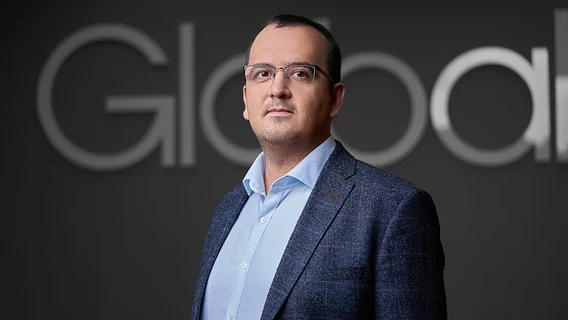
This was stated by Andriy Yavorsky, Senior Vice President of Strategy and Technology at GlobalLogic, in an interview with LIGA.net.
"Current AI models are already good at solving entry-level problems (not just in IT), so the demand for beginners is decreasing," he said.
According to Yavorsky, this has already affected the company’s approach to hiring interns and juniors. GlobalLogic cooperates with 22 Ukrainian universities, together with them it has opened six training labs and launched nine training programs.
Now, during the selection process, direct programming skills have become less of a priority. Instead, algorithmic thinking and the ability to analyze business problems have come to the fore. And this applies not only to beginners, but also to experienced specialists.
At the same time, the company continues to invest in training new professionals. Since 2018, GlobalLogic has allocated more than $6 million to external and internal training for beginners.
"Because if we don’t give young people the opportunity to learn and get started, it won’t lead us to anything exciting," Jaworsky noted.
He also doesn’t believe that the development of AI means the need for engineers will disappear. He says that specialists are still needed for complex tasks.
As an example, Yavorsky cited a situation where a product can be created using so-called vibecoding without a team of 10 developers, but then suddenly 50,000 users a day come to it. In this case, complex engineering tasks arise for which AI alone is not enough.
"The difficulty is not that there is no demand as such, but that customers need confidence in economic stability to buy new products," he said.
According to Jaworsky, the current situation in IT is also a consequence of a drop in demand after a period of hyper-demand, and AI is one of the factors in these changes.