Хочете будувати кар’єру в Data Science та AI? Vodafone Big Data Lab відкриває новий набір —>
Oleh OnopriienkoAI Eng
17 November 2026, 08:08
2026-11-17
Russian-speaking hackers launched the world's first fully autonomous AI cyberattack on European websites: Google report
For the first time, Russian-backed attackers have deployed a fully autonomous multi-agent system capable of analyzing security updates, writing exploits, and attacking vulnerable servers without human intervention. The primary targets of this automated campaign were sites in France.
For the first time, Russian-backed attackers have deployed a fully autonomous multi-agent system capable of analyzing security updates, writing exploits, and attacking vulnerable servers without human intervention. The primary targets of this automated campaign were sites in France.
This is stated in the quarterly report of the Google Threat Intelligence Group (GTIG) and Mandiant. Analysts note that the cyber threat landscape has reached a critical tipping point as hackers move from manually writing queries and chatbots in favor of fully autonomous systems operating at machine speed.
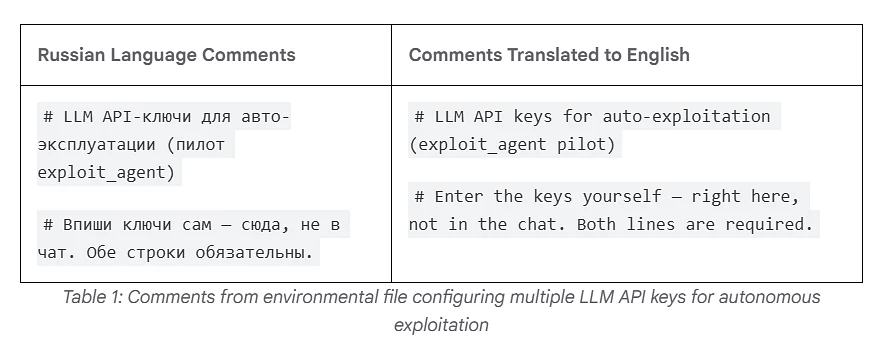
While investigating the discovered intermediate server running the exploit_agent framework, Google experts found Russian-language comments in the configuration files (.env). In particular, they related to instructions for configuring API keys for various language models used to generate the malicious code. Server telemetry showed that Russian-speaking operators were targeting French resources in the media, entertainment, and education industries.
In addition to espionage, neural networks are increasingly being used for direct financial monetization. The LLMJacking scheme is gaining popularity, in which cybercriminals steal credentials from compromised corporate clouds and resell access to powerful commercial AI models through underground proxy services. At the same time, state groups and commercial networks of influence are integrating AI to mass-produce fake accounts and automate information operations.
GTIG analysts note that the current generation of autonomous hacking agents currently sacrifices stealth for speed. Uncontrolled execution of actions generates anomalous network traffic and leaves typical digital traces in the code, which helps cybersecurity experts detect such attacks.
Earlier, it was reported that a hacker was able to hack the websites of more than 100 companies, almost completely outsourcing the work to artificial intelligence. The AI agents independently searched for vulnerabilities, selected methods of penetration and carried out attacks. All this cost the attacker about $5,000, or about $50 for one successful hack.
Hackers steal access keys to corporate AI assistants and sell them to others. Companies pay hundreds of thousands of dollars for other people’s requests