UNIT.City — місце, де люди працюють... КРАЩЕ! Обирай свій простір просто зараз 👉
Марія БровінськаScience Pop
16 June 2026, 10:18
2026-06-16
Gene-edited humans are on the way: scientists are concerned about a new experiment with embryos
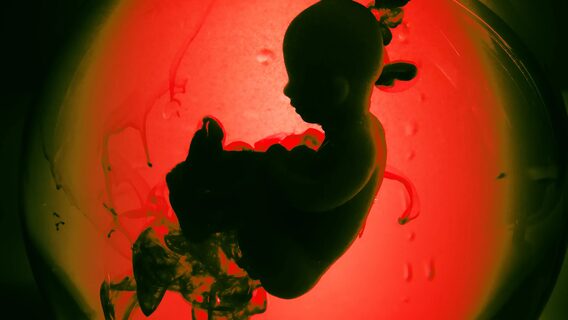
A team of geneticists led by Dieter Egli of Columbia University has edited two genomic sites in human zygotes using base editing, a more precise alternative to CRISPR. The study, which has not yet been peer-reviewed, has already raised serious concerns in the scientific community: critics say it could pave the way for much more controversial experiments on embryos.
A team of geneticists led by Dieter Egli of Columbia University has edited two genomic sites in human zygotes using base editing, a more precise alternative to CRISPR. The study, which has not yet been peer-reviewed, has already raised serious concerns in the scientific community: critics say it could pave the way for much more controversial experiments on embryos.
What exactly did the researchers do?
Unlike CRISPR, which cuts out entire segments of DNA, base editing makes point-specific edits within a single strand of DNA. Egli’s team targeted two genomic sites involved in cholesterol regulation and hemoglobin production—chosen not for their therapeutic potential but because they are well-studied in the context of somatic gene editing.
The goal of the study was not therapeutic, Futurism.com notes: the scientists sought to show that base editing is a viable way to edit the DNA of embryos without the risks that accompanied previous attempts with CRISPR. The embryos were not brought to term.
The results were mixed. A significant proportion of the edited embryos showed mosaicism, a condition in which cells in a single embryo are genetically different from one another. According to the New York Times, this could cause medical problems if the zygotes develop into embryos and later into children. Ana Iltis, a bioethicist at Wake Forest University who was not involved in the study, told the NYT that some of the potentially harmful effects may not become apparent until after birth.
Why is this alarming?
The study is supported by Nucleus Genomics, a company that screens IVF embryos for genetic disorders and has repeatedly found itself at the center of controversy over its claims.
Alexis Comor, a researcher who helped develop CRISPR, told Scientific American that «the cat is already out of the bag.» Without strong regulatory oversight in the U.S., she said, Egli’s team could have broken the existing informal consensus among scientists and effectively «opened the floodgates» for further work in the field. Comor called the research «the gateway to embryo editing for enhancement» — hinting at the risk of moving from treating disease to breeding for desirable traits.
University of California, Berkeley geneticist Fedor Urnov was even more blunt, telling the NYT that the researchers had effectively given «child enhancers» a manual to go beyond ethical boundaries.
Nathan Treff, co-author of the study and chief clinical officer of Nucleus Genomics, insists that the technology is still a long way from being put into practice. He says there is still a lot of work to be done, but this research brings science closer to the goal of curing or preventing disease.
For reference
Gene editing of human embryos has remained one of the most controversial topics in science since Chinese scientist He Jiankui stunned the world eight years ago by editing embryos with CRISPR and allowing them to be born. Supporters of the technology highlight its potential to treat diseases in new ways; critics compare it to eugenics and warn of a dangerous precedent: the ability for parents to choose the traits they want in their unborn child.
The base editing technology itself already has positive examples of application: last year, a 9.5-month-old child was cured of a rare genetic disorder using this gene therapy method.
Репост новин змушує нас вважати себе розумнішими, але це не так. З лідерами думок теж працює, показує нове дослідження
Обмін новинними статтями з друзями та підписниками в соціальних мережах спонукає людей думати, що вони знають про теми цих статей більше, ніж вони знають насправді. І це працює з активними користувачами Facebook, що ставить під сумнів обізнаність ваших улюблених лідерів думок. Про це свідчить дослідження вчених з Техаського університету в Остіні. До речі, обов’язково покажіть цю статтю своїм друзям і репостніть у соцмережах.