Оксана СтепураRobots
9 October 2026, 13:46
2026-10-09
American scientists created a $400 humanoid robot based on an old smartphone
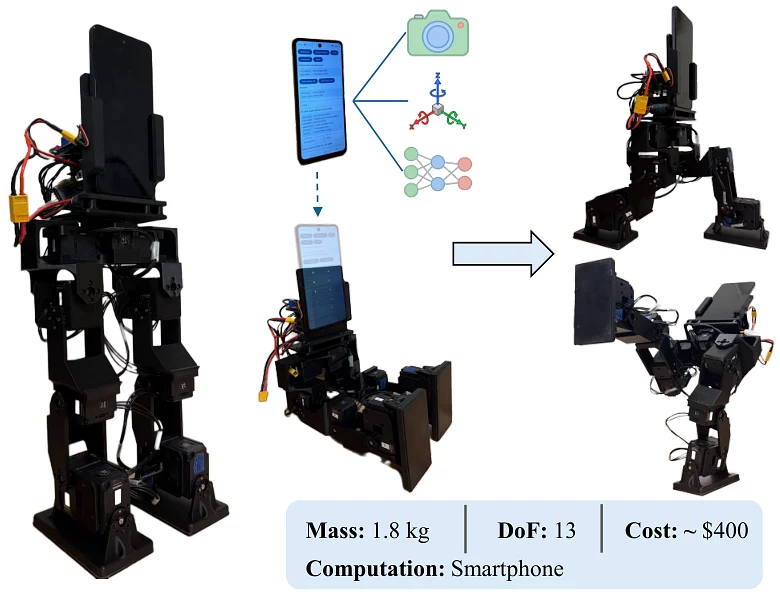
Researchers at the University of California, Los Angeles (UCLA) have developed a humanoid robot called PhoneBot, in which a regular Android smartphone acts as the "brain." The robot can already walk, follow a person, and get up on its own after falling. Even a nine-year-old phone can do the job.
Researchers at the University of California, Los Angeles (UCLA) have developed a humanoid robot called PhoneBot, in which a regular Android smartphone acts as the "brain." The robot can already walk, follow a person, and get up on its own after falling. Even a nine-year-old phone can do the job.
Scientists described the development in a study published on the arXiv platform.
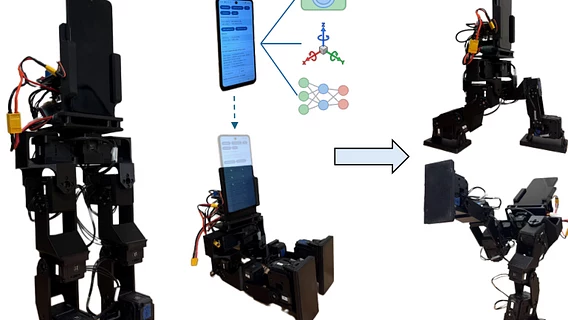
PhoneBot is 48 cm tall and weighs only 1.8 kg. It does not yet have arms, but it does have two legs, a torso with a smartphone, and 13 motors that are responsible for its movements. The phone's camera helps the robot see people and objects, motion sensors determine the position of the body, and the processor processes information and controls its walking.
Inside the PhoneBot is also a small single-board computer. It receives commands from the smartphone over Wi-Fi and transmits them to the motors. So the phone does the basic calculations. It sends commands over Wi-Fi to this computer, which transmits them to the motors.
For testing, the researchers used four different phones: Honor 9 from 2017, Moto G 2024, Moto G 2025 and Samsung Galaxy A16 5G. The last three were purchased in the US for about $50–80. All four smartphones coped with motion control, image processing and other basic tasks. However, the Honor 9 did not work with the function of building a map of the environment due to the unavailability of the necessary Google services.
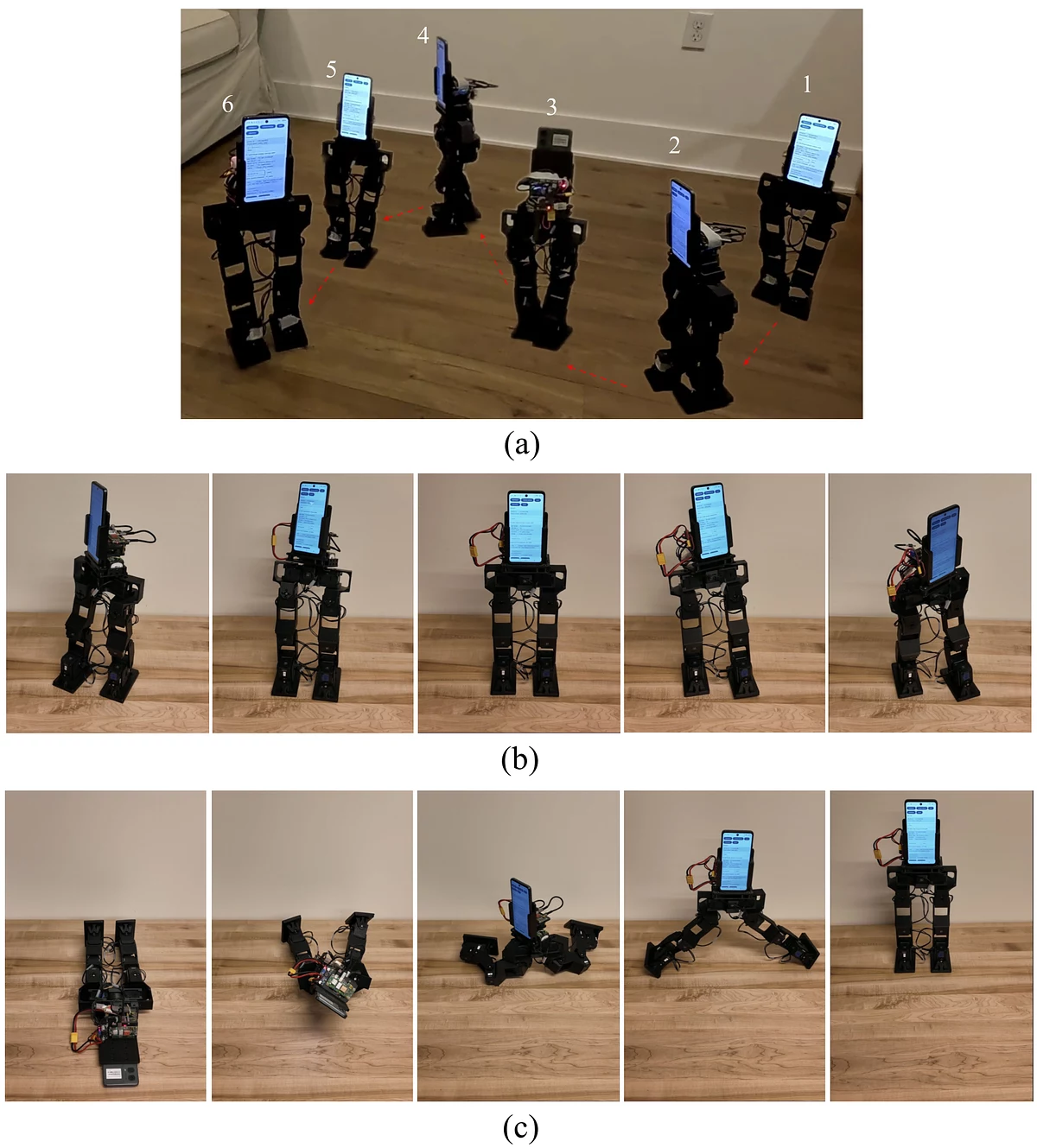
The robot's training began in a computer simulation, where it could practice without risking damaging real motors and joints. But even with the same design for both legs, there was a problem. The algorithm learned to walk unevenly: the left leg always remained ahead, while the right leg took on most of the load.
To fix this, the developers used mirroring of the training data. So the algorithm was shown the same movements, but with the right and left legs swapped.Thanksto this, PhoneBot learned to distribute the load more evenly, and then even turn to the person it sees through the camera, and get up after lying face down.
PhoneBot can also recognize speech and respond with voice using a large language model. However, for now, this requires an external laptop to process voice requests. The smartphone itself plays the ready-made response through the speaker.
In the future, the developers plan to teach it to move over uneven terrain, add light hands for working with objects, and transfer voice control directly to the smartphone.
According to the study authors, the hardware for PhoneBot costs about $400, not including the smartphone. The cheapest of the other compact robotic platforms listed in the study is estimated at $3,500.
Previously, dev.ua wrote about the Chinese startup Noetix Robotics, which introduced the humanoid robot Bumi for $1,400. It is 94 cm tall, can walk, dance, and respond to voice commands.