Хочете будувати кар’єру в Data Science та AI? Vodafone Big Data Lab відкриває новий набір —>
Олег ОнопрієнкоWar
7 September 2026, 09:00
2026-09-07
Jet terror: How the Armed Forces of Ukraine will land new enemy UAVs
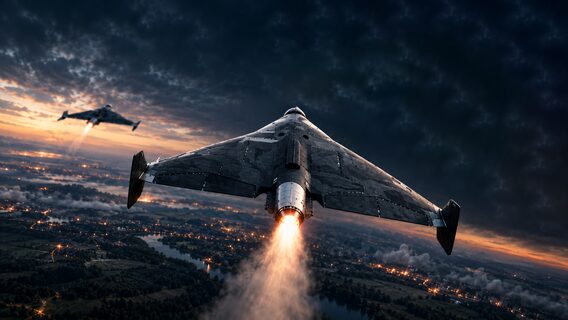
Prolonged air alerts, the government's division of threat levels, and constant hits — Kyiv and the regions have encountered a new enemy tactic. Russia is scaling up production of Shahed jets, which fly at the speed of cruise missiles and cover a range of up to 1,000 km. We understand why mobile fire groups lose effectiveness against high-speed targets, how the enemy is building infrastructure for Geran-4/5, and what technological solutions the Defense Forces will use to defeat the new threat.
Prolonged air alerts, the government's division of threat levels, and constant hits — Kyiv and the regions have encountered a new enemy tactic. Russia is scaling up production of Shahed jets, which fly at the speed of cruise missiles and cover a range of up to 1,000 km. We understand why mobile fire groups lose effectiveness against high-speed targets, how the enemy is building infrastructure for Geran-4/5, and what technological solutions the Defense Forces will use to defeat the new threat.
For almost two weeks, Kyiv residents and residents of the surrounding regions have been living in a state of continuous, exhausting marathon, where the sounds of sirens merge into a continuous air raid alert due to the constant and imminent threat of the use of jet drones. At the end of August, an absolute record was recorded in the capital - 13 air raid alerts sounded in one day, paralyzing the normal rhythm of the metropolis. In addition to the constant howling of sirens, the security situation also remains difficult, logistics hubs, terminals, warehouses, enterprises and even the SBU building - dozens of targets hit by jets in the last two weeks alone in Kyiv and the region.
The situation has taken on such a threatening economic and social scale that the Ukrainian government had to intervene quickly and revise the rules of response and algorithms for alerting the population . As President Volodymyr Zelensky noted : “I held a meeting. The main issue is to accelerate all processes for the production of high-speed interceptors against jet “shaheeds”. Ukraine has manufacturers with the ability to perform this task. Prototypes have been developed, work is underway to bring this new weapon to the required level of effectiveness.”
How are these new jet "shaheeds" radically different from the "mopeds" we are used to, and why have they become such a serious challenge?
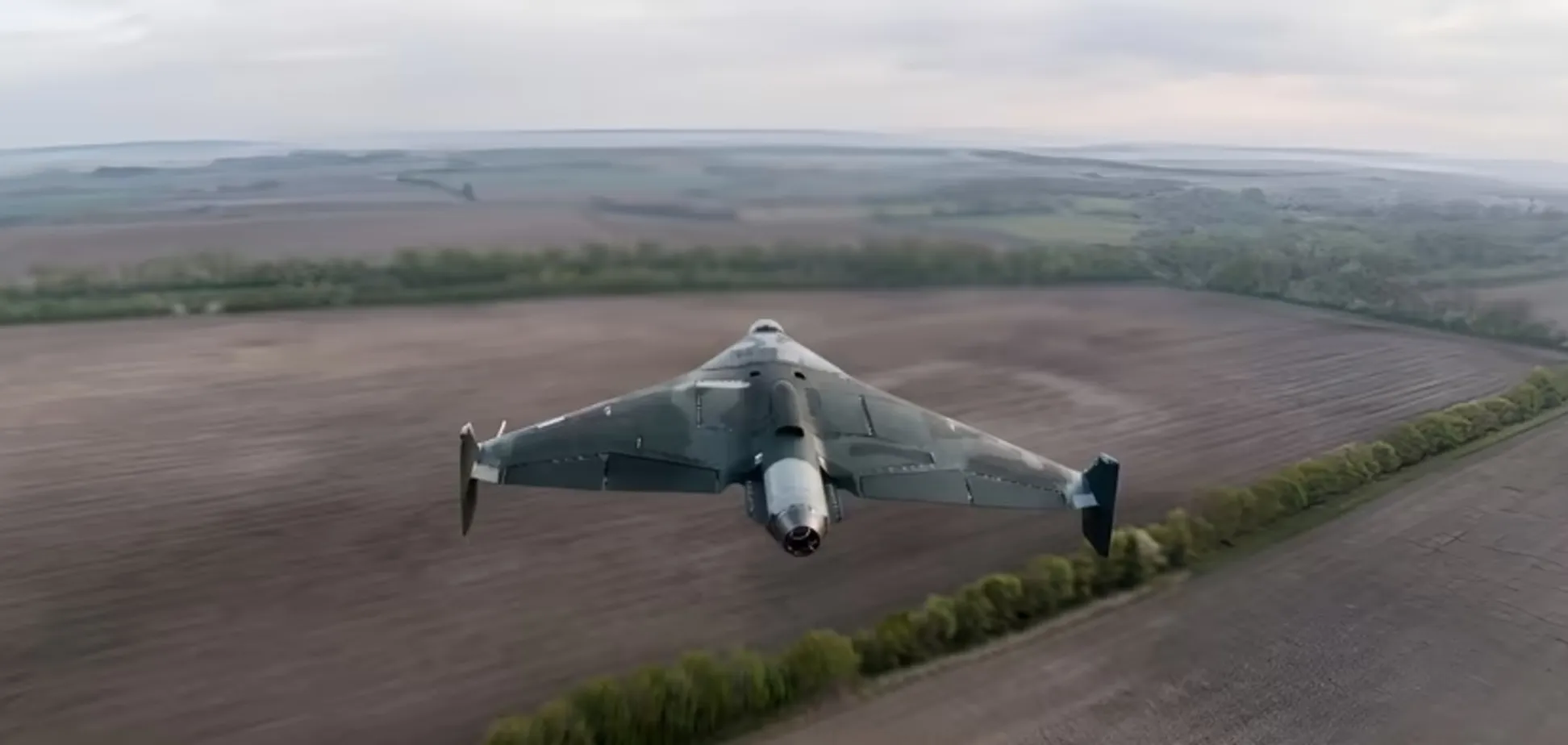
The evolution of Russian-Iranian drones has been gradual but inevitable. Without going into too much technical detail, the main change lies in the power plant and aerodynamic design. Conventional piston-powered “Shaheds” (Geran-2) fly at a speed of 150-170 km/h, while new jet models equipped with Chinese turbojet engines are capable of confidently maintaining a cruising speed of 300-400 km/h, and during the dive phase can accelerate to 600 km/h. The enemy has significantly modified the airframe, strengthening the wing structure and making its edge thinner for operation at high speeds, and has also optimized the fuel balance in order to increase the flight range, which can now reach about a thousand kilometers.
"Geranium-4"
Moreover, according to the latest data from the Main Intelligence Directorate of the Ministry of Defense of Ukraine, Russia has made a full-fledged technological transition: the production volume of jet kamikaze drones of the Geran-4 and Geran-5 types has completely exceeded the production of old piston models. As noted by Major General of the GUR Vadim Skibitsky, the Russians have reconfigured their facilities in Alabuz with an emphasis on turbojet versions. According to intelligence estimates, Russia is currently capable of producing about 3,000 such drones per month, which indicates the frantic pace of scaling this threat.
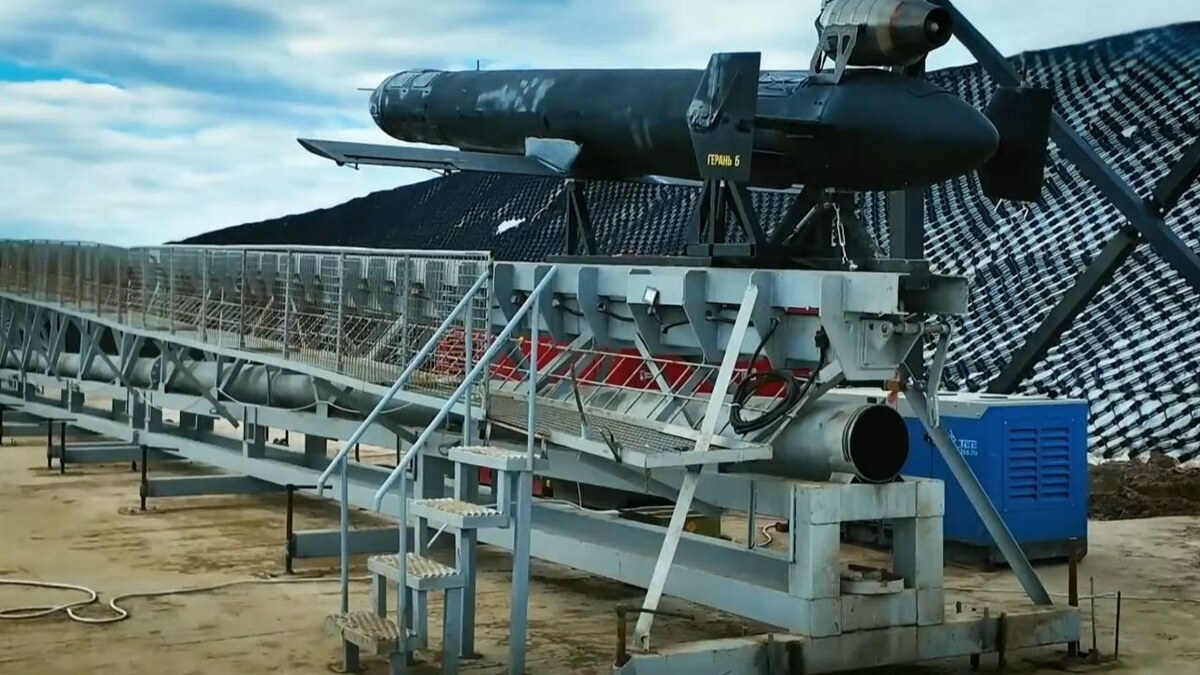
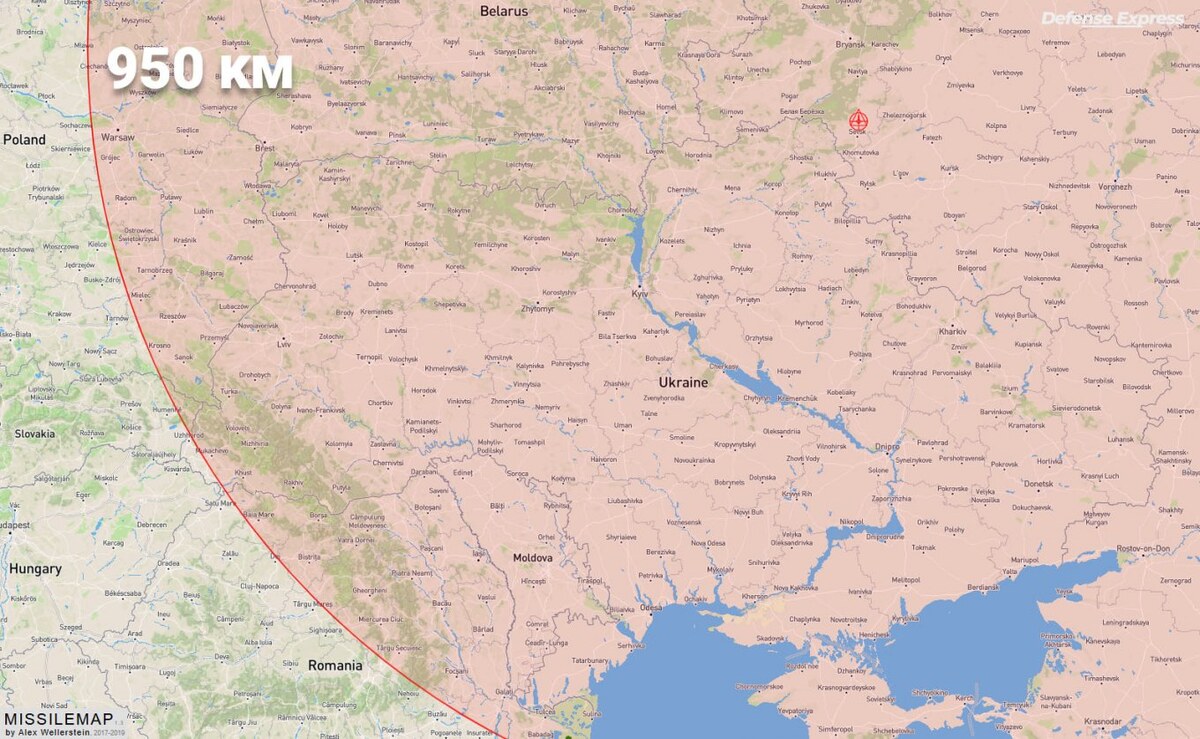
The enemy is not only manufacturing these devices, but is also actively developing the infrastructure for their launch, creating new launch sites in the Oryol and Lipetsk regions, specially adapted for the larger dimensions of the Geranium-4 and Geranium-5. And even Warsaw is within reach of some sites.
In addition, the new drones have received protected CRPA antennas and optical homing heads, which turns them into a kind of giant long-range FPV drones that can be controlled via special mesh networks.
Why are we now in a situation where it is extremely difficult to effectively counter this invasion?
The problem lies in changing the very paradigm of interception. Air Force spokesman Yuriy Ignat frankly explains the current state of affairs: “For now, we cannot count on interceptor drones… Aviation is working, anti-aircraft missile troops are working. If a drone is within the reach of small air defense or portable anti-aircraft missile systems, the appropriate means are working. We use what we have against the jet “shaheeds.”
"Geranium-5"
Conventional mobile fire groups armed with heavy machine guns, which have become a salvation against piston drones, often prove powerless against targets that are racing at speeds of over 400 km/h. As aviation expert Anatoly Khrapchinsky explains , the flight parameters of jet UAVs are very close to cruise missiles; they fly low, so their interception is too expensive.
"Russia is putting continuous pressure on our defense. Fighter aircraft are drawn into a grueling conveyor belt: takeoff, interception of a high-speed target, landing, refueling and resupply. This rapidly wears out the aircraft's resource, and ground-based anti-aircraft systems are in a state of stress," Khrapchinsky emphasizes.
Using Patriot or IRIS-T missiles against drones, the cost of which is several tens of thousands of dollars, is exactly what the enemy is trying to achieve, depleting our strategic air defense reserves. Radio technology expert Sergey “Flash” Beskrestnov also draws attention to the fact that the Russian Federation has increased the number of these UAVs by at least 67% over the past month, launching them almost straight from the factory, understanding our vulnerability to massive attacks by high-speed targets.
Flight range of jet fighters
What will we use to knock down the reagents?
There are already confirmed cases when the Ukrainian Zirka interceptor drone managed to catch up with and destroy a Geran-4 jet . This domestic device is equipped with an automatic detection and guidance system, which allows it to reach speeds of up to 340 km/h and effectively hit maneuvering targets. Our soldiers also prove that high-speed drones can be shot down even from Soviet Tunguska anti-aircraft gun-missile complexes, which, despite their age, continue to serve alongside modern Gepard and Skynex. In addition, operators of the GUR units of the Ministry of Defense already have successful hits on jet fighters using modernized conventional drones.
Jet Shaheds - what next?
Echelons of interceptor drones shoot down about 90% of conventional shaheds (according to the President of Ukraine). But with jets, the situation is much more complicated. Jet shaheds "Geran-4" differ from conventional ones in speed and design. They have a Chinese… pic.twitter.com/4SDGUbyxs1
Defeat of operators of 38 ZPR, 1129 ZRP, Rubpak Bulava 3mb OPB, department of active operations of the GUR of the Ministry of Defense
Andriy Hrytsenyuk said in an interview with Forbes Ukraine that there is currently a strategy for the development of small air defense missiles and interceptor drones, which provides for four main areas of development:
Turbojet interceptors. These are drones equipped with a miniature engine, similar to those found in cruise missiles, which allows them to accelerate to the extremely high speeds necessary to intercept a target while pursuing it.
Impeller interceptors with electric propulsion. Their main advantage is cost-effectiveness, as impeller engines cost about eight times less than turbojet counterparts (from $500 to $1,000 versus $5,000-$8,000), which makes them ideal for mass production.
Ultra-fast electric racing copters . These devices have the most improved aerodynamics, carefully selected batteries and motors, so that they can start lightning fast and accelerate to speeds of over 450 km/h, intercepting a drone at short distances.
Systems for shooting down "Shaheeds" on oncoming courses. Currently, six Ukrainian companies are actively developing this area, creating solutions that will allow destroying enemy drones not by catching up with them, but by intercepting them in the forward hemisphere, which requires extremely accurate radars and homing heads.
As Defense Minister Yevgeny Khmara noted , there are currently four potential interceptors that have passed field tests. It is known for certain that one of them is the Alexa Spatium drone interceptor , which was officially announced by the Defense Ministry. The Defense Minister's words about the presence of four potential interceptors are directly confirmed by military expert on radio technologies Sergey "Flash" Beskrestnov.
"We currently have at least four types of jet interceptors, but they are at the stage of final testing and testing in combat conditions. We cannot talk about their production in millions right now - the final stage of testing is still underway. Until then, conventional air defense works against jet fighters. We are talking about missiles, machine guns, cannons (in particular, anti-aircraft), as well as a very important segment - our fighters," Flash noted in an interview with DOU.
Andriy Hrytsenyuk also spoke about the importance of the aviation component in protecting Ukrainian skies. Ukrainian developers are actively reworking R-60 aircraft missiles to intercept UAVs. The main requirement for such projects is to maintain a low launch cost, which should not exceed $20–25 thousand. Since the price of the “Shaheed” itself fluctuates within $100–150 thousand, such mathematics makes interception economically profitable, even if three or four missiles have to be launched to destroy one target.
The Ministry of Defense has shown a new means of combating rocket "shaheeds". What is known about the first rocket interceptor in Ukraine, Alexa Spatium