Марія БровінськаAgroTech
11 August 2026, 10:00
2026-08-11
How Ukraine's largest agro-tech holding got rid of hundreds of thousands of paper invoices — and why drivers don't want to go back to paper anymore
Every year, 2 million documents pass through the Kernel system. A few years ago, each of them existed on paper — and could be lost, have incorrectly entered data or discrepancies in the weight of the goods, which caused a delay in the entire delivery. Today, 65% of these documents exist only in digital form. And drivers who once transferred pieces of paper at weigh stations now sign consignment notes on their phones.
For several years, Kernel has been actively implementing electronic waybills (eWBLs) in all chains of transportation of sunflower seeds, grain, oil, etc. This is not just a technical feature, but a real change in the culture of document flow in the agricultural sector. The goal was simple: less paper, more transparency and speed in the formation and accounting of primary documents.
Every year, 2 million documents pass through the Kernel system. A few years ago, each of them existed on paper — and could be lost, have incorrectly entered data or discrepancies in the weight of the goods, which caused a delay in the entire delivery. Today, 65% of these documents exist only in digital form. And drivers who once transferred pieces of paper at weigh stations now sign consignment notes on their phones.
For several years, Kernel has been actively implementing electronic waybills (eWBLs) in all chains of transportation of sunflower seeds, grain, oil, etc. This is not just a technical feature, but a real change in the culture of document flow in the agricultural sector. The goal was simple: less paper, more transparency and speed in the formation and accounting of primary documents.
A typical morning at the grain elevator — then and now
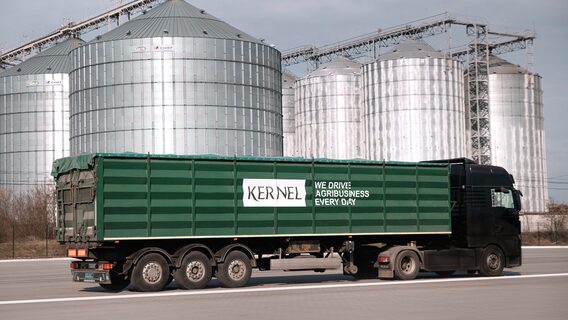
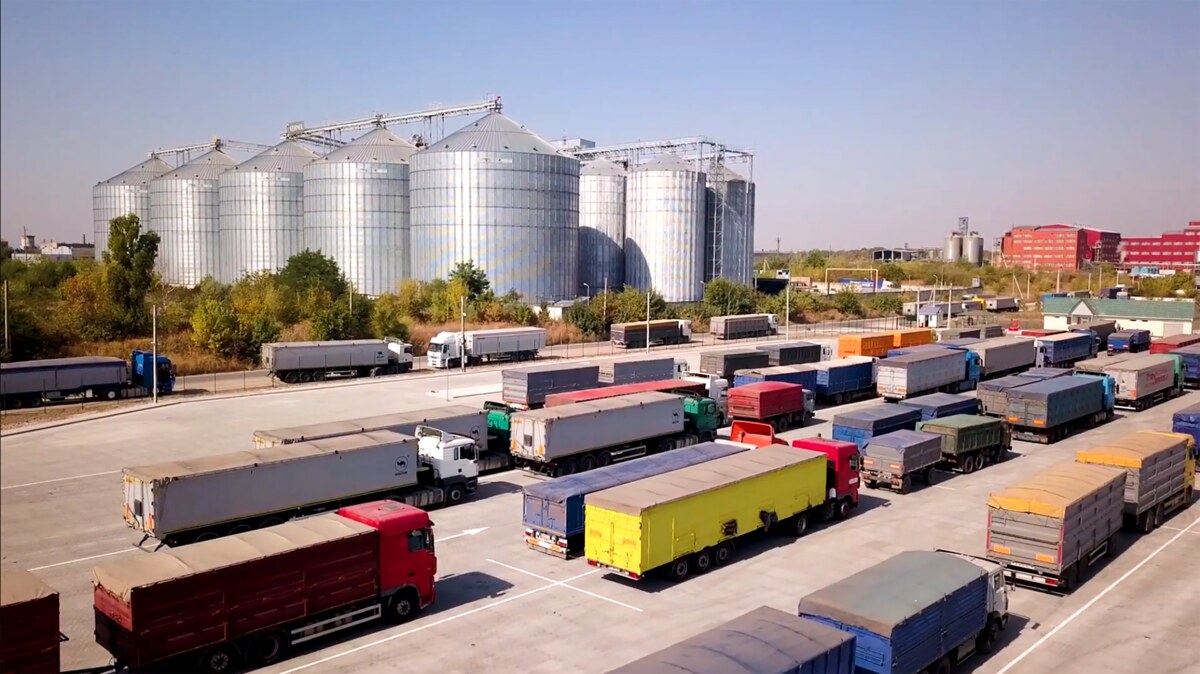
Imagine: six in the morning, a line of trucks at the entrance to the elevator. Previously, each driver carried a paper waybill with him — sometimes filled out by hand, sometimes with an error in the weight or address. The weigher would manually verify the data, find a discrepancy, and send it for re-registration. The truck was standing. The next one was standing behind it.
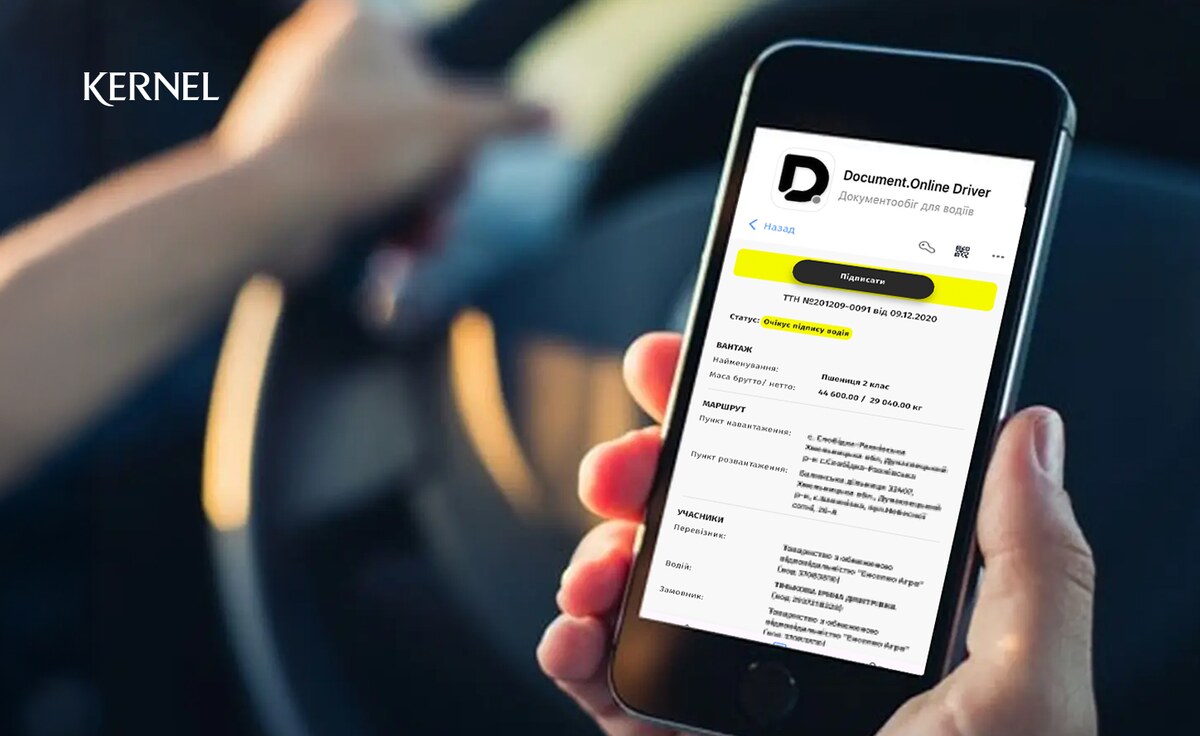
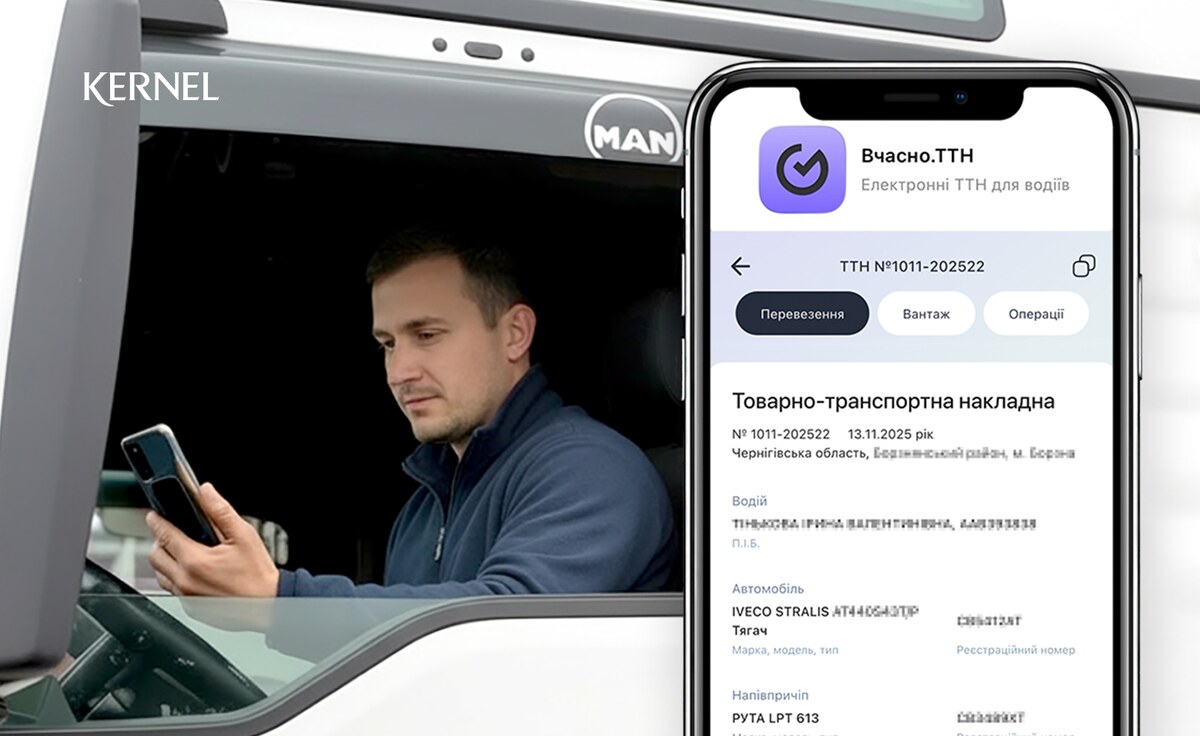
Today, the same scene looks different. The driver approaches the facility — the document is already in the system. The car’s weighing is recorded automatically. The signature is via a mobile app. The queue moves.
This is why Kernel started back in 2017 with its own electronic document management system. Not because the law required it, but because paper document management in the agricultural sector was a source of constant chaos: documents were reissued several times, data did not match, and archives took up entire rooms.
Numbers that speak for themselves
Currently, 500,000 freight bills pass through Kernel logistics every year. The company’s goal is to have 95% of internal documents in digital format and 75% in work with counterparties.
In 2024, the first fully digital chain was launched — internal transportation between elevators, factories and terminals. The result: 87% of TTNs during the season were paperless. In 2025, the chain «from field to elevator» was added and reached 90% paperless.
Kernel has already connected 1,000 partner car companies, 6,000 drivers, and over 400 dispatchers and weighbridges to a single digital ecosystem.
The most difficult thing is not technology, but people
Launching the system turned out to be easier than convincing people to use it. Thousands of drivers and hundreds of carriers were used to pen and paper — and didn’t understand why anything needed to change.
I had to learn from scratch: how to get an electronic signature, how to use the mobile application, what to do if something went wrong. There were a lot of mistakes at the start. The process took time. But today the same people say that they don’t understand how they worked differently before.
What changed for each participant
For business, it means less routine costs, fewer errors in primary documents, and faster generation of inspection packages.
For drivers, there are no queues with paperwork, no «lost document» issues. Everything is on your phone.
For partners, there is complete transparency: every step of the delivery is visible in real time, calculations are faster. If earlier we had to wait 5–7 days for the delivery of paper documents after unloading, now all operations are carried out in electronic format.
At the same time, checking primary documents for correctness of execution was reduced by approximately 80%, and the risks of losing freight invoices virtually disappeared.
Kernel became the first company in the agricultural sector of Ukraine to successfully implement a full cycle of electronic document management. The large-scale transformation has proven its effectiveness: from transparency for partners to comfort for drivers. This is a case of technological leadership, where leadership is determined not only by the idea, but also by the ability to be the first to change the rules of the game in the entire industry.
Дуже цікаво подивитися, як саме їх перевіряють реальні служби. По факту фізично документа не існує, є лише шаблон в базі данних і поля true/false і якщо десь в шаблоні помилка, то вона масштабується на всі 'документи'. Тут більше стаття не про те що вони скоротили людський фактор, а про те як його має перевіряти державний орган... Якщо адмін може виправити 'документ' поки фізично авто вже рухається. Чи не є це порушенням закону ?
Дуже цікаво подивитися, як саме їх перевіряють реальні служби. По факту фізично документа не існує, є лише шаблон в базі данних і поля true/false і якщо десь в шаблоні помилка, то вона масштабується на всі 'документи'. Тут більше стаття не про те що вони скоротили людський фактор, а про те як його має перевіряти державний орган... Якщо адмін може виправити 'документ' поки фізично авто вже рухається. Чи не є це порушенням закону ?









Comment hidden for violating commenting rules.
Comment hidden for violating commenting rules.
Дуже цікаво подивитися, як саме їх перевіряють реальні служби. По факту фізично документа не існує, є лише шаблон в базі данних і поля true/false і якщо десь в шаблоні помилка, то вона масштабується на всі 'документи'. Тут більше стаття не про те що вони скоротили людський фактор, а про те як його має перевіряти державний орган... Якщо адмін може виправити 'документ' поки фізично авто вже рухається. Чи не є це порушенням закону ?
Дуже цікаво подивитися, як саме їх перевіряють реальні служби. По факту фізично документа не існує, є лише шаблон в базі данних і поля true/false і якщо десь в шаблоні помилка, то вона масштабується на всі 'документи'. Тут більше стаття не про те що вони скоротили людський фактор, а про те як його має перевіряти державний орган... Якщо адмін може виправити 'документ' поки фізично авто вже рухається. Чи не є це порушенням закону ?