Марія БровінськаAgroTech
24 July 2026, 10:00
2026-07-24
"Kernel" counts seeds by photo and builds logistics for 500,000 variables in 8 minutes. How the agrotech platform works
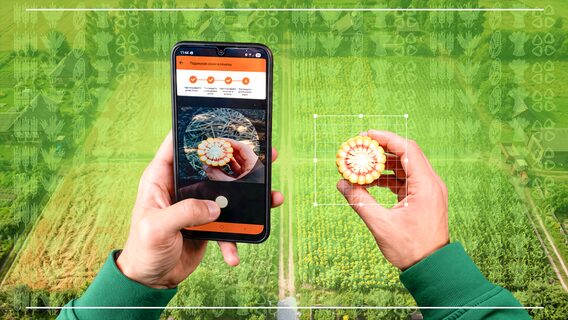
An agronomist takes a photo of a corn head and within seconds receives a grain count along with a yield forecast. A logistician opens the system in the morning and within 8 minutes has a crop transportation plan for the fields, elevators, and port. This sounds like a set of separate AI features. In fact, it is one system.
For eight years, Kernel has been developing its own Digital Agribusiness (DAB) — a web and mobile platform with a microservice architecture on the backend, which combines 6 separate projects — from crop planning, agricultural operations, calculation of fertilizer rates to logistics, analytics, and Data Science models.
Its task is not just to collect data, but to answer key business questions: how much to invest in a season, what yield to expect, how not to lose it during the growing process, and how to track what is really happening in the fields or individual areas.
dev.ua is launching a project in which, in partnership with the largest Ukrainian agricultural holding, Kernel, talks about the most modern technological solutions in agriculture that increase the efficiency of agricultural production and simplify the work of farmers.
An agronomist takes a photo of a corn head and within seconds receives a grain count along with a yield forecast. A logistician opens the system in the morning and within 8 minutes has a crop transportation plan for the fields, elevators, and port. This sounds like a set of separate AI features. In fact, it is one system.
For eight years, Kernel has been developing its own Digital Agribusiness (DAB) — a web and mobile platform with a microservice architecture on the backend, which combines 6 separate projects — from crop planning, agricultural operations, calculation of fertilizer rates to logistics, analytics, and Data Science models.
Its task is not just to collect data, but to answer key business questions: how much to invest in a season, what yield to expect, how not to lose it during the growing process, and how to track what is really happening in the fields or individual areas.
dev.ua is launching a project in which, in partnership with the largest Ukrainian agricultural holding, Kernel, talks about the most modern technological solutions in agriculture that increase the efficiency of agricultural production and simplify the work of farmers.
How agronomists lived with a notebook — and what changed
One of the key tools in this system was the mobile application «Scouting» — in fact, an «operating system» for an agronomist in the field. Ten years ago, an agronomist would visit the fields according to a schedule or «by feel», keeping some information in his head, some in a notebook. It was impossible to see all the fields at once, so problems were often noticed only when they became critical — the crop lagged behind in development, pests or diseases appeared, and time for a quick response was lost, so part of the harvest had to be written off.
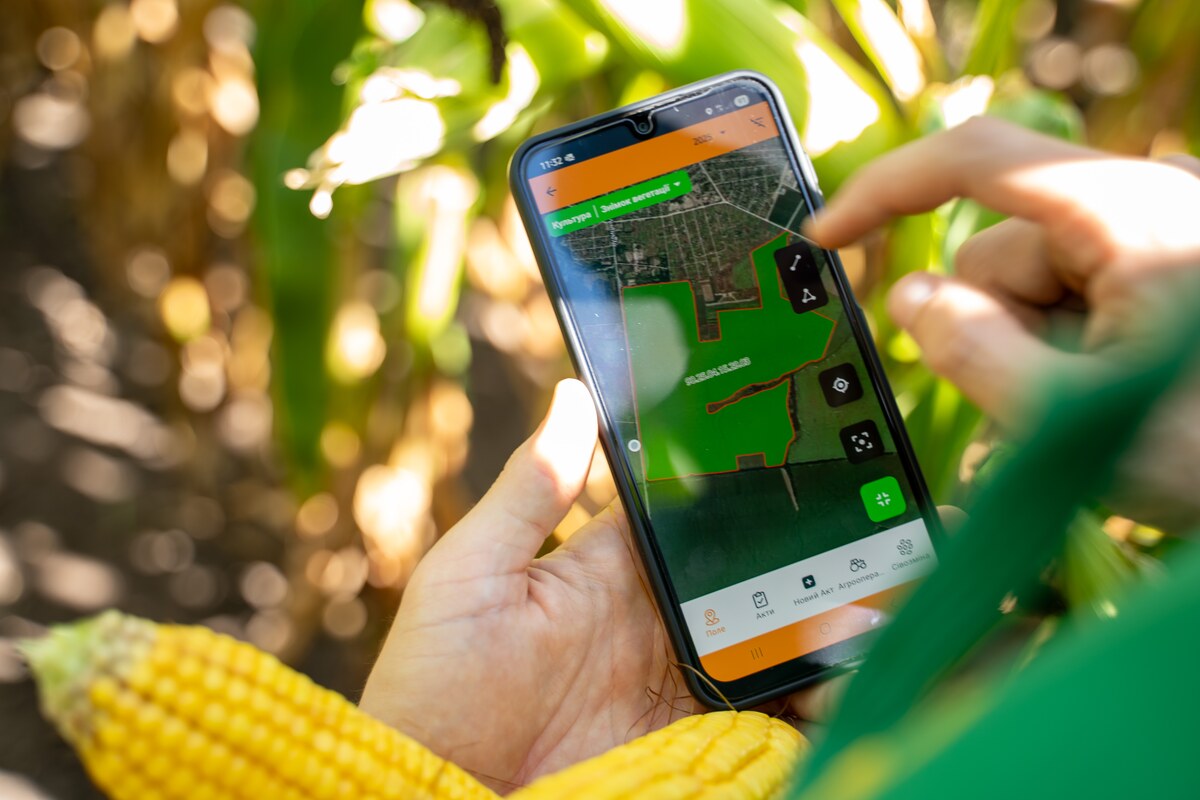
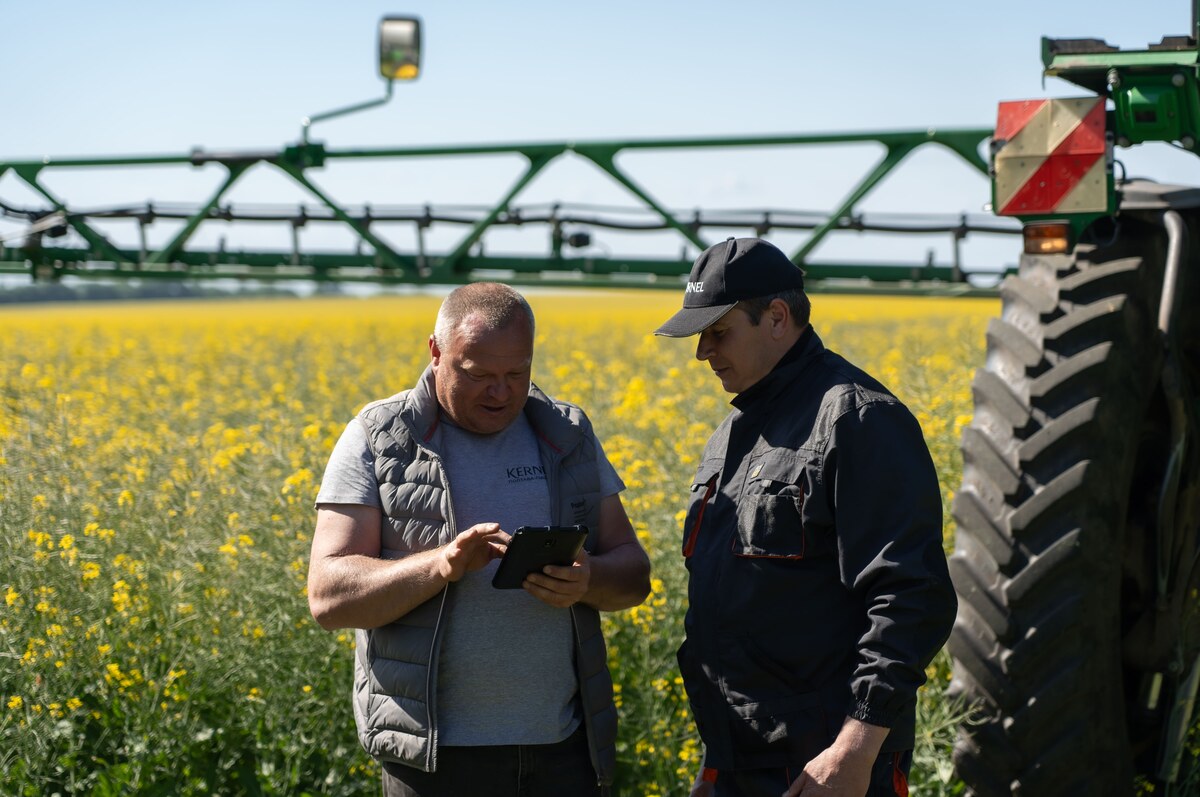
Now the agronomist goes to the field at the signal of the system in critical phenological phases or when visible risks appear. The system highlights problem areas through satellite images and vegetation indices. Instead of hours with papers — a few minutes in the system: selection of the site, photo of the soil and plant, comment — and the data is immediately in the system, which all employees involved in the process can see in real time.
«Scouting is the field’s ‘heart rate monitor.’ It doesn’t increase yield by itself. But it helps you understand what to do next,» Kernel explains.
What’s under the hood of DAB
Behind this interface is a multi-layered system: actual data, planning and forecast layers. Actual data comes from internal accounting systems, sensors, satellite images (Sentinel and Landsat), as well as photo and video recordings of the entire production cycle from the fields.
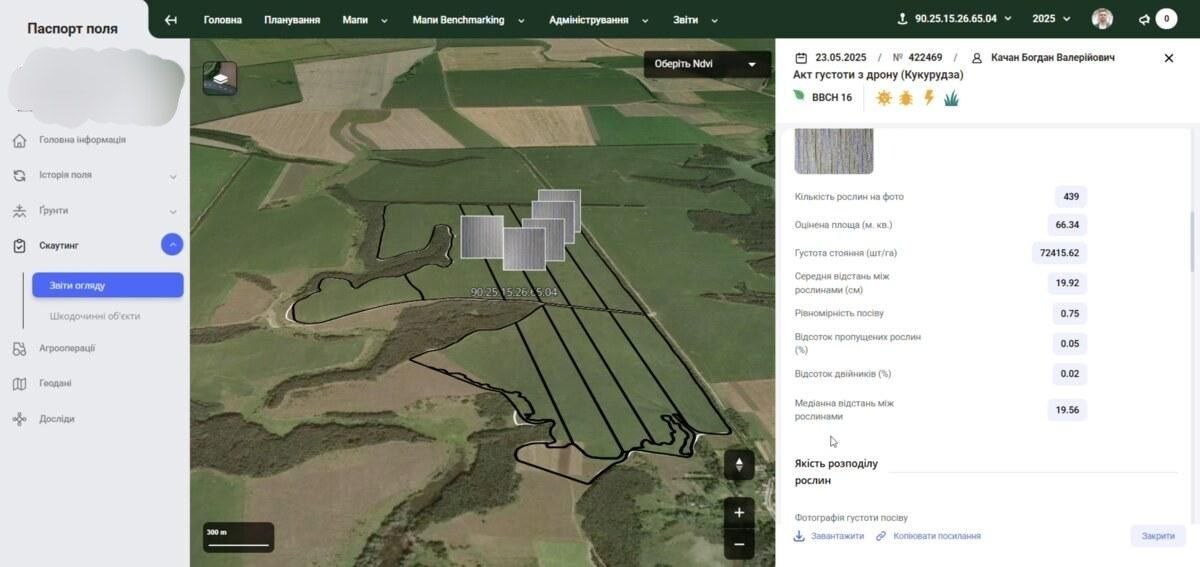
All this is summarized in a «field passport» — a digital card that collects crop history, sowing and harvesting dates, yield, agricultural operations, weather data, and a «field score» — an index of its productivity.
One of the key data sources that Kernel works with is Sentinel and Landsat satellite images. Based on them, the system calculates the vegetation index (NDVI — Normalized Difference Vegetation Index), which allows you to assess the condition of crops, identify problem areas and track the development of crops throughout the season. Satellite data is supplemented with information from weather stations, agrochemical soil analyses and field observations.
Plans are formed based on many years of analytics, and forecasts are made using artificial intelligence and Data Science models that take into account meteorological data (iMetos, Geosys, etc.), field history, soil types, financial results, etc. As a result, the system does not just show what is happening, but helps model solutions.
AI that actually works in the field, not in presentations
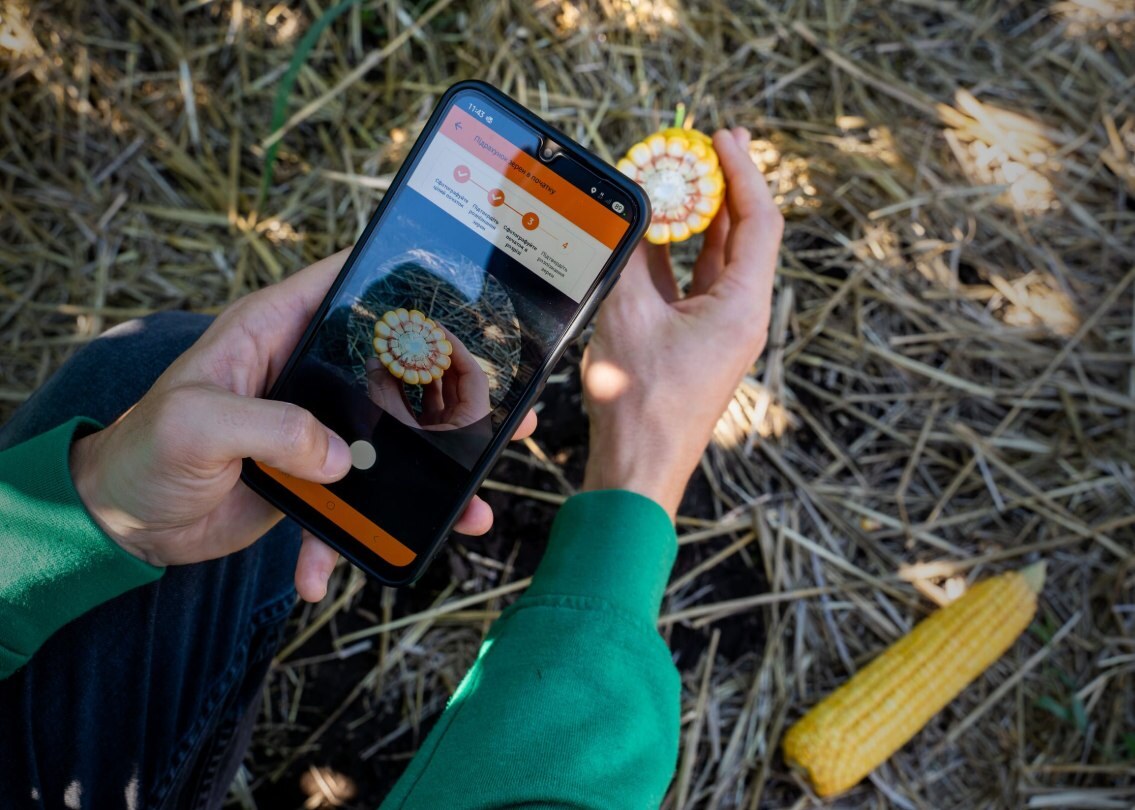
AI computer vision models are integrated into the DAB platform. For example, counting seeds in sunflower and grains in corn: the algorithm analyzes the photo and in 3 seconds determines the number of seeds, their filling and potential oil content. Together with other data, this helps to assess the biological yield of the field. Previously, this was done manually — samples were taken, counted, extrapolated. It was slow and inaccurate, because it was done literally «by eye». Now — clearly and quickly.
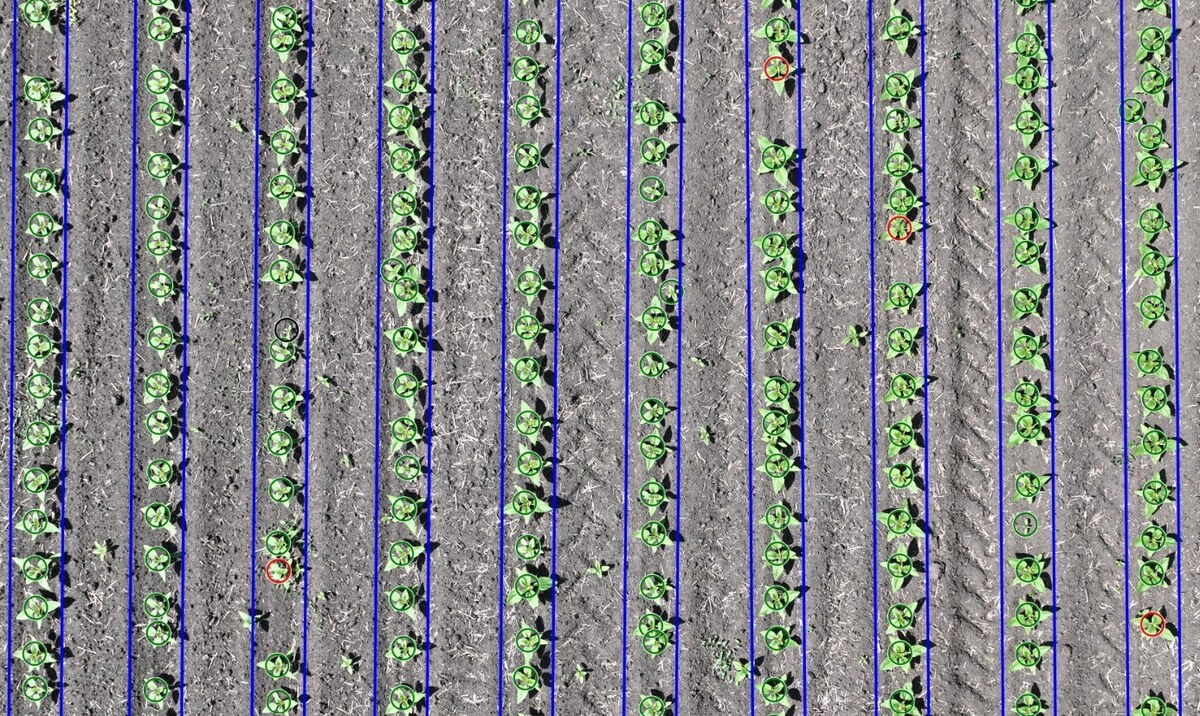
Another computer vision model, which is integrated with drone images, estimates crop density, finds gaps and irregularities. Additionally, the platform has built-in disease and pest directories that help quickly identify problems right in the field.
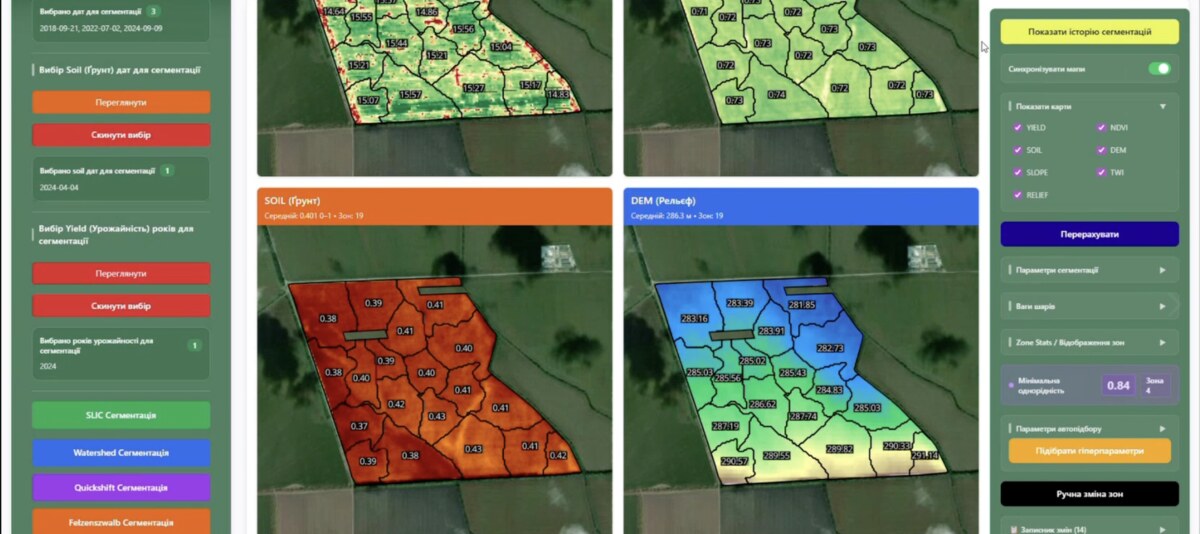
All this data is combined into a single geoanalytical tool that allows you to compare, model, and optimize solutions for each section of the field in real time. Kernel has long stopped looking at the field as a single area, because even within the same field there can be different types of soil, relief, humidity, lighting, and productivity of individual sections. Therefore, the system works with zoning — that is, dividing the field into separate zones with their own characteristics. In fact, each such section has its own digital profile, which allows you to more accurately plan work and assess the yield potential.
For Ukrainian and global agribusiness, this is a transition from field management to management of separate, territorially homogeneous zones. If earlier decisions were made based on average indicators across the entire field, now the agronomist can see differences between individual plots and work with them in a targeted manner. This opens up opportunities for more precise fertilizer application, cost control, and increased resource efficiency.
Digital experiments instead of notebooks
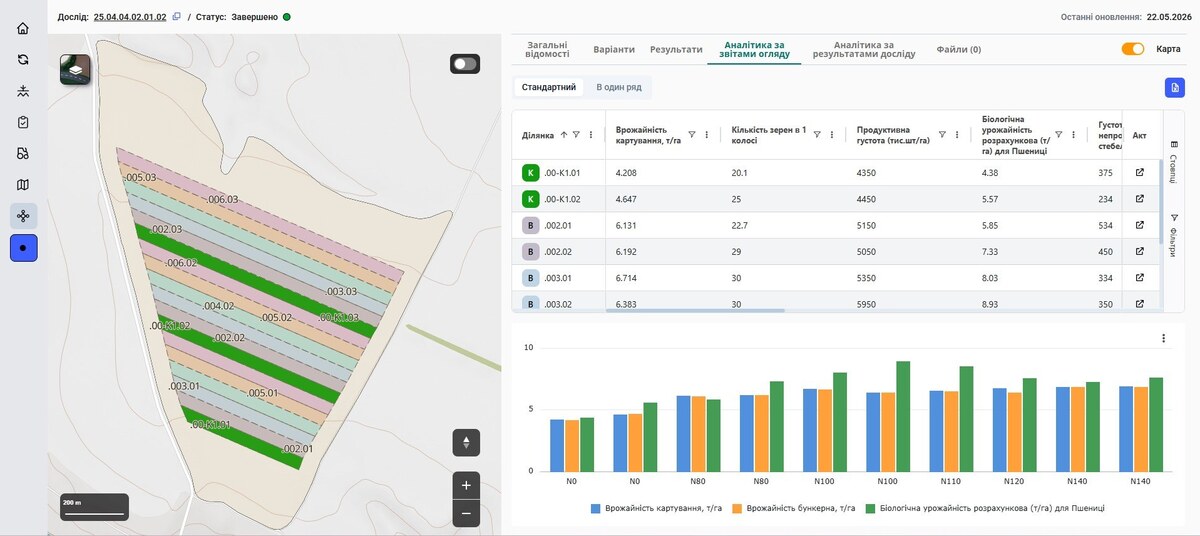
A separate direction of development of the platform is the digitalization of agronomic experiments. And this is know-how on the market. Previously, field experiments often existed in the form of local records of individual specialists. Now the system has a special module where agronomists can create experimental plots, determine those responsible, record the parameters of the experiments and track the results throughout the cycle.
Information is available via a web interface and mobile application, and results are accumulated in the company’s unified knowledge base. This allows you to scale successful practices across different farms and regions.
Excel can’t handle it anymore: 500,000 variables at play
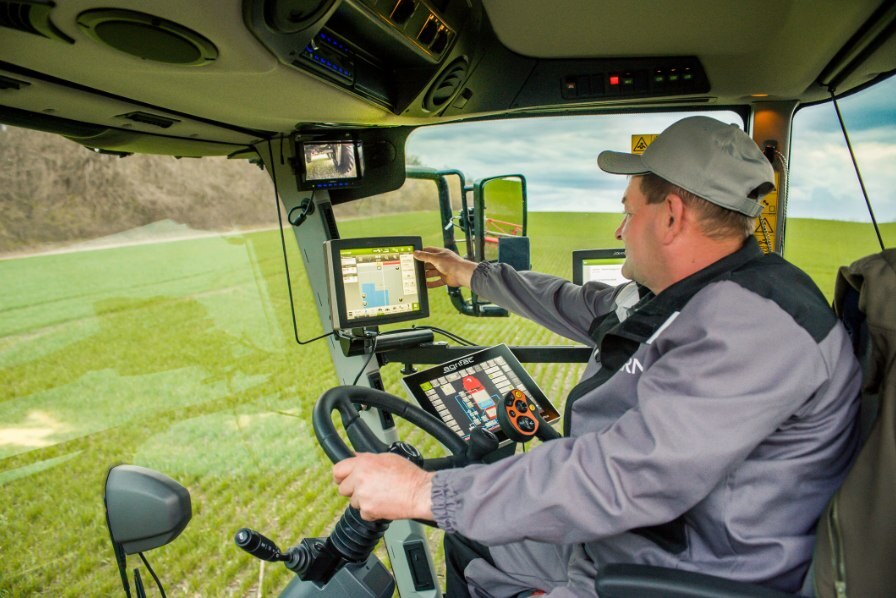
The most complex level is logistics. Kernel manages thousands of fields, dozens of elevators, and port terminals. Just a few years ago, route planning took days of work in Excel. Now the model takes into account more than 500,000 parameters — from grain moisture to elevator capacity and railway schedules — and generates a plan in 8 minutes.
The system works both at the strategy level (season planning) and at the operations level (weekly modeling of collection and transportation).
«We avoid bottlenecks during harvest. Elevators do not idle, grain does not spoil, and transportation becomes cheaper,» the company explains.
A big system under the hood: from satellites to ML
Technically, DAB is an integration platform: mobile applications, satellite services, IoT data, analytical dashboards and Data Science models. Inside, there is cloud infrastructure, big data processing, machine learning and geoanalytics.
Every day, the system processes terabytes of data — from fields, drones, sensors, and logistics. But the key is not the volume, but the fact that this data directly affects decisions and money.
Kernel emphasizes: this is not «magic» and not an autopilot. The system gives an accurate picture, but the final decision always rests with the person. The difference is that now this decision is made not «by eye», but based on accurate data.
What’s next: a system that tells you when to act
The next stage is even more proactive and accurate in working with fields. The team is working on an AI assistant for agronomists. It is assumed that it will be able to answer questions about field data, help analyze the situation and find the necessary information faster among the accumulated data and reference materials. In fact, we are talking about a digital assistant that will answer any questions and signal risks in real time — from vegetation changes to weather threats.
«Kernel» has long been making agro as technological as fintech or e-commerce. And it seems that this is no longer an ambition — but a working system where data literally counts money.