Хочете будувати кар’єру в Data Science та AI? Vodafone Big Data Lab відкриває новий набір —>
Наталя ХандусенкоHot News
6 June 2025, 12:03
2025-06-06
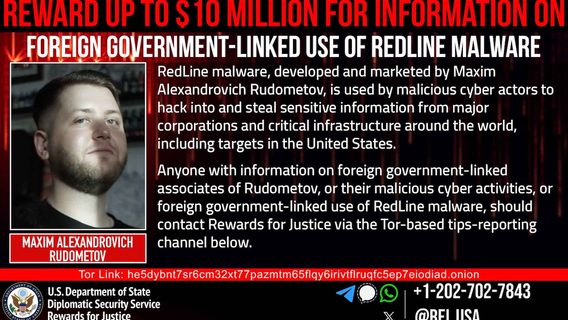
The US is ready to pay $10 million for information about a hacker from Luhansk region. His program infected millions of computers around the world
The U.S. government is offering up to $10 million in rewards for information about Ukrainian Maxim Rudometov, who allegedly developed and sold the RedLine hijacker program. He fled to Russia after the full-scale invasion.
The U.S. government is offering up to $10 million in rewards for information about Ukrainian Maxim Rudometov, who allegedly developed and sold the RedLine hijacker program. He fled to Russia after the full-scale invasion.
Maksym Rudometov was born in 1999 in Luhansk Oblast. In February 2022, the developer fled to Krasnodar, Russia, according to the U.S. Department of State, which administers the Rewards for Justice program.
The RedLine malware, developed by Rudometov, was used by attackers to launch attacks on large corporations and critical infrastructure facilities around the world, including in the United States.
“Criminals used RedLine to infect millions of computers around the world, making it one of the most widespread malware variants in the world,” the State Department said in a statement.
RedLine is sold as “Malware as a Service” (“MaaS”). Attackers purchase a license to use the software and then launch their own campaigns to infect computers. The software is also advertised for sale on cybercrime forums and through Telegram channels.
Rudometov regularly accessed and managed RedLine’s technical infrastructure. He is also associated with various cryptocurrency accounts that were used to receive and launder payments. He used various nicknames: “dendimirror”, “alinchok”, “ghackihg”, “makc1901”, “navi_ghacking” and “bloodzz.fenix”.
Redline’s data-stealing code collects victims’ personal and financial information, stored credentials, and cryptocurrency access tokens, and then sends this sensitive information to a server controlled by RedLine. The crooks then sell these stolen credentials, cookies, and bank accounts on darknet marketplaces.
Коли виникає побутове питання, іноді перевіряю цю сторінку https://sutovychok.com.ua/ . Там трапляються практичні рекомендації для дому та звичайних життєвих ситуацій.









Коли виникає побутове питання, іноді перевіряю цю сторінку https://sutovychok.com.ua/ . Там трапляються практичні рекомендації для дому та звичайних життєвих ситуацій.