Олександр КузьменкоWar
24 July 2026, 14:21
2026-07-24
Ukrainian cyber experts forced Russian air defense to shoot down its own Su-57 fighter jet
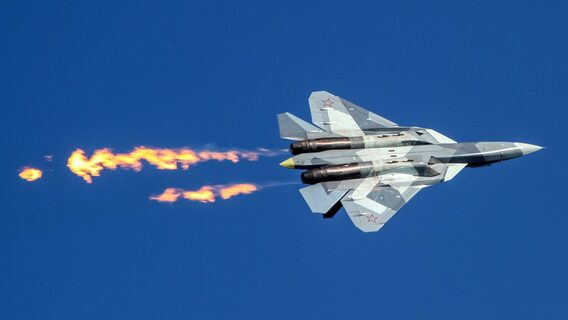
As a result of a comprehensive HUMINT and CYBINT operation by the international intelligence community InformNapalm in cooperation with Ukrainian cyber experts, a modern Russian Su-57 fighter jet was hit in the Moscow region. The Russian air defense system was successfully turned into a tool for destroying its own aircraft.
As a result of a comprehensive HUMINT and CYBINT operation by the international intelligence community InformNapalm in cooperation with Ukrainian cyber experts, a modern Russian Su-57 fighter jet was hit in the Moscow region. The Russian air defense system was successfully turned into a tool for destroying its own aircraft.
This was reported by the InformNapalm community on social networks.
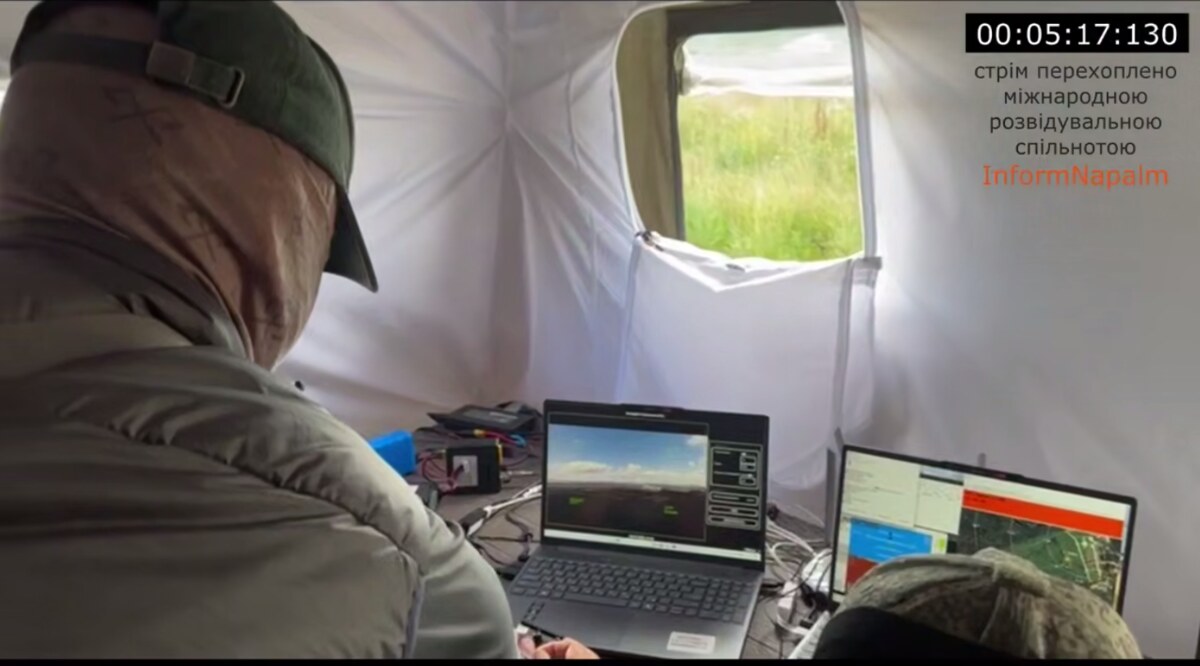
The operation was the result of a long analysis of materials intercepted from the enemy. Among them were online broadcasts from the training ground, where the air defense calculations of the "BARS Moscow" formation were being prepared to repel attacks by Ukrainian long-range drones. Based on this data, the intelligence officers prepared an analytical note on the operating algorithms, software and hardware complex, and vulnerabilities of the system and handed it over to the Defense Forces of Ukraine.
The access obtained and the identified vulnerabilities allowed for cyber intervention and influence on the work of one of the BARS Moscow calculations. As a result, the enemy air defense destroyed its own Su-57 fighter immediately after its takeoff from the Kubinka airfield.
Screenshot from a Russian air defense stream intercepted by InformNapalm
According to InformNapalm, the combination of HUMINT and CYBINT components opened a short window of opportunity, which was used in a timely and effective manner. At the time of publishing the details of the operation, this window had closed, and the mechanism used cannot be repeated or scaled up unchanged. The community decided to talk about this case because the event became public, and Russian media and pro-war bloggers began to actively promote a version convenient for the Russian Federation about a “technical malfunction.”
“We thank our friends — cyber specialists of the future Cyber Forces of the Armed Forces of Ukraine. We believe that Cyber Forces will one day be created in Ukraine if the Verkhovna Rada has a good rest during the holidays and finds time to gather and finally vote on their creation, which has been dragging on for quite some time,” InformNapalm emphasized.
The Defense Express publication notes that there are two main probable technical scenarios for the destruction of the aircraft.
The first involves gaining unauthorized access to the control systems of autonomous turrets of the Citadel type with a 30-mm cannon, which would allow the Su-57 to be hit at low altitude. The second option is to replace data in the airspace situational awareness system. Designating the Su-57 as an enemy target would force the medium and longer-range air defense systems of the 1st Air Defense Army of the Russian Army to work on their own fighter.
In 2025, as part of the OKBMLeaks cyber operation, InformNapalm published secret documents from the Russian developer of components for the Su-57 fighter jet. The material was then translated into 13 languages and distributed in many world media.