NASA published the code that helped land humans on the Moon
NASA employee Chris Harry has published on GitHub the original software code that helped the Apollo 11 mission land the first people on the Moon.


NASA employee Chris Harry has published on GitHub the original software code that helped the Apollo 11 mission land the first people on the Moon.
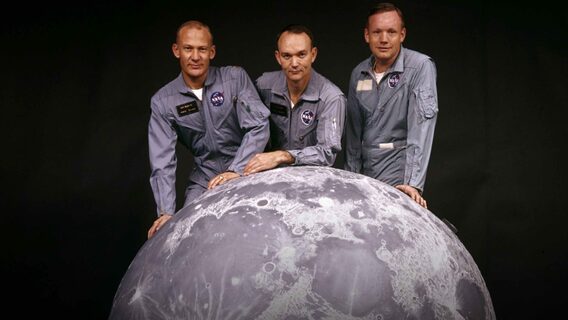
NASA employee Chris Harry has published on GitHub the original software code that helped the Apollo 11 mission land the first people on the Moon.
The repository is marked as «public domain» and contains two separate programs: Comanche055, which was used aboard the Apollo command module, and Luminary099, which was used in the lunar module, TechSpot reports .
Both programs were written for the Apollo Navigation Computer (AGC), which as of 2026 has ridiculous specifications: 3,840 bytes of RAM and 69,120 bytes of storage, executing approximately 85,000 instructions per second.
The digitization of the code was made possible by a collaboration between Virtual AGC, a preservation project dedicated to Apollo computing, and the MIT Museum, which holds the original paper lists. Scanned and read line by line, the files are now available online.
The Comanche055 code shows how this software worked in life-threatening situations. One of the files, ALARM_AND_ABORT.agc, details the logic for tracking and responding to critical errors. Comments in the code explain its role: logging alarm conditions, turning on a warning light if necessary, and deciding whether the fault requires an abort.
Another frequently used fragment illustrates the mathematical basis of the Apollo guidance system—approximately 30 lines of assembly code that calculate navigation trajectories.
Using the Virtual AGC toolkit—available for Linux, macOS, Windows XP–7, and even FreeBSD—programs can be compiled and run in simulation mode, recreating the operation of onboard computers from half a century ago. The Virtual AGC repository contains instructions, context information, and documentation for both the Command Module and Lunar Module, serving as a kind of museum of Apollo software.
Let us recall that half a century has passed since humanity last visited the Moon. It turned out that to conquer space in 2026, three things are needed: a super-powerful rocket, a working toilet, and an iPhone in the astronaut’s pocket. dev.ua told how the 10 days of the Artemis II mission in space passed, where the most frequent phrase was: «Don’t move your foot, I’ll get something out from under it now.»