Марія БровінськаScience Pop
6 January 2026, 08:33
2026-01-06
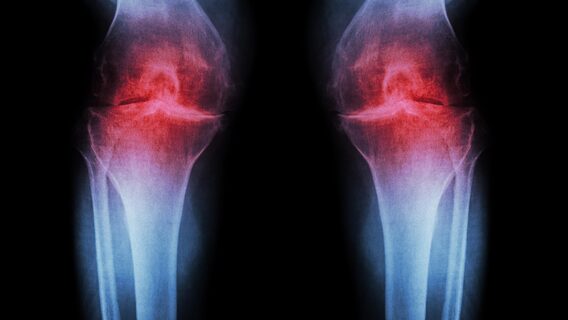
“Imagine being able to regenerate your own cartilage and avoid knee replacements.” Scientists have learned how to regenerate cartilage in knees and prevent arthritis without surgery: how it works
Researchers at Stanford Medicine have announced a breakthrough in the treatment of arthritis: Blocking a protein that increases with age allows cartilage to regenerate in the knees of aging mice and reduces the risk of developing arthritis after injuries similar to ACL tears in humans. In the long term, the therapy could help avoid knee or hip replacement surgeries.
Researchers at Stanford Medicine have announced a breakthrough in the treatment of arthritis: Blocking a protein that increases with age allows cartilage to regenerate in the knees of aging mice and reduces the risk of developing arthritis after injuries similar to ACL tears in humans. In the long term, the therapy could help avoid knee or hip replacement surgeries.
The target is a protein called 15-PGDH, which accumulates with age and inhibits natural tissue repair. Blocking its action with a special injectable drug causes chondrocytes — the cells that produce cartilage — to return to a more «younger» state and restorehyaline cartilage, which ensures smooth functioning of joints.
Unlike other tissues, scitechdaily.com writes, cartilage regeneration does not require stem cells: existing cells simply change gene activity and begin to regenerate cartilage on their own.
«We were looking for stem cells, but their involvement in cartilage regeneration turned out to be unnecessary. This opens up new possibilities for treating arthritis after injuries or age-related changes,» says Helen Blau, professor of microbiology and immunology.
Older mice after the injections showed significant thickening of cartilage in their knees. Mice with knee injuries (simulating an ACL tear) developed less arthritis and moved better after treatment. Human knee tissue taken during surgery began to regenerate normal cartilage in the lab.
Phase 1 clinical trials of the drug for treating muscle weakness have already shown safety and activity in healthy volunteers. The next step is to test the effect on cartilage repair in humans. If the study is confirmed, it could be an alternative to expensive and traumatic knee surgeries.
«This is a new approach to adult tissue regeneration, and it has significant clinical potential for treating arthritis due to aging or injury,» says Professor Helen Blau, head of the Baxter Laboratory for Stem Cell Biology.
«Imagine being able to regenerate your own cartilage and avoid knee replacements,» Blau adds.
Репост новин змушує нас вважати себе розумнішими, але це не так. З лідерами думок теж працює, показує нове дослідження
Обмін новинними статтями з друзями та підписниками в соціальних мережах спонукає людей думати, що вони знають про теми цих статей більше, ніж вони знають насправді. І це працює з активними користувачами Facebook, що ставить під сумнів обізнаність ваших улюблених лідерів думок. Про це свідчить дослідження вчених з Техаського університету в Остіні. До речі, обов’язково покажіть цю статтю своїм друзям і репостніть у соцмережах.