Хочете будувати кар’єру в Data Science та AI? Vodafone Big Data Lab відкриває новий набір —>
Наталя ХандусенкоAI Eng
30 January 2025, 16:03
2025-01-30
Former Google and Apple engineers launch open-source Oumi AI platform that could help create the next DeepSeek
Oumi AI, a new startup led by former Google and Apple AI veterans, has unveiled an eponymous platform that provides researchers and developers with a full suite of tools to build, evaluate, and deploy basic AI models.
Oumi AI, a new startup led by former Google and Apple AI veterans, has unveiled an eponymous platform that provides researchers and developers with a full suite of tools to build, evaluate, and deploy basic AI models.
After the success of DeepSeek-R1 , it became crystal clear: open source really does matter for AI.
But what is open source AI? For Meta and its Llama models, this means free access to use the model under certain conditions. DeepSeek is available under a permissive open source license, which provides extensive access to its architecture and capabilities. However, the specific training code and detailed methodologies, especially those involving reinforcement learning (RL) techniques such as group relative policy optimization (GRPO), have not been publicly disclosed. This limits the ability to fully understand and reproduce the model training process.
However, neither DeepSeek nor Llama provide full and unconditional access to the entire model code, including weights and training data. Without this information, developers can still work with an open model, but they don’t have all the tools and knowledge they need to understand how it actually works and, more importantly, how to build a completely new model. This is exactly the problem that a new startup led by former Google and Apple AI veterans is trying to solve.
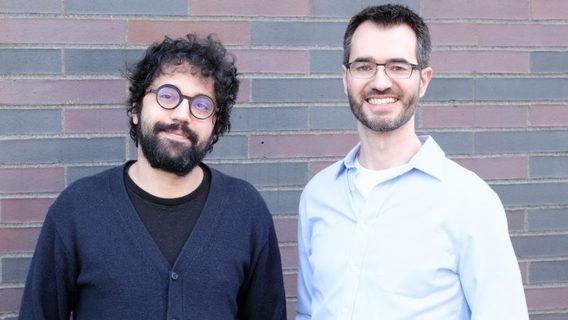
The Oumi startup is supported by an alliance of 13 leading research universities, including Princeton, Stanford, MIT, Berkeley, the University of Oxford, the University of Cambridge, the University of Waterloo, and Carnegie Mellon.
Oumi’s founders have raised $10 million, a modest seed round that they say is in line with their needs. While big players like OpenAI are planning to invest $500 billion in massive data centers through projects like Stargate, Oumi is taking a radically different approach. The platform provides researchers and developers with a full suite of tools to build, evaluate, and deploy fundamental models.
“Even the biggest companies can’t do this on their own,” Oussama Elachkar, a co-founder of Oumi who previously worked as a machine learning engineer at Apple, told VentureBeat. “We were effectively working in isolation inside Apple, and there’s a lot of other isolation going on across the industry. There has to be a better way to co-develop these models.”
What open source models like DeepSeek and Llama lack
Oumi CEO and former Google Cloud AI senior development manager Manos Koukoumidis told VentureBeat that researchers constantly tell him that AI experiments have become extremely difficult.
While today’s open models are a step forward, they’re not enough. Koukoumidis explained that with current “open” AI models like DeepSeek-R1 and Llama, an organization can use the model and deploy it on its own. What’s missing is that anyone else who wants to build the model doesn’t know exactly how it was built.
Oumi’s founders believe that lack of transparency is a major obstacle to collaborative AI research and development. Even a project like Llama requires significant effort from researchers to understand how to replicate and develop the work.
How Oumi is working to open up AI to enterprise users, researchers, and everyone else
The Oumi platform works by providing a universal environment that streamlines the complex workflows associated with building AI models.
Koukoumidis explained that building a basic model typically requires 10 or more steps, often in parallel. Oumi integrates all the necessary tools and workflows into a single environment, eliminating the need for researchers to assemble and configure various open-source components.
Key specifications include:
Supports models with parameters from 10M to 405B.
Implementation of advanced training methods including SFT, LoRA, QLoRA and DPO.
Compatible with both text and multimodal models.
Built-in tools for synthesis and curation of training data using LLM judges.
Deployment capabilities using modern output mechanisms such as vLLM and SGLang.
Comprehensive evaluation of the model using standard industry benchmarks.
The platform allows users to start small, using their own laptops for initial experiments and model training. As they progress, users can scale to larger computing resources, such as university clusters or cloud providers, all within a single Oumi environment.
“The idea that you need hundreds of billions of dollars for AI infrastructure is fundamentally flawed,” Koukoumidis said. “By distributing computing across universities and research institutions, we can achieve similar or better results at a fraction of the cost.”
Як нейромережі бачать вільну та незалежну Україну? Тест dev.ua
Нейронні мережі для генерації зображень бачать світ по-своєму, їхню логіку зрозуміти часом зовсім неможливо. Але таки хочеться. На честь Дня Незалежності України редакція dev.ua вирішила провести невеликий експеримент.
Ми задали чотирьом різним нейронним мережам п’ять однакових запитів: «прапор України», «День Незалежності України», «український Крим», «перемога України» та «українці». Отриманими результатами ми ділимося з вами нижче.
У TikTok тепер можна генерувати фон за допомогою нейромережі. Ми протестували її та ділимося результатами
У TikTok з’явилася нова функція «Розумний фон». З її допомогою як фон для тіктоків можна підставляти згенеровані нейромережею зображення. Редакція dev.ua протестувала цю технологію і ділиться своїми враженнями.