Наталя ХандусенкоGadgets
10 June 2026, 14:01
2026-06-10
How the DRAM crisis affects the smartphone market: Xiaomi production drops by almost 40%, while the iPhone 17 strengthens its position
The RAM crisis is affecting some smartphone manufacturers much more than others. While Xiaomi had to cut smartphone production by almost 40% in the first quarter of 2026, Apple was even able to produce 20% more iPhones than the previous year.
The RAM crisis is affecting some smartphone manufacturers much more than others. While Xiaomi had to cut smartphone production by almost 40% in the first quarter of 2026, Apple was even able to produce 20% more iPhones than the previous year.
Since the fall of 2025, prices for random access memory (RAM) and NAND flash memory have skyrocketed: now 16 GB of DDR5 costs consumers about $200, while last year the same RAM could still be purchased for $37. However, the huge demand for RAM and NAND from artificial intelligence giants such as OpenAI is increasing costs not only for ordinary buyers, but also for manufacturers of products such as desktop PCs, laptops and smartphones.
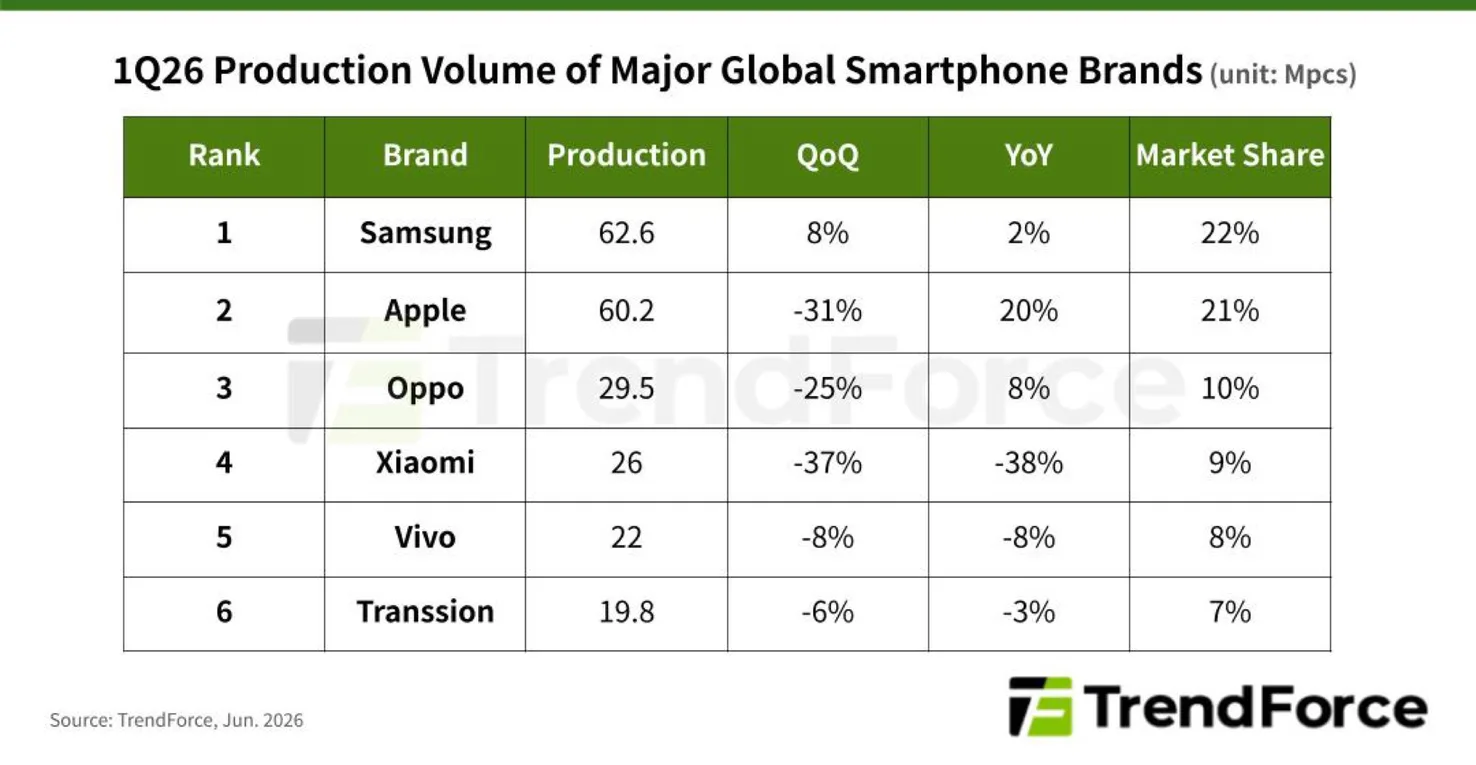
TrendForce's analysis shows how this crisis affected various smartphone manufacturers in the first quarter of 2026. In total, only 284 million smartphones were released in the first quarter, which is 1.7% less than in the same period last year, Notebookcheck writes .
According to TrendForce, the crisis in the DRAM market has a delayed effect, as smartphone manufacturers still have RAM stocks from last year, and fears of further price increases have spurred demand. However, for the year as a whole, TrendForce predicts a 16.2% drop in production to 1.051 billion units.
However, data from the first quarter already shows that manufacturers of cheaper devices are likely to be hit harder. Xiaomi produced 38% fewer smartphones than in the same period last year, while Vivo's production volume fell by 8%. On the other hand, manufacturers with a higher average selling price are in a better position: Samsung was able to produce 2% more smartphones than last year, and Apple's production volume increased by 20% overall thanks to the popularity of the iPhone 17 line.