Наталя ХандусенкоHot News
19 December 2025, 15:32
2025-12-19
Kyiv topped the rating of Ukrainian cities in terms of the level of development of electronic services
Analysts of the Transparent Cities program conducted a study on the development of the ecosystem of electronic services, access to which is offered by local governments in 11 cities, namely: Kyiv,Dnipro, Zaporizhia, Kropyvnytskyi, Lutsk, Lviv, Odessa, Poltava, Kharkiv, Khmelnytskyi and Chernihiv.
Analysts of the Transparent Cities program conducted a study on the development of the ecosystem of electronic services, access to which is offered by local governments in 11 cities, namely: Kyiv,Dnipro, Zaporizhia, Kropyvnytskyi, Lutsk, Lviv, Odessa, Poltava, Kharkiv, Khmelnytskyi and Chernihiv.
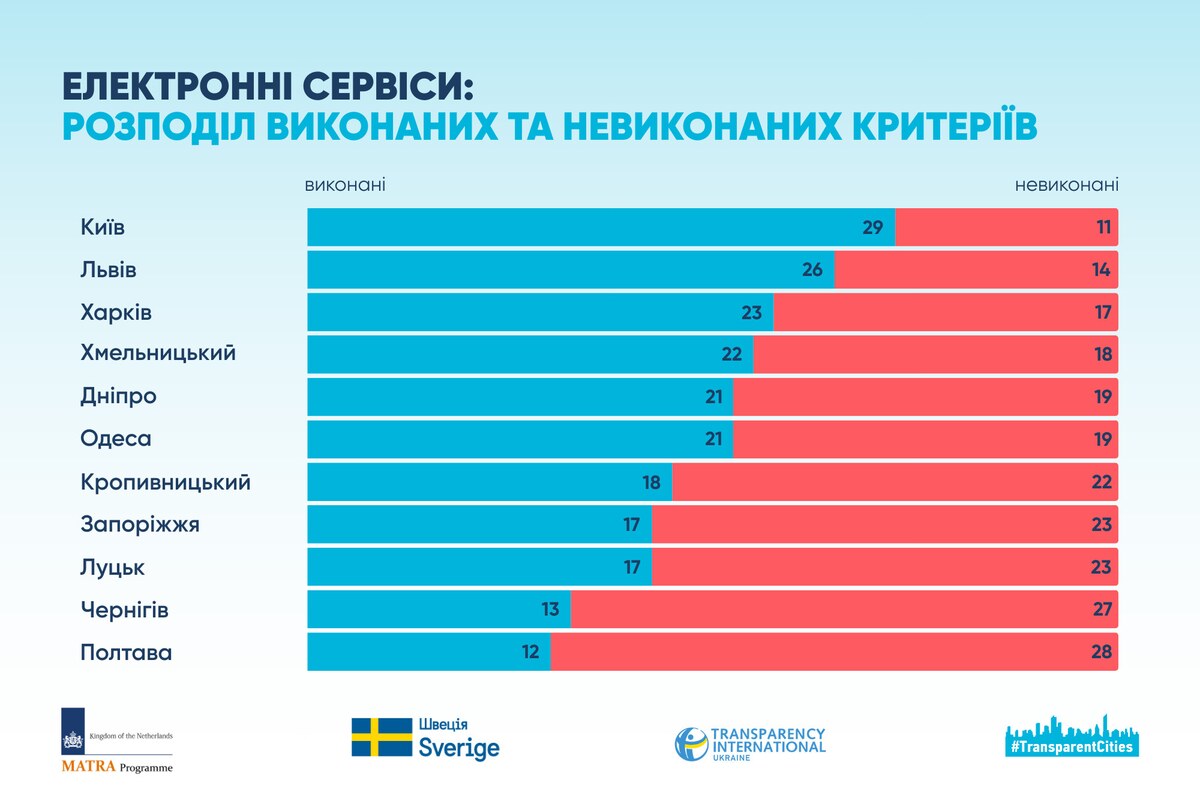
Cities were assessed on 40 criteria related to digital services, their integration and benefits (availability of a digital strategy, access to online services, possibility of electronic interaction with authorities, etc.). The maximum number of points a city could receive was 100 points, according to Transparency International Ukraine.
Research results
The average level of implementation of 40 indicators of the "Electronic Services" block is 49.8%.
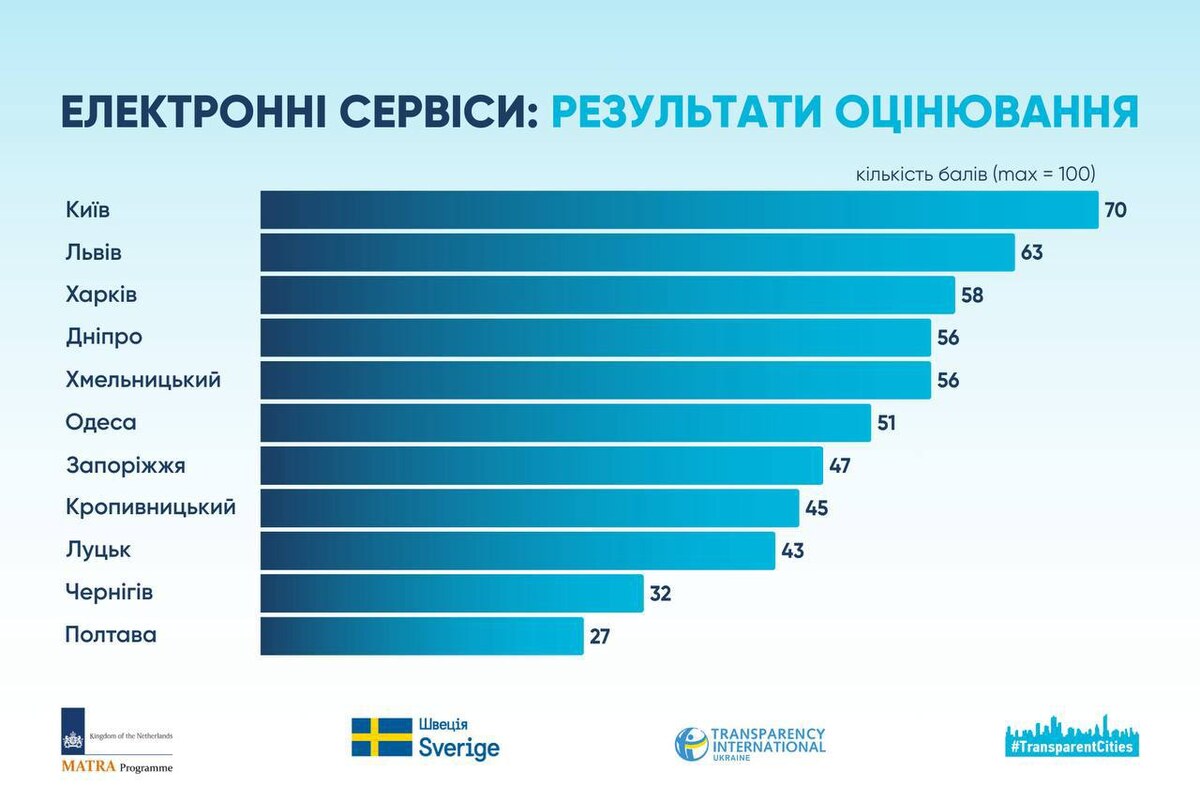
The highest score in Kyiv is 70 out of 100 possible points. The next highest score is Lviv with 63 points, followed by Kharkiv, which received 58 points. The lowest scores are in Poltava (27), Chernihiv (32), and Lutsk (43).
"The leadership of Kyiv and Lviv was predictable. But Kharkiv's third place, probably, few could have predicted. The study showed that the city authorities manage not only to support the work of electronic services created before the war, but also to develop new ones (for example, the Open Kharkiv mobile application), thanks to which Kharkiv was able to achieve a high result," the study noted.
An analysis of the availability of current approved informatization programs among city councils showed that only three regional centers — Poltava, Chernihiv, and Lutsk — do not have them.
In Poltava and Chernihiv, no mention of the program was found at all, in Lutsk, the draft program "SmartLutsk" for 2025–2029 was published on the city council website, but as of October 2025, it had not been approved. And it was these three cities that showed the worst results according to the study.
Strengths and weaknesses
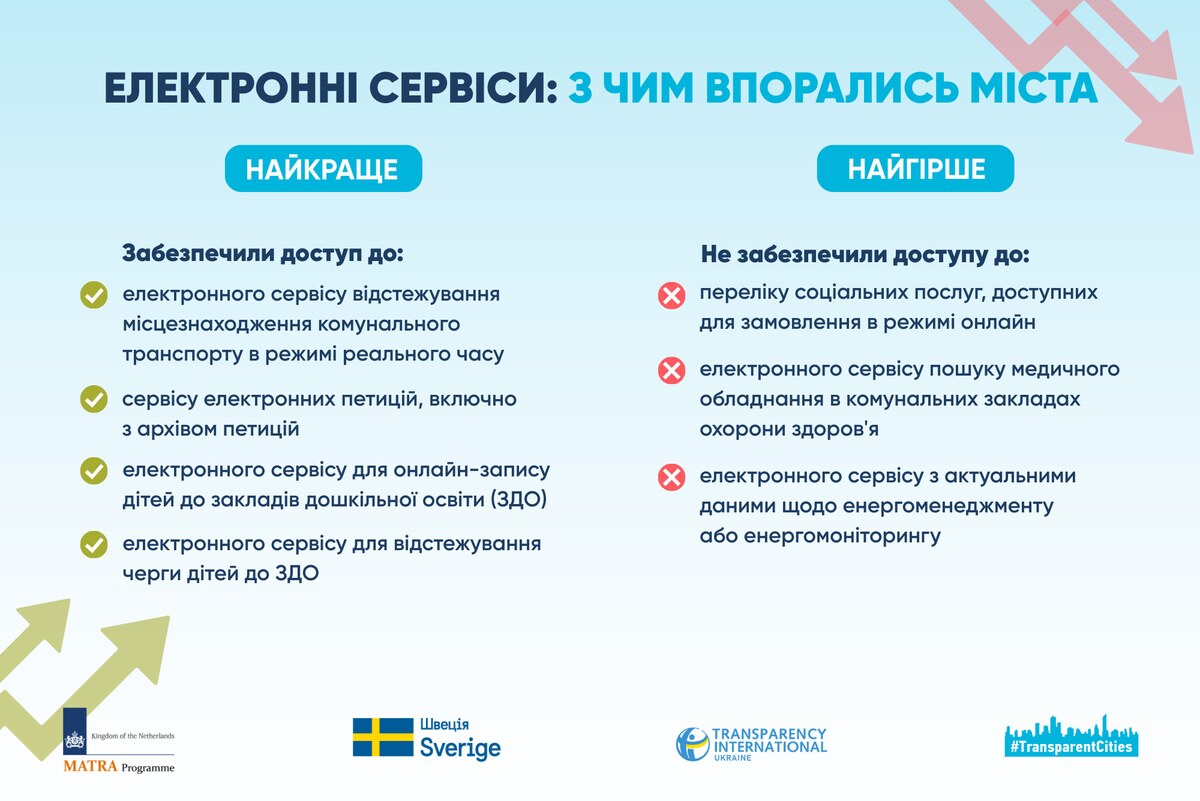
All 11 cities surveyed provide access to an electronic service for tracking the location of public transport in real time, as well as an electronic local petition service. All regional centers also provide access to a service for online registration of children for kindergartens and the ability to remotely track the queue.
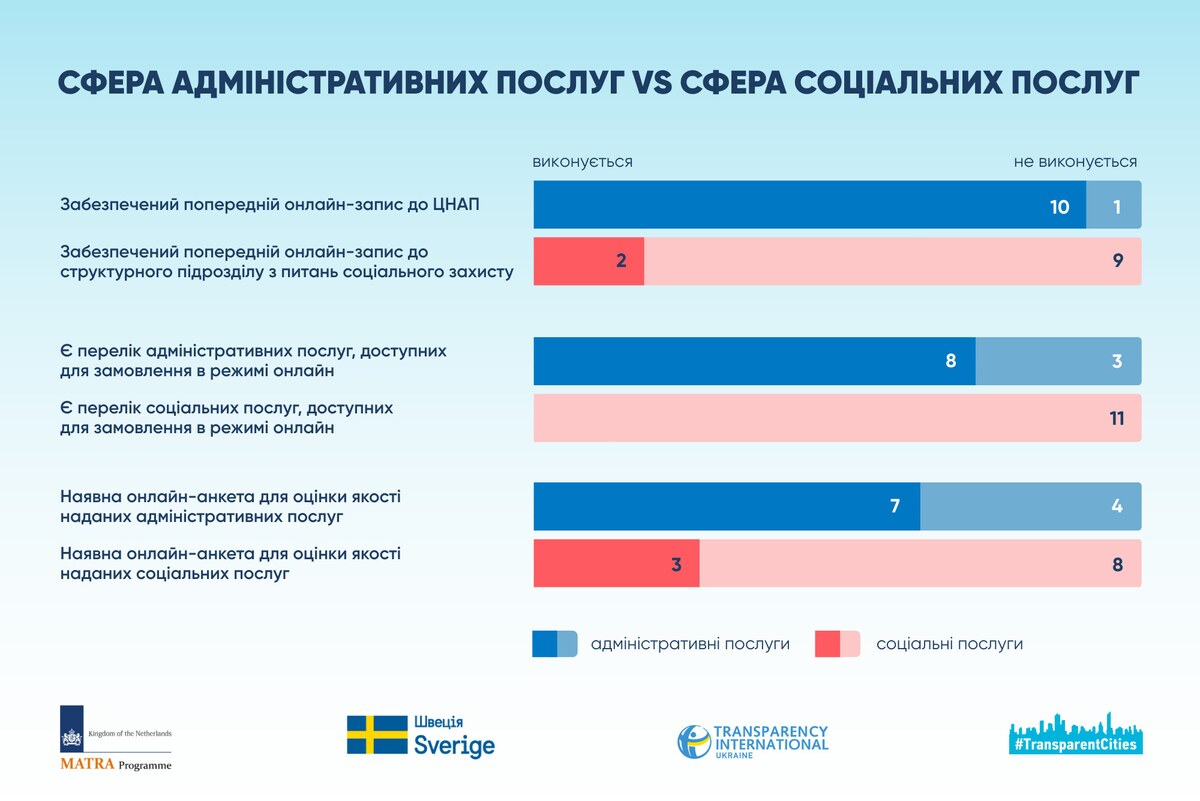
All studied cities, except Kropyvnytskyi, have introduced cashless payment for public transport (QR code / contactless NFC payment / virtual transport card) and the possibility of prior online registration at the ASC.
9 out of 11 regional centers provide communication through electronic contact centers — analytical and communication systems that receive, process, and monitor the implementation of citizens' appeals regarding problems that require an urgent response (exceptions — Kropyvnytskyi and Poltava).
At the same time, no city council has published a separate list of social services available for citizens to order online on its official website or the website of the structural unit for social protection of the population.
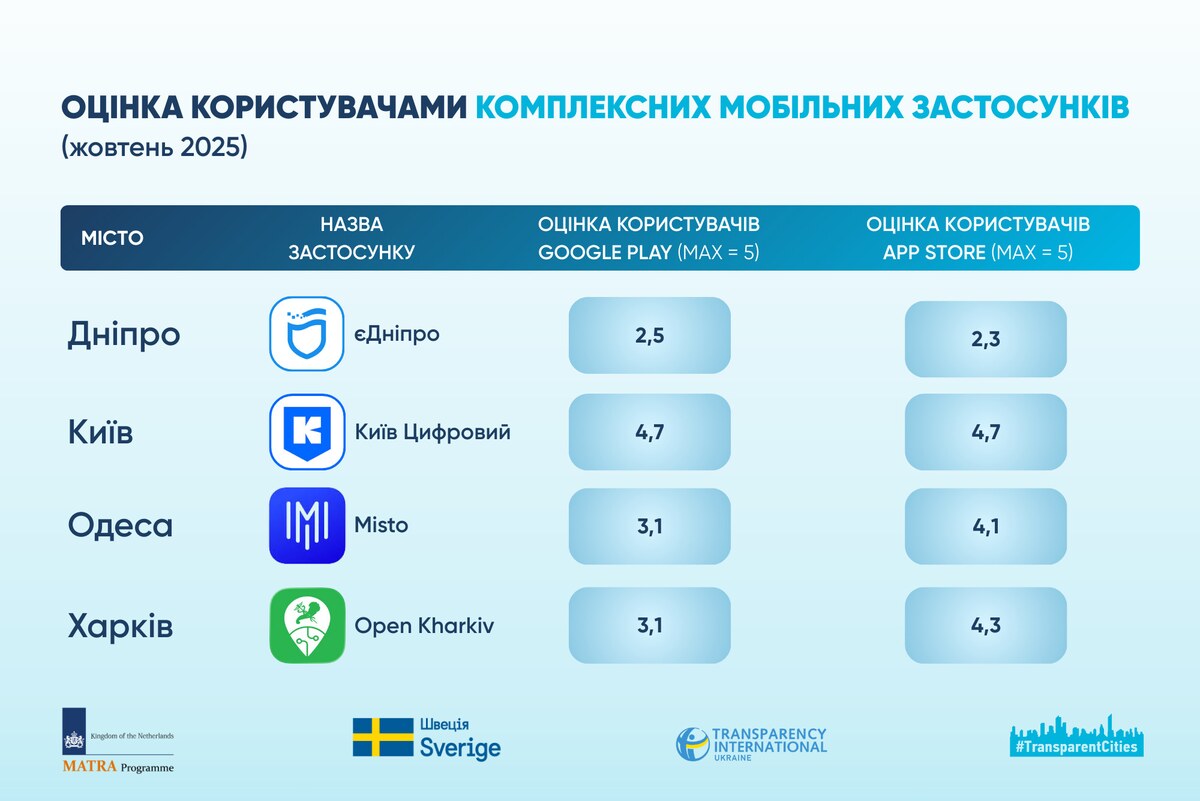
Another surprise of the study was the absence of links to pages dedicated to city integrated mobile applications with lists of available services on the main pages of the official websites of local governments. In total, four such applications are currently operating: eDnipro (Dnipro), Kyiv Digital (Kyiv), Misto (Odessa) and Open Kharkiv (Kharkiv). However, only the main page of the official website of the Odessa City Council has a link to the Misto application.
In addition to problems with the availability of services, during the assessment, analysts noted difficulties in determining the relevance of the data provided by certain services. For example, according to the results of the study, 7 out of 11 city councils do not provide access to up-to-date interactive maps of civil defense structures, which is extremely critical in the fourth year of the war. In Kropyvnytskyi and Poltava city councils, no links to the relevant maps could be found on the official websites, while in the other five city councils, access to the maps was provided, but it is impossible to check whether the data was updated in 2025.
Key findings
There is a correlation between the city's lack of an approved informatization program and the low results obtained as a result of a comprehensive assessment of electronic services.
The 11 cities analyzed have very different levels of development of the e-services ecosystem.
The principle of a "single point of entry", which is an element of European governance, is applied selectively. At the same time, there is sometimes confusion in the use of the words "services" and "services".
There are big problems.with digital services related to local statistics, energy efficiency, healthcare and social services.