Top 10 interesting facts about Lenovo that you might not know
The AIN publication analyzed the main trends of the Ukrainian IT market over 10 years: from 2014 to 2024. The study showed how the introduction of innovations and investments in startups influenced the rapid development of our technology industry.
The AIN publication analyzed the main trends of the Ukrainian IT market over 10 years: from 2014 to 2024. The study showed how the introduction of innovations and investments in startups influenced the rapid development of our technology industry.
One of the partners in this study was Lenovo.
The DEV.ua editorial team has collected the most interesting facts about Lenovo. So after reading this article, you will learn why it can be considered one of the most innovative companies in the world.
R&D around the world
Just think about these numbers: Lenovo has 18 R&D centers: Frankfurt, Bucharest, Beijing, Chicago, Hong Kong, Taipei and other cities. 3,6% of the company’s revenue is spent on research. Lenovo has over 40,000 patents and applications for innovations in its treasury. Every fourth employee works in the R&D department.
Lenovo foldable devices
Lenovo’s foldable technology is one of the innovations that has caught the attention of many users and technology experts around the world. The company was one of the first in the world to develop and introduce foldable devices.
In 2019, Motorola, a subsidiary of Lenovo, relaunched the 2019 legend, the Razr. But this time, it was a foldable smartphone. The new version took the iconic design and integrated it with modern technologies, such as a foldable OLED screen.
Motorola Razr
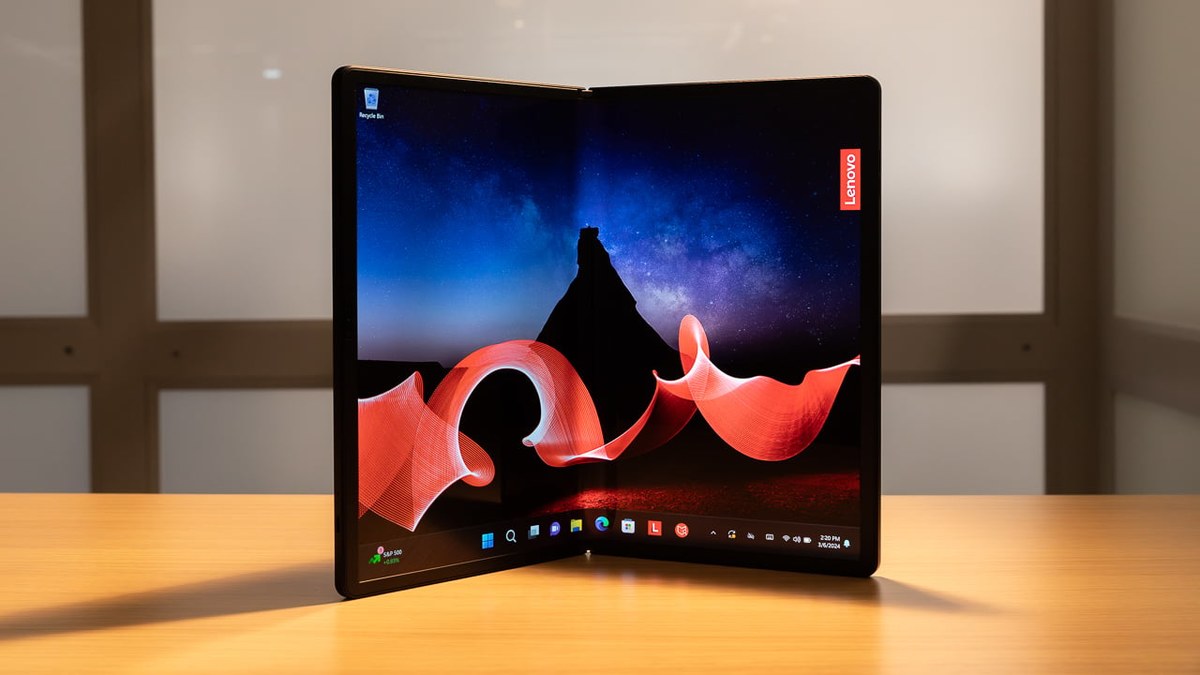
A year later, Lenovo introduced its first device, the ThinkPad X1 Fold, as the world’s first foldable PC based on x86 architecture. The gadget featured a large 13.3-inch OLED display.
ThinkPad X1 Fold
Server cooling
Lenovo’s server cooling system is an important part of the company’s innovation portfolio. It uses several cooling methods for its servers: air (Lenovo Cool Blue) and liquid cooling.
Lenovo is implementing component-level liquid cooling, reducing the overall size of servers and improving thermal control. And using Open Compute Project standards allows liquid cooling to be integrated with other solutions. Lenovo XClarity allows real-time temperature monitoring and optimization, reducing power consumption.
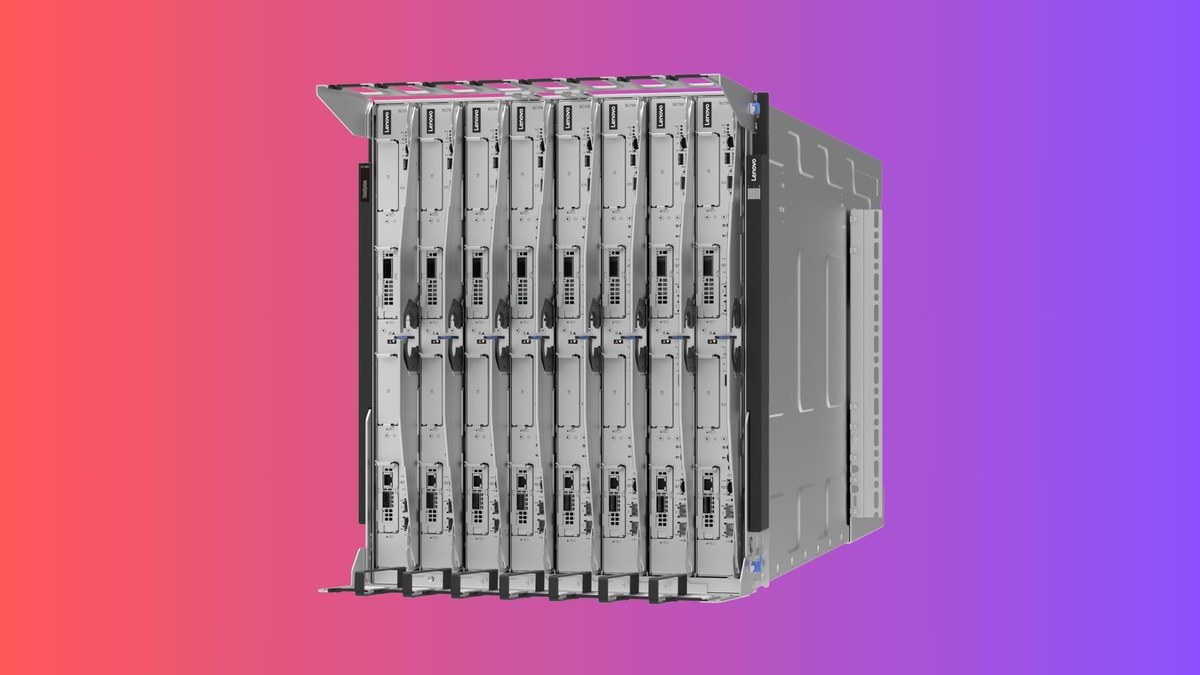
At the end of 2024, Lenovo introduced the new ThinkSystem N1380 Neptune vertical liquid cooling system, which allows for complete heat dissipation to eliminate the need for specialized air conditioning for server racks with a capacity of over 100 kW.
ThinkSystem N1380 Neptune
Why is this important?
Liquid cooling reduces energy consumption by 20–30% compared to air systems. It also reduces component temperatures by 10–20°C. This is a significant energy saving for data centers.
Artificial Intelligence: Lenovo’s AI Ambitions
Lenovo is actively investing in the development of artificial intelligence. According to the company’s plans, investments in AI will double, and by 2028 the company will invest $ 1 billion in the development of this technology.
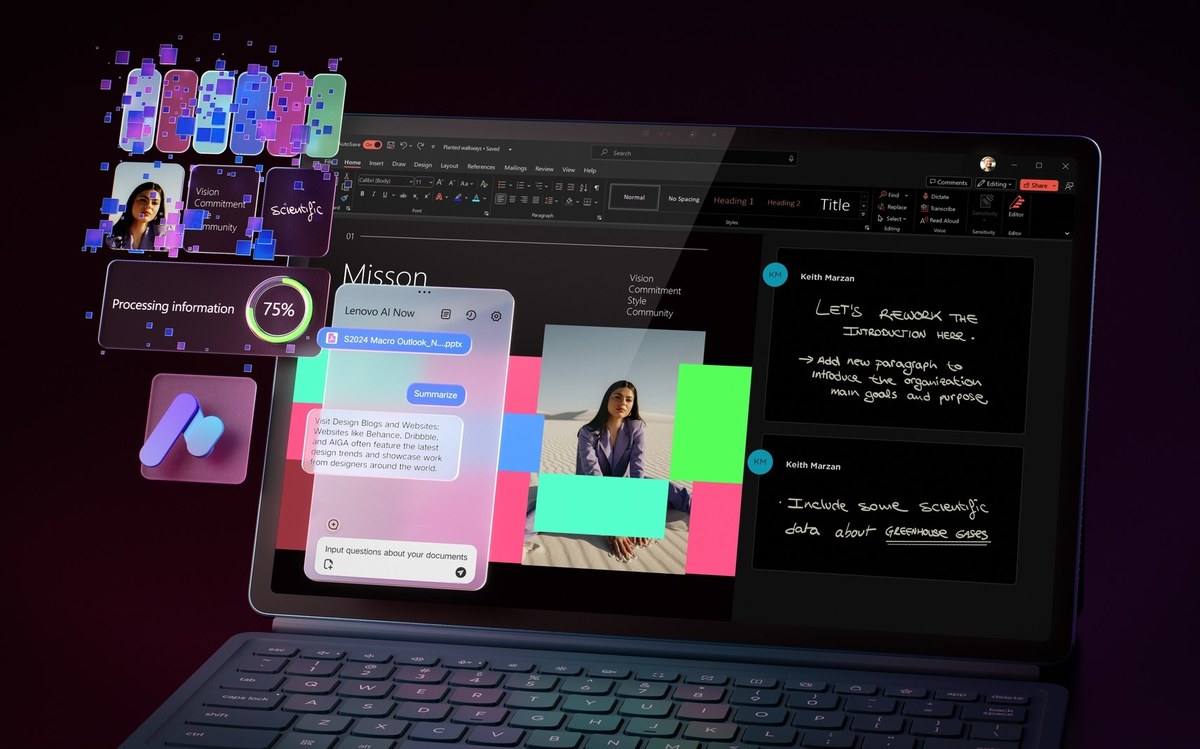
One of the latest products, Lenovo AI Now, is an AI agent that transforms traditional PCs into personalized devices. This agent uses LLM, built on Meta’s Llama 3, and operates without the need for cloud processing, allowing tasks to be automated without compromising privacy.
Lenovo AI Now
Lenovo’s Libras Translation Project
This is a solution for instant sign language translation. Libras is a sign language used in Brazil. About 2.3 million people in the country use it for daily communication. Lenovo’s Libras Translation Project aims to develop an innovative solution that uses computer vision and an original artificial intelligence engine to translate it into written or spoken text.
A team of researchers has developed an AI solution to facilitate interaction where a sign language interpreter may not be available, from stores to hospitals, to increase autonomy and build connections.
3D conferences are no longer fantasy
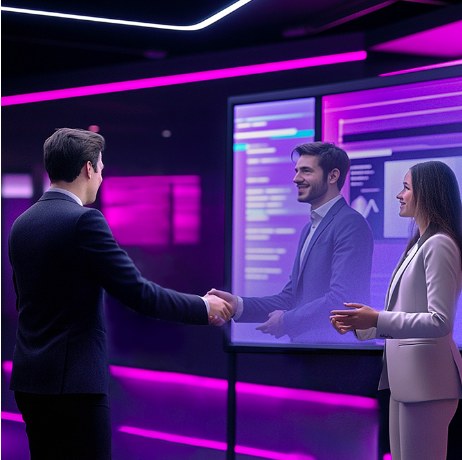
Lenovo’s Super Multi-view 3D offers an immersive 65-inch glasses-free 3D display designed for multi-person interaction from multiple perspectives. The company introduced this technology last year.
By capturing real-time 3D video from multiple angles, participants can conduct meetings with a natural sense of depth and interaction, eliminating physical barriers and making remote collaboration more like in-person communication.
Lenovo Energy Independence: Achievements and Plans
Lenovo is actively working to reduce its environmental impact. By fiscal year 2025/26, the company plans to source 90% of its energy for its global operations from renewable sources.
In fiscal year 2023/24, Lenovo’s total solar generation capacity increased by 48% compared to the previous fiscal year.
Examples
1. LCFC, a subsidiary of Lenovo, is installing an additional 3 MW of solar power capacity to increase its total solar generation capacity to 10.1 MW.
2. Factory in Budapest — installation of 3 MW of capacity.
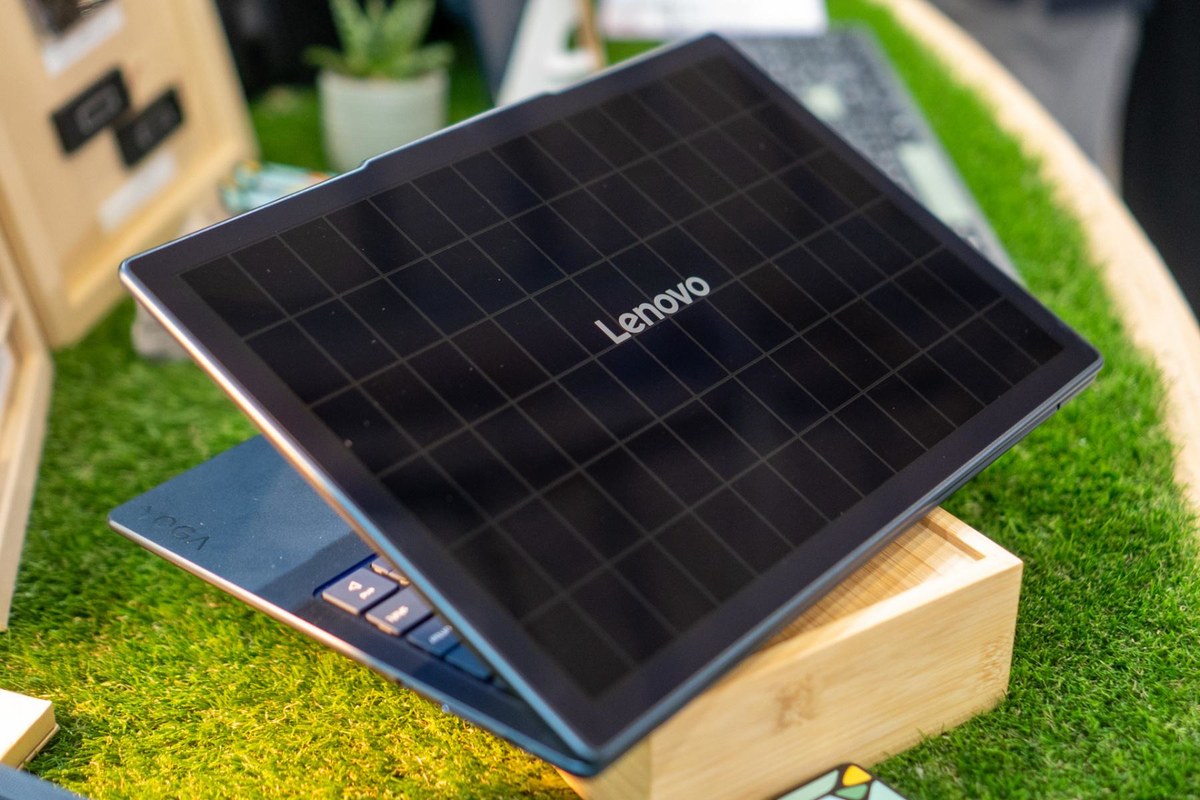
A prototype laptop with a solar panel that was demonstrated at MWC 2025
Edge Computing — Distributed Infrastructure
Edge computing is a distributed computing paradigm that deploys computing closer to the data source.
Lenovo boasts a full suite of peripheral offerings, including edge servers, edge clients, edge gateways, and an edge computing platform.
Edge enables data to be processed closer to where it was created, helping to eliminate latency and data traffic congestion between devices and the cloud
Edge enables innovation in next-generation devices with heterogeneous computing, intelligence, and collaboration needs across the edge and cloud.
The concept of application is smart cities. This is exactly the case where data processing should occur as close as possible to decision-making. Such autonomy is a guarantee that various processes in a smart city — for example, ensuring security — will occur without failures. After all, data processing will not go a long way.
Reliable IT infrastructure
According to the ITIC 2023 Global Server Hardware Security Survey, 84% of enterprises consider data security breaches to be the leading cause of unplanned server and application downtime.
Unlike its competitors, Lenovo has its own vertically integrated production. In addition, the company creates client products according to their geography, which guarantees not only fast delivery of solutions, but also, most importantly, security. Because Lenovo does not allow outsiders into its own production and supply chain.
That’s why Lenovo has been a trusted supplier to the U.S. government and other countries since 2005. Lenovo servers are trusted around the world, powering more supercomputers than any other vendor.
Local production
Lenovo’s local manufacturing is an important part of the company’s strategy to reduce costs, optimize logistics, support local economies, and reduce dependence on global supply chains. Lenovo has manufacturing facilities in various regions of the world, allowing the company to effectively serve local markets.
China: Lenovo has a significant portion of its manufacturing operations in China, where its main factories are located. This is part of a strategy to ensure access to resources as well as to quickly adapt to market changes.
India: Lenovo has several factories in India that manufacture laptops, PCs, and other devices. Manufacturing in India allows it to reduce costs and taxes, as well as maintain a strong presence in the Indian market.
Brazil: Lenovo also has manufacturing in Brazil to serve the South American market, particularly under the Made in Brazil program, which allows for reduced import duties and taxes.
US and Europe: In the US and European countries, Lenovo organizes the assembly and servicing of its devices, which allows for improved availability and reduced delivery times to these markets.
Localizing production allows Lenovo to respond effectively to changes in demand and currency fluctuations. Local production also allows it to adapt products to local market requirements, including certification standards and safety requirements.
Have important news to share? Message our Telegram bot
Key events and useful links in our Telegram channel