Хочете будувати кар’єру в Data Science та AI? Vodafone Big Data Lab відкриває новий набір —>
Олександр КузьменкоAI Eng
9 September 2026, 10:42
2026-09-09
OpenAI found itself at the center of a scandal over accusations of stealing mathematical research and pressure on scientists
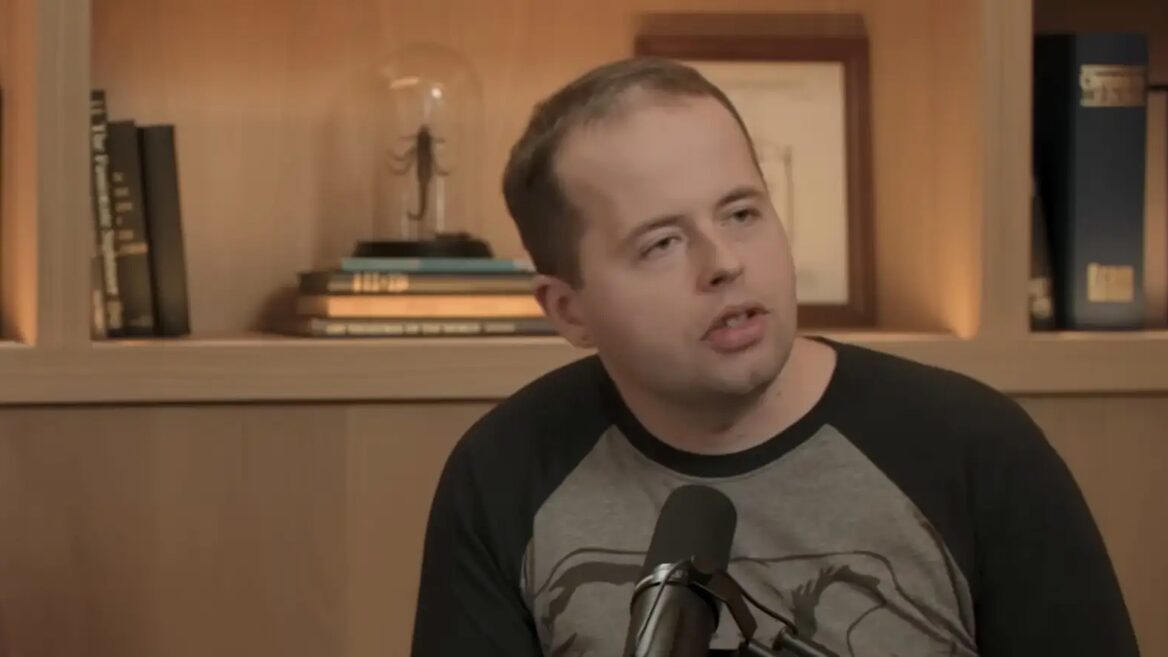
OpenAI has been accused of using private user data and aggressive academic competition to solve one of the most difficult mathematical problems of our time — the existence and smoothness of the Navier-Stokes equations. New York University professor Tristan Buckmaster said that the AI developer could have copied his unique approach through the Codex tool (which he used) to be the first to claim a scientific breakthrough.
OpenAI has been accused of using private user data and aggressive academic competition to solve one of the most difficult mathematical problems of our time — the existence and smoothness of the Navier-Stokes equations. New York University professor Tristan Buckmaster said that the AI developer could have copied his unique approach through the Codex tool (which he used) to be the first to claim a scientific breakthrough.
This became known from a public statement by Tristan Buckmaster, published after a series of tense negotiations with representatives of OpenAI.
Buckmaster said he worked on three proofs in collaboration with Anthropic mathematician Levent Alpege. The scientists used a rare mathematical method that is rarely used in the community. However, they actively used OpenAI’s Codex tools during their work. Soon after word of their progress began to spread in scientific circles, OpenAI suddenly launched its own team to solve the same problem using the same method.
Buckmaster suspects that OpenAI used data from his prompts and interactions with Codex to guide its own researchers. «This is not a direction you can get to in a few days by just giving a model a problem statement,» the professor emphasized.
The situation escalated when Buckmaster tried to dig deeper and demand transparency. According to the scientist, OpenAI representative Bubek escalated to direct threats, asking: «Why would you ruin your career? If you don’t want me to be polite, then I don’t have to be polite.»
In addition, Buckmaster was required to remove mention of collaboration with Alpege, since he is an employee of OpenAI’s main competitor, Anthropic.
Immediately after the scientists’ statement , OpenAI published its own proof, obtained using a new, as-yet-unannounced model. In one week of aggressive problem solving, the system crystallized 300 billion output tokens, which cost about $22.5 million in Astra computing power. Scientists believe that OpenAI decided to use its huge advantage in resources to prematurely seize the lead.
In its official statement, OpenAI denies outright copying. The company insists that its researchers did not see Buckmaster’s materials before publication, although it admits: «We cannot completely rule out that de-identified data helped improve our models.» At the same time, OpenAI claims that their proof differs significantly from Buckmaster and Alpege’s results.
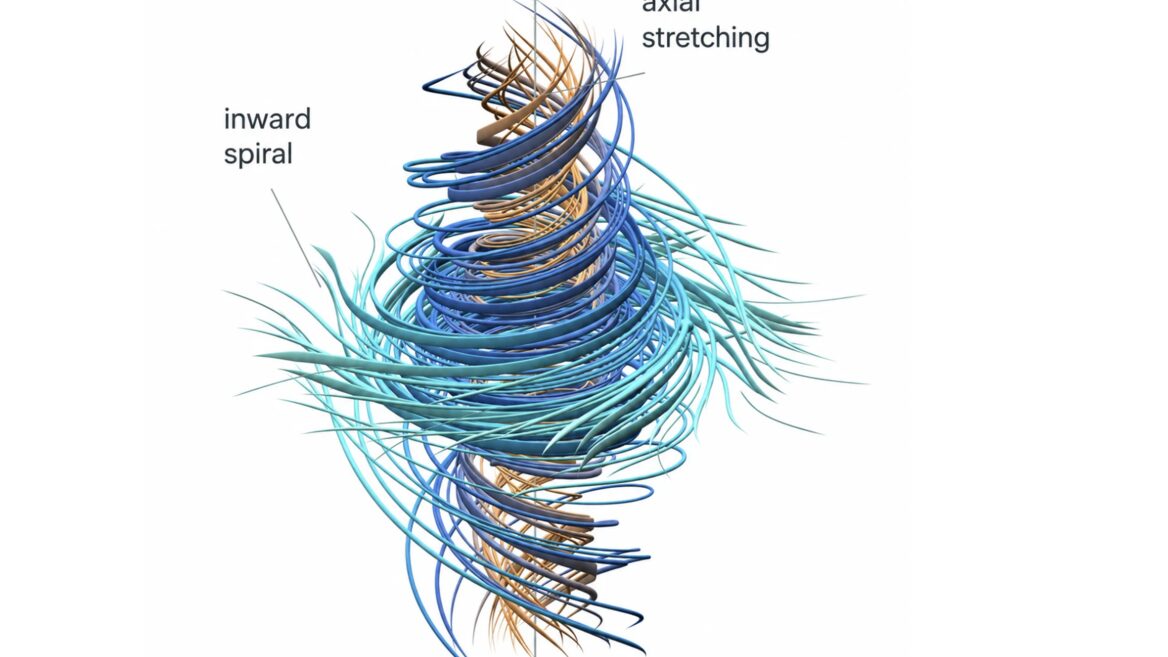
The controversy surrounding the Navier–Stokes equations, one of seven Clay Mathematics Institute Millennium Prize problems, carries a $1 million prize each. These equations describe the motion of fluids and gases, and the controversy surrounding their solution has raised a sensitive issue about the ethics of using corporate AI models in basic science. OpenAI is not bidding for the Millennium Prize and explicitly states that its goal is to demonstrate the progress of AI models, not to win a cash prize.
Як нейромережі бачать вільну та незалежну Україну? Тест dev.ua
Нейронні мережі для генерації зображень бачать світ по-своєму, їхню логіку зрозуміти часом зовсім неможливо. Але таки хочеться. На честь Дня Незалежності України редакція dev.ua вирішила провести невеликий експеримент.
Ми задали чотирьом різним нейронним мережам п’ять однакових запитів: «прапор України», «День Незалежності України», «український Крим», «перемога України» та «українці». Отриманими результатами ми ділимося з вами нижче.
У TikTok тепер можна генерувати фон за допомогою нейромережі. Ми протестували її та ділимося результатами
У TikTok з’явилася нова функція «Розумний фон». З її допомогою як фон для тіктоків можна підставляти згенеровані нейромережею зображення. Редакція dev.ua протестувала цю технологію і ділиться своїми враженнями.