Хочете будувати кар’єру в Data Science та AI? Vodafone Big Data Lab відкриває новий набір —>
Наталя ХандусенкоAI Eng
23 September 2026, 10:16
2026-09-23
Meta tests using third-party contractors to handle calls in Muse: employees concerned about confidential data leaks
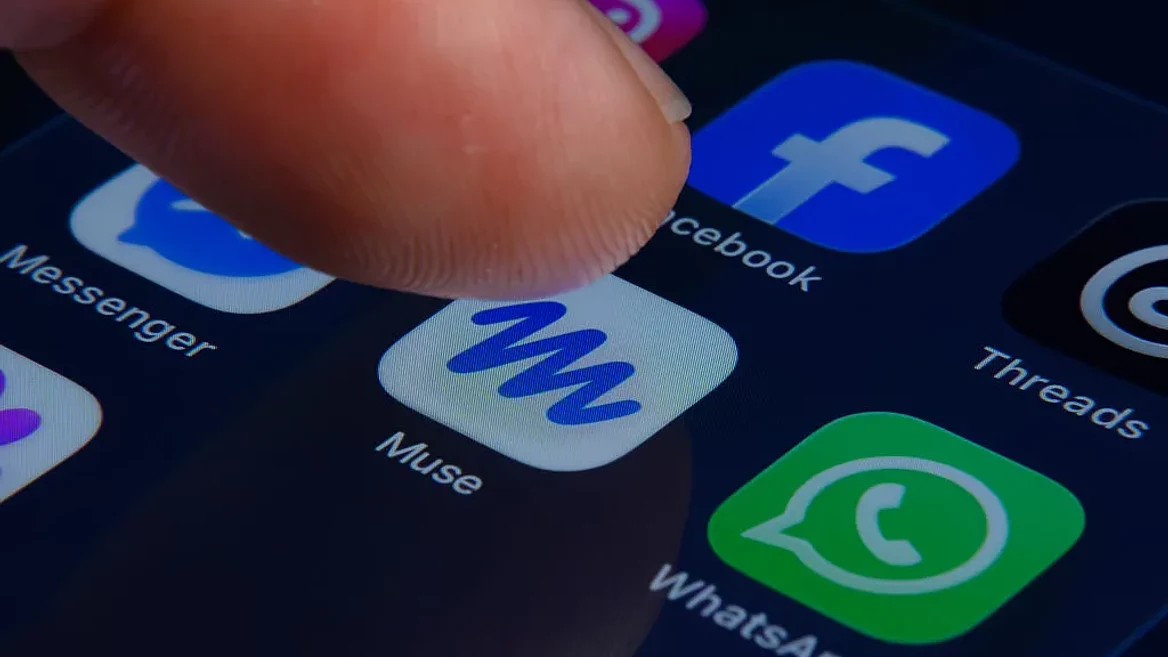
Meta is testing a “human concierge” feature for its new AI personal assistant, Muse. This involves third-party human contractors discreetly handling some of the phone calls made using the digital assistant.
Meta is testing a “human concierge” feature for its new AI personal assistant, Muse. This involves third-party human contractors discreetly handling some of the phone calls made using the digital assistant.
This is evidenced by internal company documents obtained by Reuters .
Why did Meta take this step?
In the first two weeks after its release, Muse was the number one download app in the US, with over 2.5 million users. One of the app's main features is the ability to call businesses and institutions on its own, such as to make hair appointments or book tickets.
However, during real calls, the AI encountered problems: callers often hung up when they heard a robotic voice. To increase the success rate of calls from low rates to 95–98%, the company launched a “human concierge” function. In case of difficulties, a human operator would discreetly intercept the call and complete the task for the assistant.
Employee resentment and security risks
Some employees have raised privacy concerns about having these calls handled by humans. They warned that this approach could inadvertently expose sensitive information to call center operators, internal memos show. “I don’t understand why we think this feature is worth the risk,” one employee wrote on an internal network. “We’re one step away from a failure that would expose unnecessary information to human operators.”
Another employee, who asked Muse to call an internet and cable provider to review the cost of the tariff, noted that according to the transcript of the conversation, the contractor involved made a racist remark during the call.
In response, the vice president of Superintelligence Labs at Meta admitted that it was a "mistake" to start testing calls with contractors without properly informing users, and said that the company has now "rolled back this feature."
She added in her post that Meta is still in the process of “improving its AI calling technology.” She said that some tests have shown that involving humans in making calls can increase the success rate to 95–98%, compared to “the lower percentage of AI calls directly.”
She also apologized to the employee who reported the racial reference during a conversation via Muse, and promised that the “human operator” involved would no longer work on any of Meta’s projects.
History repeats itself
Using humans to simulate autonomous AI is not a new experience for the company. A decade ago, Meta (then Facebook) developed the “M” assistant in Messenger, where about 70% of tasks were actually performed by humans.
Meta spokesperson Daniel Roberts said the purpose of the test was to gather feedback to improve data protection, and the feature would be returned only after appropriate safeguards were in place. Despite the scandal, Meta shares rose more than 20% after Muse launched, adding more than $200 billion to the company's market capitalization.
UPD Instead of an answer — a ban: Meta blocked the account of a Ukrainian IT entrepreneur after his request about restrictions on Muse models in Ukraine
«В жовтні випускаємо VR-шолом для аватарів, в «чіпування» Neuralink Маска вірю мало». Про що глава Meta Цукерберг 3 години говорив в подкасті Джо Рогана
25 серпня вийшла чергова серія популярного подкасту The Joe Rogan Experience, гостем якого став глава компанії Meta Марк Цукерберг. Розповідаємо про головне з майже 3-годинного інтерв’ю.
Як нейромережі бачать вільну та незалежну Україну? Тест dev.ua
Нейронні мережі для генерації зображень бачать світ по-своєму, їхню логіку зрозуміти часом зовсім неможливо. Але таки хочеться. На честь Дня Незалежності України редакція dev.ua вирішила провести невеликий експеримент.
Ми задали чотирьом різним нейронним мережам п’ять однакових запитів: «прапор України», «День Незалежності України», «український Крим», «перемога України» та «українці». Отриманими результатами ми ділимося з вами нижче.
Have important news to share? Message our Telegram bot
Key events and useful links in our Telegram channel