Хочете будувати кар’єру в Data Science та AI? Vodafone Big Data Lab відкриває новий набір —>
Олександр КузьменкоGadgets
22 May 2026, 16:13
2026-05-22
The official ball of the 2026 FIFA World Cup has a wireless charging function. Why is it needed?
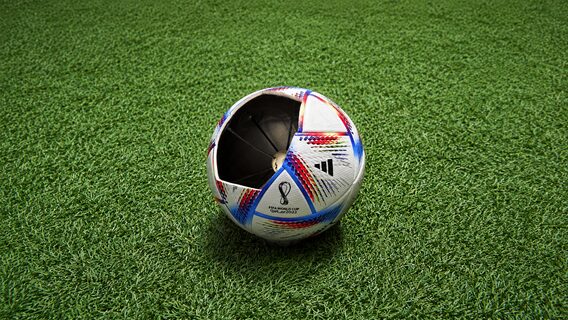
The official ball of this year’s FIFA World Cup, called TRIONDA, is equipped with a built-in high-tech motion sensor from Adidas. It records every touch, trajectory and flight speed in real time, but also requires recharging.
The official ball of this year’s FIFA World Cup, called TRIONDA, is equipped with a built-in high-tech motion sensor from Adidas. It records every touch, trajectory and flight speed in real time, but also requires recharging.
As the developer of the technology Adidas notes, the system is based on an IMU (Inertial Measurement Unit) sensor with a polling rate of 500 Hz. This means that the sensor records and transmits data 500 times per second, tracking the acceleration and micro-movements of the ball in three dimensions. The device weighs only 14 grams and is mounted in one of the inner panels in such a way as to fully preserve the balance, aerodynamics and weight of the ball, remaining invisible to the players.
The main reason for integrating such a sensor was the technical limitations of standard broadcast systems. Stadium cameras typically record video at 50 frames per second. This was often not enough to accurately determine the microsecond of a pass during difficult offsides.
Because the TRIONDA sensor operates ten times faster than a standard camera, the system accurately detects the exact moment a player first makes contact with the ball. The technology also captures the slightest touches, allowing referees to quickly make decisions in controversial handball incidents that are difficult to see on regular video replays.
The balls at this year’s World Cup need to be charged before each match and feature special sensors that collect spatial positioning data in real-time. pic.twitter.com/Sr41FpinxQ
The data received from the ball is synchronized with external tracking systems at stadiums in the USA, Canada and Mexico. Special optical cameras around the perimeter of the field track the movements of the players, and when combined with the TRIONDA sensor, the system creates a complete three-dimensional model of the game. The information is instantly sent to the video assistant referee (VAR) room for automatic and immediate determination of offsides and ball crossing the line.
The electronics inside the TRIONDA are powered by an integrated battery. The battery provides about six hours of continuous operation on a single charge, which is more than enough for a match with extra time. However, stadium staff are forced to charge the balls before each game using wireless stations, as are the referees' other digital equipment.
Adidas worked with FIFA on this technology (Connected Ball) and conducted stadium tests between 2020 and 2022. The German brand first tested a similar connected ball system called Al Rihla at the 2022 World Cup in Qatar. The 2026 version features increased data transmission accuracy, improved energy efficiency and deeper integration with a semi-automatic offside detection system, the operation of which is carefully tested by FIFA’s innovation department before each tournament.
The 2026 FIFA World Cup will be held in Mexico, Canada and the United States from June 11 to July 19.