Хочете будувати кар’єру в Data Science та AI? Vodafone Big Data Lab відкриває новий набір —>
Ігор Вишневський Weapon
19 June 2026, 15:33
2026-06-19
Microwave weapons and an autonomous turret that shoots down FPV for less than $50. What unique deftech solutions received grants after the third batch of the Defence Builder accelerator
Nine Ukrainian and European defense-tech teams presented their technologies to investors, military and international partners at Demo Day 3.0, the final event of the third batch of the Defence Builder Accelerator.
Nine Ukrainian and European defense-tech teams presented their technologies to investors, military and international partners at Demo Day 3.0, the final event of the third batch of the Defence Builder Accelerator.
According to the Defence Builder press service, the teams received grants of up to $65,000 from the accelerator and main partner of the event, General Chereshnya.
As reported, the solutions of the third batch complement each other and cover three planes of modern combat, all solutions at the TRL 3-8 level.
As for strike and autonomous UAVs, WingTech showed the HABA bomber drone with a range of up to 600 km, which takes off from a catapult and operates without GPS.
In turn, Trident introduced an autonomous homing module that brings the drone to the target even under jamming and increases accuracy from 20% to over 80%.
Fremen, meanwhile, presented the audience with a compact on-board module that protects reconnaissance drones from FPV interceptors.
Among the solutions related to air defense and situational awareness, Frost Works introduced the VELES system for early detection of low-flying threats such as «shaheeds».
Denmark’s BlueShadow demonstrated swarms of unmanned surface drones intercepting UAVs over the Black Sea, while NEBOSTRAZH presented an autonomous turret for kinetic FPV destruction for less than $50 per target. Another team, whose name has not yet been revealed, is working on microwave weapons against swarms of drones and guided aerial bombs.
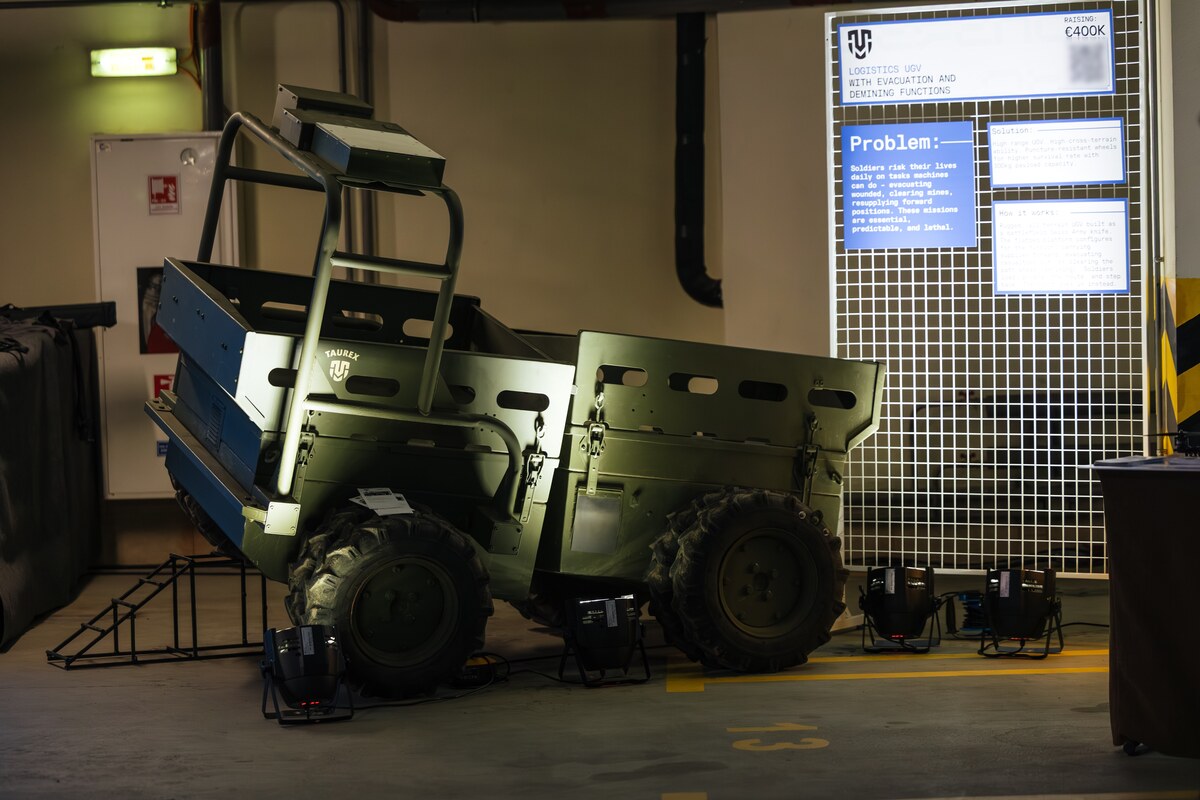
Meanwhile, TAUREX demonstrated a platform carrying over 300 kg over a distance of over 80 km for logistics and evacuation, and Telearmy shared information about its technology for remotely controlling ground equipment with a record range of 4,300 km.
Thus, Demo Day completed a four-month program in which teams simultaneously built a company, proved the product in tests with combat units, and established connections with investors, lawyers, and defense manufacturers.
According to Line Rindvig, CEO of Defence Builder Accelerator, the companies mentioned are coming out with a clear understanding of what needs to happen in the next 6, 12 and 24 months, from export controls and NATO standards to supply chains.
All of the aforementioned teams received grant support, which depended on their results during the accelerator. In total, a team could receive up to $65,000. The base grant for each team from Defence Builder was $10,000, and the teams with the best results during the accelerator received an additional $30,000. In particular, this applies to:
Fremen — $30,000
WingTech — $20,000
Frost Works — $20,000
TAUREX — $20,000
Four teams were separately recognized by the defense-tech company General Chereshnya, providing WingTech, Trident, NEBOSTRAZH, and Frost Works with an additional $25,000 each.