Хочете будувати кар’єру в Data Science та AI? Vodafone Big Data Lab відкриває новий набір —>
Валентин ШнайдерRobots
8 September 2025, 09:35
2025-09-08
Microrobots can replace injection needles: scientists from the US and China presented a new technology
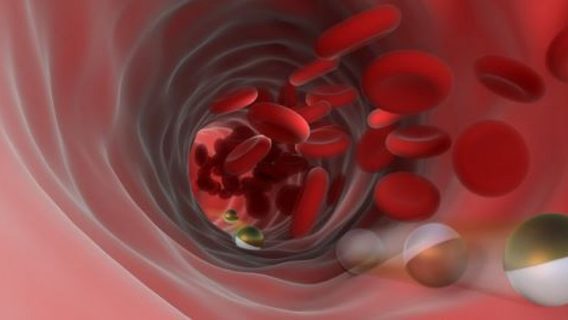
A team of researchers from the US and China has created microrobots that are propelled by the energy of cavitation, the explosion of bubbles in a liquid. The new technology allows drugs to be delivered into the body without traditional needles and could become the basis for future painless injections.
A team of researchers from the US and China has created microrobots that are propelled by the energy of cavitation, the explosion of bubbles in a liquid. The new technology allows drugs to be delivered into the body without traditional needles and could become the basis for future painless injections.
According to Interesting Engineering, the scientists have developed a system where a laser heats a light-absorbing material and triggers the formation of bubbles. When the bubble reaches its limit, it collapses abruptly, creating a shock wave. This micro-explosion can move devices as small as a millimeter up to 1.5 meters or accelerate them in a liquid up to 12 m/s.
Such microrobots can jump, slide and swim, which opens the way to use in complex environments: from narrow channels to human tissues. The main prospect lies in medicine: they are able to penetrate the skin without a needle and deliver drugs directly to the target area, for example, to tumors.
The system has several advantages. It does not require an internal power source or moving parts, and is controlled by an external laser. This provides precise control of direction, height, and force of movement, unlike existing microrobots that typically rely on magnetic fields or chemical reactions.
Beyond medicine, potential applications include engineering and research in hard-to-reach environments. With their ability to navigate wet and uneven surfaces, microrobots could be useful for inspecting pipelines, technical mechanisms, or even working inside biological systems.
The development is currently at the proof-of-concept stage. The main challenges are precisely controlling cavitation in living tissues and ensuring that it is safe for cells. In addition, lasers have a limited penetration depth, so engineering solutions such as fiber optics or the use of infrared radiation will be required for practical use. Despite these challenges, the researchers believe that their technology could change the way we think about medical procedures in the future.
Previously, dev.ua wrote about how a team of roboticists from China has developed a new type of microrobots that can continuously transform their shape and «lock» in certain configurations. Researchers claim that these tiny robots are similar to the robots from the Transformers movies.